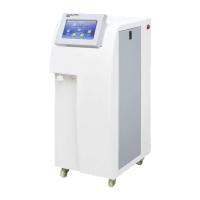
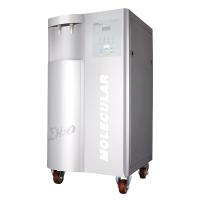
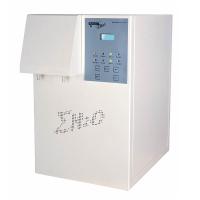
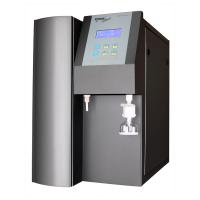
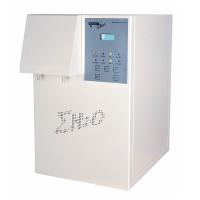
This article starts from the principle and process of pure water machines commonly used in hospitals, and then analyzes the basic maintenance common sense of medical pure water machines, expounds the composition and function of various filter equipment, and compares the processes of different pure water machines.
1 Definition of medical pure water and principle of pure water machine
"Chinese Pharmacopoeia" (2010 Edition) stipulates: "Purified water is water for medicinal purposes obtained by distillation , ion exchange, reverse osmosis or other suitable methods." It is no longer limited to "distillation" a craft. This change in the Pharmacopoeia is a great progress in the development history of my country's pharmaceutical water production, and it is in line with the Pharmacopoeia of professional countries in the world. In the past, the Pharmacopoeia defined water for injection as "water obtained by distilling purified water", but USP has clearly stipulated that reverse osmosis (RO) method can be used as a legal method for preparing water for injection in 7 consecutive editions, which shows people's respect for water for injection. Confidence in the production of pharmaceutical water using membrane technology. The production of pharmaceutical water by membrane separation is an inevitable trend in the development of pharmaceutical water technology.
At present, most pharmaceutical companies and medical institutions at home and abroad have adopted methods such as ion exchange, reverse osmosis and ion exchange to obtain purified water. In the above-mentioned water production process, ion exchange technology is still widely used as a deep desalination method, but a large amount of waste acid and waste alkali will be generated when the ion exchange resin is regenerated, which seriously pollutes the environment and restricts its development. The reverse osmosis membrane can remove 100% of bacteria, pyrogens, viruses and organic matter in water. Although the two-stage reverse osmosis can avoid the use of ion exchange resin, it has extremely high requirements on the salt content of the raw water, because the current desalination rate of the reverse osmosis device about 98%. If the raw water has a high salt content, the conductivity of the produced water will will exceed the control index. Pure water for medicine has relatively higher and stricter water quality requirements, and it is often required that the resistance value of ultrapure water should be higher than 15 megohms.
2 Process flow of pure water machine
According to the situation of the water machine currently used in our hospital, the process can be roughly divided into:
1. Raw water→raw water booster pump→pp cotton filter→activated carbon filter reverse osmosis equipment→ion exchanger→purified Water Tank→pure water pump→water point
2. Raw water→raw water booster pump→multi-media filter→activated carbon filter→sand filter→water softener→first stage reverse osmosis→intermediate Water Tank→second stage reverse osmosis (reverse osmosis membrane surface is positively charged)→purification Water tank→pure water pump→water point
3 Maintenance knowledge of pure water equipment
3.1 Strain filter
(1) Classification of coarse filter The coarse filter is different according to the size of the filtered water. The common ones are sand filter, non-woven filter element filter and PP fiber filter element filter. The lengths of non-woven filter elements and PP fiber filter elements are commonly used in two types: 10 inches and 20 inches. The filter element used as a coarse filter generally has a pore size of about 25um.
(2) The role of the coarse filter
The role of the coarse filter is to remove suspended impurities with large particle sizes in the water, prevent these impurities from entering the activated carbon filter, cover the surface of the activated carbon, and make the capillary structure of the activated carbon lose the ability to absorb impurities in the water.
(3) Maintenance of coarse filter
As the working time increases, the water flow will gradually decrease. If it is not treated in time , the resistance of the coarse filter will rise sharply with the increase of retained solid impurities. It cannot meet the water flow requirements of the subsequent treatment process. For sand filters, backwash in time after the pressure drops to a certain level. Part of the fine sand is washed out of the filter during backwashing, so the sand filter should be regularly replenished with sand. After frequent backwashing, the degree of splitting of the sand increases. The remaining silt slowly increases, and the sand layer will appear "hardened", and the sand layer should be replaced at this time. For non-woven fabric or PP fiber filter elements, it is difficult to wash them with water after the filter holes are blocked, and the filter elements must be replaced regularly.
3.2 Activated carbon filter
(1) The function of activated carbon The function of activated carbon filter is mainly to remove macromolecular organic matter , iron oxide and residual chlorine. This is because organic matter, residual chlorine, and iron oxides are likely to poison the ion exchange resin, while residual chlorine and cationic surfactants will not only poison the resin, but also damage the structure of the reverse osmosis membrane, making the reverse osmosis membrane ineffective.
(2) Adsorption principle of activated carbon
The adsorption principle of activated carbon is to form a layer of balanced , and then absorb organic matter and impurities into the activated carbon particles, and the adsorption effect at the initial stage of use is very high. But over time, the adsorption capacity of activated carbon will be weakened to varying degrees, and the adsorption effect will also decrease. Therefore, activated carbon should be cleaned or replaced regularly.
3.3 Water softener
(1) The function of water softener
Ion exchange resin is a polymer with corresponding functional groups. In general, conventional sodium ion exchange resins carry a large amount of sodium ions. When the content of calcium and magnesium ions in the water is high, the ion exchange resin can release sodium ions, and the functional groups combine with the calcium and magnesium ions, so that the content of calcium and magnesium ions in the water decreases, and the hardness of the water decreases. Hard water becomes soft water, which is the working process of water softening equipment.
(2) Maintenance of water softener
The water softener used to make pure water generally uses sodium-type cation exchange resin. After the resin exchange is saturated, it is regenerated with salt. After several years of use, the resin is more and more broken and gradually loses its softening ability. Especially when the activated carbon filter is saturated and the activated carbon is not replaced in time, the iron, organic matter and residual chlorine in the raw water will directly enter the water softener, poisoning the resin. Once poisoned, it cannot be restored by regeneration. When the working exchange capacity of the resin drops significantly, the resin should be replaced.
3.4 Reverse osmosis membrane
Reverse osmosis is the core component of the pure water system. The raw water that has been pretreated and meets the requirements of the reverse osmosis membrane becomes pure water after being filtered by the reverse osmosis membrane. Therefore, the maintenance of the reverse osmosis membrane is the key to ensure the quality of pure water. . During the working process of the reverse osmosis membrane, the salt concentration on the membrane surface is higher than the concentration in the main fluid. This phenomenon is called concentration polarization. The consequence of concentration polarization is that some salts are precipitated on the membrane surface and block the reverse osmosis membrane. The water production channel reduces the water production rate of the membrane. When the organic matter in the feed water is not washed away continuously or periodically, it will precipitate on the surface of the membrane, especially some reverse osmosis membranes with a charged surface, which will absorb the charged organic matter. It sticks on the surface of the membrane, and the deposition of organic matter on the surface of the membrane causes more serious damage to the membrane than the precipitation of salt on the surface of the membrane, and sometimes this damage is irreversible. The concentration of organic matter and various salts on the surface of the membrane is much higher than that of the main water flow, which provides rich nutrients for the reproduction of bacteria. A large number of microbial flora not only block the water production channel, but also because the reverse osmosis membrane itself is an organic matter, it will be decomposed by microorganisms, causing irreversible damage. Oxidizing substances in the water, such as residual chlorine, are then enriched by touching the table. After enrichment to a certain extent, the concentration exceeds the tolerance of the membrane itself, and the reverse osmosis membrane will be oxidized and decomposed.
4 Water quality standards for medical pure water
2010 Pharmacopoeia Standards
GMP standard
Resistivity: ≥15MΩ.CM Conductivity: ≤0.5μS
Ammonia≤0.3μg/ml
Nitrate≤0.06μg/ml Heavy metal≤0.5μg/ml
5 Comparison of three processes for preparing ultrapure water for the pharmaceutical industry
At present, there are basically the following , and most of the remaining process flows are derived from different combinations and collocations based on the following three basic process flows. Their advantages and disadvantages are listed below:
1. The first type uses ion exchange resin, which has the advantages of less initial investment and less space occupied, but the disadvantage is that it needs frequent ion regeneration, consumes a lot of acid and alkali, and has certain damage to the environment.
2. The second method uses reverse osmosis as a pretreatment and is equipped with ion exchange equipment. Its characteristic is that the initial investment is higher than that of ion exchange resin, but the regeneration cycle of ion equipment is relatively long, and the cost of acid and alkali is higher than that of pure ion resin. way much less. But it is still destructive to the environment.
3. The third type uses reverse osmosis as pretreatment and then is equipped with an electrodeionization (EDI) device. This is an economical and environmentally friendly process for producing ultra-pure water. It does not need to be regenerated with acid and alkali. It can continuously produce ultrapure water, which has no damage to the environment. The disadvantage is that the initial investment is too expensive compared to the above two methods.