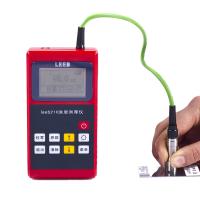
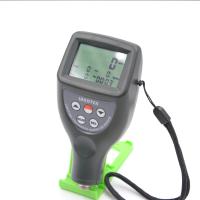
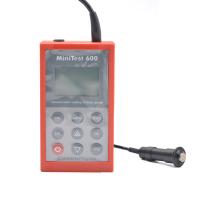
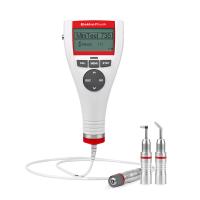
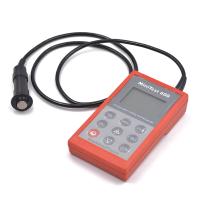
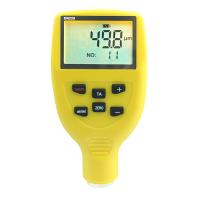
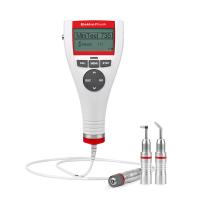
Using the magnetic method to measure the thickness of the non-magnetic coating layer on the magnetic metal substrate, the thickness of the nickel layer on the magnetic and non-magnetic substrate, and the thickness of the non-conductive coating layer on the non-magnetic substrate is the most applicable non-destructive thickness measurement method. There are three national standards based on:
(1) GB/T4956 "Magnetic Method for Measuring the Thickness of Non-magnetic Coating on Magnetic Metal Substrate" is recommended by the national standard, which is equivalent to the international standard recommended by ISO2178. The thickness measurement method specified in it is designed based on the fact that there is a certain functional relationship between the thickness change of the non-magnetic covering layer sandwiched between the magnet and the magnetic substrate of the magnetic Thickness Gauge and the change of magnetic attraction or the change of the magnetic resistance of the magnetic circuit.
(2) GB/T13744 "Measurement of Nickel Plating Thickness on Magnetic and Nonmagnetic Substrates" national standard. The thickness measurement method specified in it is designed based on the fact that there is a certain functional relationship between the thickness change of the nickel layer sandwiched between the magnet of the Thickness Gauge and the non-magnetic substrate and the resulting change in magnetic attraction or reluctance of the magnet.
(3) The national standard GB/T4957 "Eddy Current Method for Determination of Thickness of Non-conductive Covering Layer on Non-magnetic Substrate" is equivalent to the international standard 1SO02360. The thickness measurement method specified in it is to use the high-frequency electromagnetic field generated by the measuring head device of the eddy current Thickness Gauge to cause the conductor under the measuring head to generate an electric eddy current; the amplitude and phase of this eddy current are shared between the conductor and the measuring head. It is designed as a function of the thickness of the non-conductive cover coat. When the electrical conductivity difference between the covering layer and the substrate is relatively large, it can also be used to measure the thickness of the non-magnetic conductive covering layer on the non-conductive conductive substrate.
The measurement accuracy is affected by many factors by using the method of measuring the thickness between the substrate and the covering layer with or without magnetism and using eddy current. When measuring the thickness, the thickness of the covering layer, the electrical conductivity of the covering layer, the electrical and magnetic properties of the base metal (such as electrical conductivity, magnetism, whether there is residual magnetism, etc.), the thickness of the base metal, and the edge effect of the measuring surface should be avoided as much as possible. , The curvature of the measurement surface. The roughness of the measurement surface, whether there is foreign matter attached to the probe or the measurement surface, the magnetic field around the working environment, the pressure of the probe during measurement, the orientation of the probe, and the ambient temperature, etc., have a great impact on the measurement accuracy. interference. When using magnetic method and eddy current method to measure coating thickness, the measurement error is within ±10% or 1.5µm.
In recent years, magnetic Thickness Gauges and eddy current Thickness Gauges with professional functions have been continuously launched in the domestic market. The measurement accuracy of the instrument can be increased to ±3%, and the measurement range has been expanded to 0~1000µm. It not only integrates magnetic thickness measurement and eddy current It can measure thickness in one body and use liquid crystal display. It can also be injected with a dual-function probe that can be used for electromagnetic induction measurement and eddy current measurement. It can even automatically identify the base material to determine which induction method to use for measurement and the measured data. It can store more than 5,000 readings, and has statistics and calculation functions, and the function of printing out all readings. When measuring rough surfaces, it has a calibration function to ensure the necessary accuracy.