Fineness Overview
Fineness: Fineness measurement is to check the size or uniformity of dispersion of particles such as paint or paint paste inner color (filler), expressed in μm.
The fineness of the coating can affect the gloss, appearance, corrosion resistance and storage stability of the coating. The smaller the particles of the pigment (filler), the higher the degree of dispersion in the paint, the finer its fineness, the smoother the paint film, and the better the decoration.
Principle of fineness plate
At present, the most commonly used method for measuring the fineness of paint is the scraper Fineness Meter.
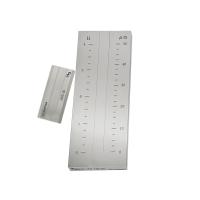
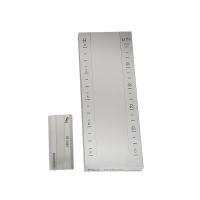
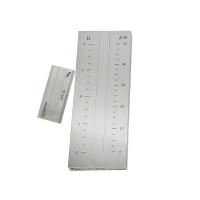
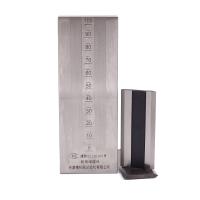
It consists of a polished flat plate and a scraper. There are one or two grooves parallel to the long side of the plate, and the depth of the grooves decreases uniformly from one end to the other, with one end having a suitable depth (such as 25 μm, 50 μm, 100 μm or 150 μm), and the other end The depth of the groove is O (that is, as flat as the surface of the flat plate), and the graduation is engraved according to the depth of the groove according to different specifications; the scraper has two types of single-edged and double-edged, and the blade is straight.
The measurement results of fineness are related to the Fineness Meter used to a certain extent
The standard of paint fineness
Fineness meter specifications in GB/T1724 standard of paint fineness grade table
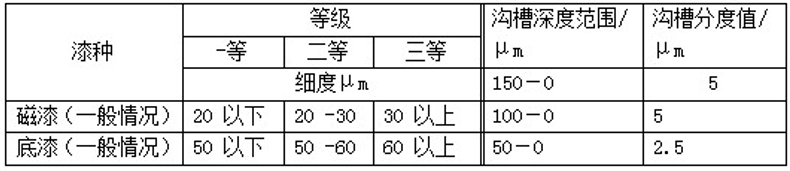
Fineness meter specifications in the ISO1524 standard Fineness meter specifications in the DIN53203 standard