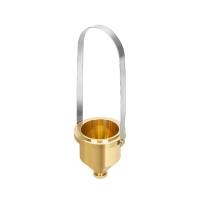
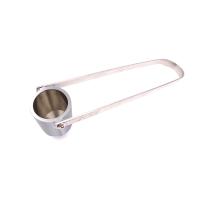
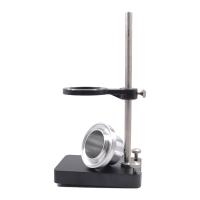
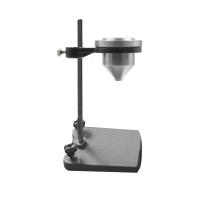
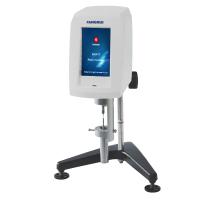
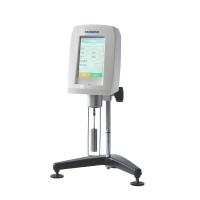
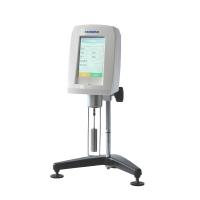
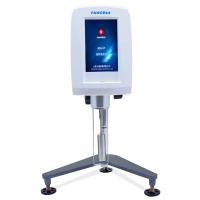
There are many kinds of instruments for measuring the viscosity of coatings. At present, the mainstream measuring instruments at home and abroad are still Viscosity Cups. According to the division idea of NBCHAO Mall, it can be divided into
Domestic: 4 cups of paint, 1 cup of paint
Overseas: Zahn Zion Cup Din Cup Ford Ford Cup ISO Outflow Cup JIS Iwata Cup
Of course, from the perspective of the industry market, the national standard Tu-1 Cup and Tu-4 Cup are more adopted in CHINA, while ISO is recommended by the International Organization for Standardization outFlow Cup. This issue introduces Tu-4 cups
Why is it called Tu-4 Cup?
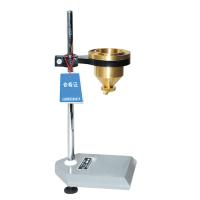
Tu-4 Cup is a cylindrical upper part and a conical lower part with a capacity of 100mL. There is a stainless steel spout with a standard hole of 4mm at the bottom of the cone, which is why it is called Tu-4 Cup. See Figure 1 for specific dimensions. Tu-4 cup is easy to use, but some details in the specific operation process will still affect the accuracy and reproducibility of the viscosity test.

Tu 4 Viscosity Cup Instructions for Use

1. Before or after measurement, use gauze dipped in solution to wipe off 4 cups and dry them in the air or with cold wind. No residual liquid is allowed to adhere to the cup or flow out of the tube hole. The inner wall and outflow hole of the cup should be kept clean, and the original smoothness should be maintained when observing the light.
2. The test should be carried out in a constant temperature room at 25±1°C, and the support platform should be adjusted to maintain a horizontal position.
3. Stir the test solution evenly, and keep it at a temperature of 25±1°C after filtering through a sieve with no less than 567 holes/cm.
4. Inject the test solution into the viscosity agent, block the outflow hole with your fingers (if there is a stopper on the corrosive liquid cup), slowly pour the tested solution into the cup until the liquid surface protrudes from the upper edge of the cup, if there is any Bubbles, when the bubbles float to the surface, use a clean flat glass plate to push it along the edge once, and divide it to remove the protruding liquid surface and bubbles, so that the level of the measured liquid and the upper edge of the flow are on the same level.
5. Let go of your finger (or push away the stopper), the test solution will flow out vertically, take it up with the cup, and start the stopwatch at the same time, the test solution will flow out into a line, stop the stopwatch when it is disconnected, and the measured time represents its viscosity. The unit is seconds.
6. Secondary parallel test, the error shall not exceed 3% of the average value.
7. The first method should be used to clean after each use.
So, how to choose Tu-4 cups?
In contrast, copper cups have a long service life and stable test data. However, most of the standard holes of metal cups are detachable. If the thread cannot be screwed to the top, the volume of the Viscosity Cup will actually be increased, and the connection will become angular. , affecting the flow stability. Since the outflow time is proportional to the fourth power of the inner diameter of the standard hole, if the hole is damaged during cleaning, it will greatly affect the accuracy of the test data.
The second is the unified operation method. Temperature is an important factor affecting the viscosity of the sample, so it is recommended to measure the viscosity in a constant temperature room. If conditions do not permit, the sample needs to be heated or cooled. During the test, a uniform tool should be used to scrape off excess samples along the mouth of the cup. Due to the surface tension of the tool, different tools have different effects. Then there is the Newtonian fluidity of liquids. Newtonian or near-Newtonian liquids have stable fluidity and repeatable outflow time, so Tu-4 cups are suitable for such low-viscosity varnishes and paints, and are not suitable for measuring non-Newtonian flow coatings, especially High consistency, high pigment content coating with thixotropic structure. Although the standard stipulates that Tu-4 cups can measure coating products with an outflow time of less than 150 seconds, the preferred measurement range should be 20-100 seconds, and the suitable measurement of kinematic viscosity is 60-360mm2/s, so Tu-4 cups can only be used in Satisfactory
reproducibility can be obtained only when used within the applicable viscosity range .
How to calibrate Tu-4 Cup?
Whether the Tu-4 cup is qualified or whether it can continue to be used should be checked regularly. There are two commonly used calibration methods.
1. Kinematic viscosity method
This method is based on the national standard "GB265 Kinematic Viscosity Determination Method". The kinematic viscosity of various standard oils is measured by a capillary viscometer, and the standard outflow time T of Tu-4 cup is obtained by the formula.
T=0.223V+6 (23s≤T<150s)(1)
T=0.154V+11 (T<23s)(2)
In the formula:
T——outflow time, s;
V——kinematic viscosity, mm2/s.
The ratio of the standard outflow time T to the measured outflow time t is the correction coefficient K of the Viscosity Cup.
K=T/t(3)
A series of K1, K2, K3... can be obtained from formula (3), and the arithmetic mean value thereof is taken as the correction coefficient K of the Viscosity Cup.
If K is in the range of 0.95 to 1.05, the Viscosity Cup is qualified and can still be used, but the test data should be multiplied by the correction coefficient K, which is the real measured viscosity.
2. Standard viscometer method
For users without precise temperature control and capillary viscometer, it is more practical to use the standard viscometer method. The standard Viscosity Cup is commonly known as the K-value cup. It is not used at ordinary times and is only used as a measurement standard. It is used regularly to check the Tu-4 cup used. When calibrating, it is necessary to prepare at least five aviation lubricating oils with different viscosities and the mixed oil of aviation lubricating oil and transformer oil. And calculate a series of time ratios K1...K5, take the average value as the correction coefficient K of the Viscosity Cup.
3. In addition, there is the Engua conditional method
It is to use the Engela viscometer to obtain its condition degree (°E), check the kinematic viscosity according to the corresponding table, use formula (1) or formula (2) to calculate T, and the ratio of the outflow time t measured by the tested Viscosity Cup , which is the correction coefficient K. As the viscosity of the standard oil increases, the data deviation gradually increases, so it is less used at present.