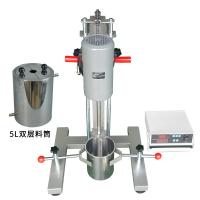
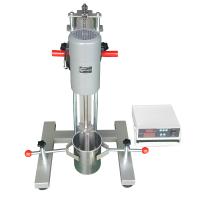
The particle size of the pigment affects the coloring strength, transparency, outdoor durability, solvent resistance and other properties of the pigment, so the average particle size is required to be constant. However, most pigment manufacture involves precipitation in water, filtering the precipitated pigment and drying the filter cake. During drying, the pigment particles are cemented together in the form of agglomerates, so the pigment is a dry powder of aggregates, which need to be dispersed to crush them into their original particle size to make a stable dispersion.
Pigment Dispersion Process
The effective dispersion of pigments in paints not only affects the color and decorative functions of paints, but also affects the adhesion, durability, mechanical strength, and chemical properties of high-solid paints and water-based paints. The dispersion of pigments goes through three processes: wetting, dispersion and stabilization.
① The process of wetting the water and air on the surface of the pigment is replaced by the paint and forming a new coating film on the surface of the pigment is called wetting.
Wetting requires that the surface tension of the binder is lower than the surface free energy of the pigment. Wetting is less of a problem with solvent-based paints because the surface tension of the organic solvents and the paints they make up is generally always lower than that of the pigments. In water-based paints, due to the high surface tension of water, it is difficult to wetting organic pigments, and wetting agents need to be added to reduce the surface tension of water. Wetting first requires the solvent to penetrate into the pigment aggregate. When the solvent viscosity is low, the rate of wetting can be very fast. The particles (primary particles) formed during the manufacture of pigments usually have a particle size of 5nm to 1µm, while aggregates are composed of tens of thousands or hundreds of thousands of primary particles, and the particle size can reach more than 100µm. The viscous paint wets It takes time inside the aggregate. Therefore, the pre-mixed paint paste is usually heated to 50°C under stirring, and then left to stand overnight, and then ground and dispersed the next day to fully wet the surface of the pigment particles.
② Grinding and dispersing In the preparation process of the pigment, the particle size of the pigment is controlled according to the specified requirements, but because the fine particles of the pigment form aggregates, they need to be dispersed again. Shear force is mainly used in coatings to disperse.
The shear rate of grinding equipment is determined by the mechanical design. It is necessary to select a suitable dispersing machine capable of transferring sufficient shear stress to the aggregates, and to formulate the millbase to disperse effectively on the selected machine. When the shear rate is constant, the shear force is proportional to the viscosity. High viscosity and high shear force are beneficial for grinding. In order to separate aggregates at a rapid rate, the viscosity of the grind should be as high as the equipment can operate efficiently. In this way, the pigment aggregates are subjected to the highest shear stress, and the separation can be completed in the shortest time.
Low viscosity paints are desired when wet and high viscosity is desired when grinded. At this time, more pigments and less polymers can be added, and the speed of wetting the new surface needs to be greater than the speed of separation. Otherwise, part of the separated primary particles gather again and have to be separated again, thus reducing the grinding efficiency and prolonging the grinding time.
Grinding is a process that consumes a lot of energy in the production of paint, and each ton of enamel requires 100~500kw·h of electric energy. When selecting effective grinding equipment, not only the grinding time is considered, but also the paint slurry is required to achieve a stable dispersion state, and the pigment can exert good performance.
Stability of dispersed systems
Flocculation is the re-aggregation of pigments after dispersion. During flocculation, the particles formed after the pigment is dispersed form loose aggregates. When the weak external force is applied, the aggregates break; when the external force stops acting, the aggregates return to their original shape immediately or later. When flocculation occurs, the low shear viscosity increases and the system becomes shear thinning.
Flocculation is the result of the interaction forces (including attractive and repulsive forces) between particles. When the force is greater than zero, that is, when the attractive force is greater than the repulsive force, flocculation occurs between the particles. When the force is large, the degree of flocculation increases, and the hiding power, gloss, fluidity, and leveling of the coating deteriorate. When the force is less than zero, that is, when the attractive force is less than the repulsive force, deflocculation occurs between particles. Deflocculation causes the coating to form an obvious hard precipitate. Therefore, from the perspective of taking into account all aspects of the performance of the coating, it is hoped that the coating will be in a slightly flocculated state.