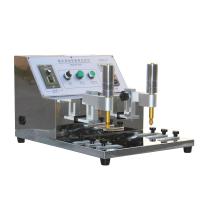
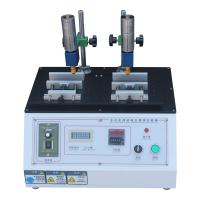
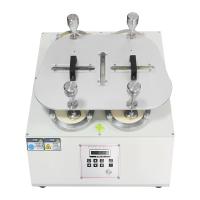
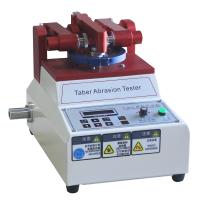
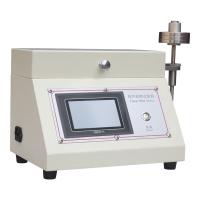
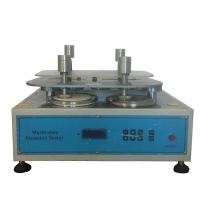
"Comparison of three test methods for wear resistance of shoe upper materials" introduces three commonly used wear test methods at home and abroad, namely GB/T3903.16-2008 "Test methods for shoe uppers, linings and inner pads. "Abrasion Resistance" (also known as Martindale Abrasion Method) for testing, but the American Standard ASTM D 3884-2009 "Standard test method for abrasion resistance of textilefabrics (TABER apparel)" (also known as TABER Abrasion Method) and ASTM D 3886-1999 "Standard test method for abrasion resistance of textile fabrics (inflated diaphragm apparatus)" (also known as STROLL wear-resistant method), using three test methods to test the wear resistance of shoe upper materials, and compare and analyze these three Advantages, disadvantages and differences between test methods.
Experimental conclusion surface:
(1) The three test methods have their own advantages and disadvantages. In actual testing, appropriate standard test methods .
(2) Three test methods were used to test, and the test results obtained were consistent. The order of wear resistance of four representative shoe upper materials was bovine shoe upper leather > PVC artificial leather > PU synthetic leather > Jiazhi cloth.
(3) The Martindale abrasion-resistant method is more suitable for the test of upper textile materials with low abrasion strength such as Jiazhi cloth, the TABER abrasion-resistant method is more suitable for the test of PU synthetic leather and other upper materials, and the STROLL abrasion-resistant method is more suitable It is suitable for testing upper materials with high abrasion strength .