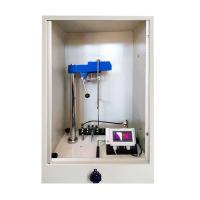
Pendulum hardness
Pendulum hardness is one of the static measurement methods of viscoelasticity, and the hardness values measured at different temperatures cannot be compared. The damping in the determination of pendulum hardness mainly comes from the absorption of mechanical energy by the paint film, that is, the loss modulus. The loss modulus is lower in both glass and rubber regions and higher at Tg. The hardness of the pendulum is related to the thickness of the paint film. When it is too thin, the substrate will be affected. The advantage of the pendulum damping test method is that it does not damage the coating film.
Common pendulum damping Testers include Konig pendulum, referred to as K pendulum; Persoz pendulum, referred to as P pendulum. These two Testers have been adopted by my country's national standard GB1730-88 "Determination of Pendulum Damping Test of Paint Film Hardness".
The pendulum damping hardness method uses two steel balls embedded under the cross bar of the pendulum to contact the coating film sample. The time (s) required for damping to a smaller angle is used to determine the hardness of the coating film, the K pendulum ranges from 6° to 3°, and the P pendulum ranges from 12° to 4°. The standard time for K to be placed on a polished flat glass plate is 250s±10s, and for P to be 420s. Both Testers are equipped with a photoelectrically controlled counting device to automatically record the damping time.
When the coating is measured with a pendulum damping Tester, the main cause of the swing attenuation is the absorption of mechanical energy by the coating. The swing attenuation time is inversely proportional to the loss modulus, and the loss modulus is used to indicate the ability of the coating to absorb mechanical energy. The loss modulus is highest in the T g transition region and low in both regions well above and below T g . Therefore, the loss modulus is relatively low in the glassy region and the rubbery region, and the swing decay time is long in these two regions, and the decay time of the soft rubber coating becomes longer. Generally, the harder the paint film, the longer the decay time; but it should be noted that the soft, rubber-like paint film also has a longer decay time.
A general conversion relationship cannot be established between the measurement results of these two pendulums. Usually only one of the pendulum instruments is specified for product testing. The results of the pendulum damping test are related to the environment during the test, and should be carried out under controlled temperature and humidity conditions without the influence of airflow. The thickness of the coating film and the material of the substrate also have an influence on the damping time.
The principle of the Swardrocker specified in ASTMD2134-66 (80) of the United States is the same as that of the pendulum damping Tester. A level gauge consisting of two flat metal rings connected at a distance of 25mm, with a glass level between the two rings. The ring is in contact with the coating film template, and heavy objects can be fixed along the edge of the ring. During the measurement, the ring rolls over a certain angle and then releases, swings on the coating film, and the value twice the number of swings required to swing to a certain, smaller angle indicates the hardness of the coating film. Use 50 swings on the polished flat glass as the calibration standard, that is, the hardness value of the glass is 100, and the hardness value of the coating film is less than 100, and the hardness of the coating film is expressed by numerical value.
The swing attenuation of the Swald Hardness Tester is caused by rolling friction and mechanical loss, and is related to film thickness and surface smoothness. This kind of Hardness Tester is more convenient to observe, relatively less error, faster testing speed, but poor sensitivity. It is suitable for the determination of soft coating films. The Sward pendulum instrument is suitable for tracking the hardness of air-dried coatings during the drying process, but its effectiveness for comparing the hardness of different coatings is limited.