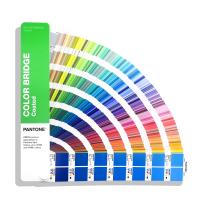
To design and establish a complete high-performance industrial paint color system, in addition to the required resins and additives, the following design principles must be followed when selecting pigments.
Variety as simple as possible
Reasonable selection of pigments, only through more than 10 kinds of single-color pastes or single-color paints, can be formulated into paints of different brightness, saturation, and hue. Reasonable simplification of the production varieties of colored paint not only saves inventory, but also an effective method to ensure effective saving of production.
Environmental friendly
It is required to choose environmentally friendly pigments that do not contain lead, chromium and cadmium, or meet the requirements of RoHS standards [lead (Pb) ≤ 1 000 × 10 -6, chromium (Cr6 + ) ≤ 1 000 × 10 -6, cadmium (Cd) ≤ 100 × 10 -6, mercury ≤ 1 000 × 10 -6] pigments.
Excellent performance
As a high-performance, high-quality topcoat, it is required to have excellent outdoor weather resistance while satisfying decorative properties. This requires the excellent performance of the pigment, no matter single color or multi-color, it requires light resistance 8, weather resistance 5, acid resistance 5, alkali resistance 5, and has a certain temperature resistance.
Good hiding power, strong tinting power
Pigments used as solid-color topcoats not only require excellent performance, but also require good hiding power and strong tinting power.
Tesco
As a conventional raw material, not only the chemical structure and chemical properties of the pigment itself are required to be stable, but also the production process is mature, the hue batch stability is good, and it is easy to purchase.
Easy to disperse, easy to formulate into various systems of coatings
Different pigments have different chemical structures and specific surface areas, and each pigment requires a reasonable selection of an appropriate dispersant to optimize the grinding dispersion. Compared with the whole paint production process, the grinding and dispersing of pigments is time-consuming and laborious, so it is necessary to choose pigments that are easy to disperse.
Excellent economy, comprehensive cost-effective
Pigment is also a relatively expensive raw material in the entire paint formulation, and its consumption and production loss of color paste are relatively large, so the overall cost performance needs to be considered when selecting pigments.
For more details, please refer to the full text of "Design and Establishment of Color System of High-performance Industrial Solid Color Paint" (Dai Hongyan)