Note: Before electrophoresis, it is forbidden to connect the power wire attached to the electrophoresis tank to the power supply of the electrophoresis instrument.
1. Wipe the two glass plates that are in contact with the glue surface with gauze and alcohol in one direction, then dry them, then put the cleaned gel glass on the glue frame, and the grooved glass is flushed out.
2. Make the sealing strip on the panel of the glue tank flat, close the panel of the glue tank, and fix it with four steering clips.
3. Fill the separation gel to about 2-3 cm from the upper edge.
4. Immediately add about 1cm of distilled water pressure (about 2.5ml of distilled water) to isolate oxygen and remove air bubbles.
5. Fill concentrated gel (1mm thick gel is about 7mL, 1.5mm thick gel is about 10mL), note: use filter paper to absorb the covering , and then pour glue.
6. Immediately insert the style grid.
7. After the glue is solidified, loosen the steering clip and take out the glass glue chamber.
8. Install the glass glue chamber: install the glass glue chamber on both sides of the body, and pay attention to make the two notches face each other. Insert the slant plate and clamp (take care that the large flat surface of the slant plate is in contact with the glass).
9. If only one piece of glue is running, replace the flat-concave glass with no glue running on one side, and the rest upward.
10. First add about 150 ml of buffer solution into the upper tank.
11. Then add buffer solution into the lower tank, up to the black sealing strip of the upper tank (that is, a maximum of 3200 ml of buffer ).
12. Unplug the sample grid.
13. Standardize the protein concentration of the sample to be determined.
①Before the samples and buffer are boiled, the protein concentration of each sample should be diluted or concentrated to 1mg/ml.
②Protein dye: Before binding to protein, the dye is yellow-brown, and after binding to protein, it is blue. The higher the protein concentration, the bluer the dye.
③ Dissolve 1mg of standard protein in 1ml of water to make a 1mg/ml standard protein solution.
14. The sample and mark are mixed with sample buffer according to the volume of 1:1, and boiled in boiling water at 100 degrees for three minutes. Pay attention to piercing the centrifuge tube or wrapping it tightly with a parafilm several times to prevent it from cracking.
15. Add sample.
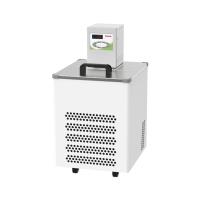
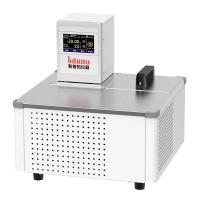
16. Connect the external constant temperature circulator, (it is strictly forbidden to connect directly to the tap water pipe)
17. Electrophoresis: Cover the lid, turn on the power of the electrophoresis instrument, select the appropriate electrophoresis parameters for electrophoresis,
18. End electrophoresis: After the electrophoresis indicator reaches the bottom of the tank, stop electrophoresis. First turn off the power of the electrophoresis instrument, then unplug the power lead, cut off the circulating cooling water, loosen the inclined plate, drain the upper tank buffer, take out the glass glue chamber, and gently insert it into the top of the groove glass with a very thin blade Use a thin blade to gently pry up the gap between the other glass and the upper glass.
19. Staining: Place the glass plate with glued plate flat on the table, and use a blade to cut along the glass strip from both sides.
20. Decolorization: Put the dyed film in the decolorization solution for decolorization. At the beginning, change the decolorization solution several times. Later, you can put more decolorization solution overnight. You can use the decolorization shaker to decolorize overnight until the background blue of the film becomes completely transparent. , you can see clearly separated bands.