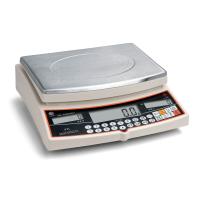
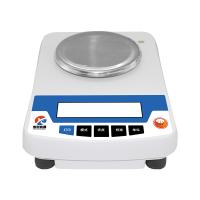
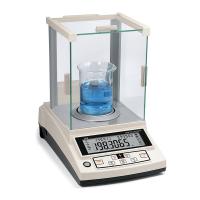
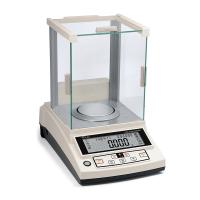
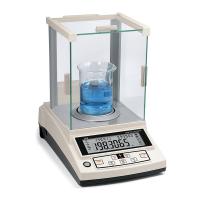
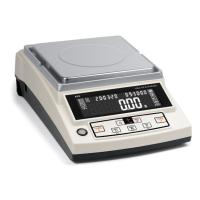
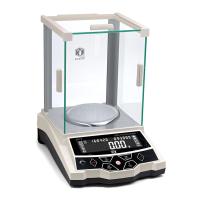
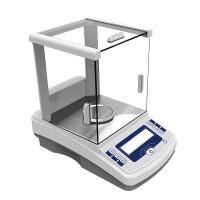
How to choose a suitable precision electronic balance in the laboratory? Precision electronic balance is a kind of precision electronic weighing instrument, which has many advantages such as fast display time, clear display, no elastic fatigue error, overload protection device, multi-level shockproof program, automatic balance fault detection system, etc., and is well received by the majority of enterprises It is popular with laboratory users and has a wide range of applications. So how does the laboratory choose the applicable precision electronic balance?
In order to help enterprises and laboratories choose the precision electronic balance that suits them. The following are two principles that should be followed when choosing a precision electronic balance:
(1) Requirements for weighing range. Choosing a precision electronic balance should not only look at its accuracy, but also look at whether the maximum weighing capacity meets the needs of the range. Usually take the maximum load plus a little insurance factor, that is, the common load can be relaxed, not the bigger the better.
(2) When choosing a precision electronic balance , we should consider whether it meets the accuracy requirements of weighing from the absolute accuracy (division value e) of the precision electronic balance . If you choose a balance with a precision of 0.1mg or a balance with a precision of 0.01mg, you must not generally say that you want a balance with a precision of one ten-thousandth or one hundred thousandth, because some foreign manufacturers use relative precision to measure the balance. The balance cannot meet the needs of users.
For example, in actual work, a Mettler precision electronic balance with an actual scale division value d of 1 mg, a verification scale division value e of 10 mg, and a maximum weighing of 200 g is used to weigh 7 mg objects . In this way, accurate results cannot be obtained: in the "JJG98-90 Non-automatic Balance Trial Verification Regulations", the maximum allowable error is of the same order of magnitude as the calibration scale graduation value "e", and the maximum allowable error of this balance is 1e , it is obviously not possible to weigh 7mg objects; it is not a good choice to weigh 15mg objects with this kind of balance, because the relative error of the test results will be very large, you should choose a higher-level balance, and some manufacturers have already Specifies the minimum weighing value. Therefore, we need to consider the accuracy level when purchasing and using precision electronic balances .