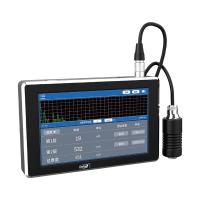
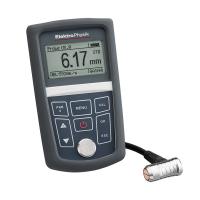
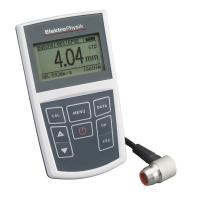
Part of the papermaking industry is pressure vessels, such as steaming balls, drying cylinders, and boilers. Their safe operation is related to the safe and normal production of the enterprise, which should be considered first by the enterprise. Whether these pressure vessels can operate safely is the most important thing. It is necessary to ensure that the equipment material is not damaged, such as no cracks, air bubbles, or the wall thickness of the material is still within the safe allowable range.
To find out whether there are bubbles, cracks in the material, or whether the wall thickness of the material has dropped below the safe allowable value, it is the best choice to use an ultrasonic Thickness Gauge. In order to achieve the above detection purposes, it is very important to use the ultrasonic Thickness Gauge correctly.
Is necessary.
1. Ultrasonic Thickness Gauge
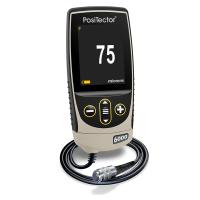
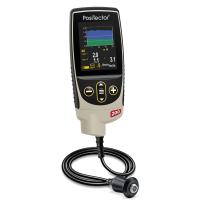
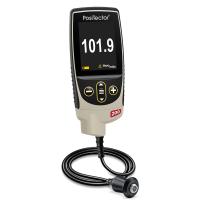
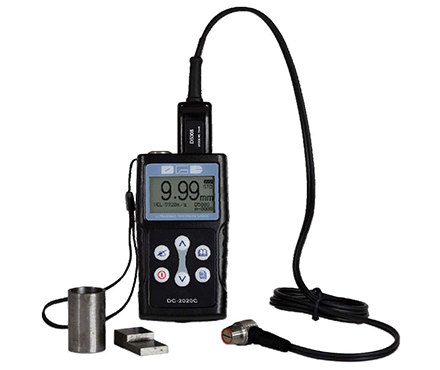
1.1 The ultrasonic Thickness Gauge consists of an integrated circuit, an ultrasonic transmitter (a small head), and a transmission and sensing wire connecting the power integrated circuit and the ultrasonic transmitter.
1.2 The Thickness Gauge uses the different propagation speeds of ultrasonic waves in various media, that is, from one phase medium to another phase medium, the performance of wave reflection will inevitably occur to "make wall thickness" measurement, that is, use wave The time difference of the reflection is used to determine the wall thickness of the metallic material.
1.3 Specifications and models of ultrasonic Thickness Gauges used in our factory: "Device". HCC-17, measuring range 1.2 ~ 200 mm (45 gauge), indication error: ±(S × 0.5%+0.1 mm), Equipped with two #5 small batteries.
2 verification method
2.1 First understand the wall thickness of the test object, find out the design and manufacturing data of the wall thickness, and then use the standard wall thickness block (configured with the instrument) for accuracy correction based on the data.
2.2 Clean the measured material points and shave off the rust blocks.
2.3 Spread clear oil on the detection point, and then paste the ultrasonic generator on the oil point, the instrument can display the data.
3 Notes on use
Use ultrasonic Thickness Gauge to detect material thickness, no harm to human body, simple and convenient (referring to HCC-17 ultrasonic Thickness Gauge. Powerful ultrasonic generator is harmful), easy to operate and read, but use some problem should be taken seriously.
3.1 The ultrasonic transmitter cannot be used in a high temperature environment (≤90°), because the high temperature will damage the "transmitter
3.2 The surface of the measured "point" metal material needs to be cleaned, otherwise false data will appear. Generally, the rounding "point" is controlled within a circular area of 10.
3.3 The purpose of oiling is to make the ultrasonic transmitter in good contact with the material to be tested and reduce wave loss. Therefore, too thick or too light is not suitable, general engine oil is enough, and this work link cannot be omitted. And direct measurement, otherwise there will be a large measurement error.
3.4 The data measured by the ultrasonic Thickness Gauge cannot be used as the final reliable basis, because there are many factors affecting the value, so the measured data is generally used as the first doubt point, and then the point is reviewed, identified and evaluated by conventional methods. Otherwise, a slight negligence will cause serious consequences.
3.5 Ultrasonic Thickness Gauge can not only be used to measure thickness, but also can be used to detect whether there are bubbles and cracks. Generally, if the value exceeds the normal value display, there may be bubbles and cracks, which need to be taken seriously.