In industrial production, metal parts need to be highly clean before surface treatment or spraying so as not to affect the subsequent process. In order to meet these high cleanliness requirements, the cleaning of parts is required and required to be effective and reliable. This requires that the concentration of the cleaning agent must be kept within an appropriate concentration range. It cannot be too high or too low. If it is too high, it will cause new pollution and increase the production cost; if it is too low, it will not meet the cleaning requirements. Only when these conditions are met can the subsequent treatment process not be adversely affected.

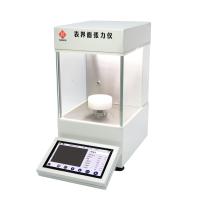
Therefore, the process of continuously monitoring the detergent concentration and adding the appropriate amount according to the consumption becomes particularly important. The SITA dynamic Surface Tensiometer measures surface tension based on the differential pressure method. During the test, air bubbles are formed by inserting into the capillary under the liquid surface, and a special sensor measures the pressure at the top of the capillary. The dynamic surface tension is calculated using the difference between the maximum and minimum bubble pressures and expressed using the calibration factor K.
σ=kx Δp
Δp=pmax-pmin
The bubble pressure is calibrated with purified water to calibrate the surface tension. The standard coefficient K depends on the automatic measuring equipment and does not depend on the life of the bubble. The dynamic surface tension ensures that the surfactant in the cleaning tank reaches a good concentration and is in a stable state during the production process. This method can save a large amount of surfactant, thereby eliminating redundant rinse steps. Not only that, but the test of residual surfactant concentration can also predict the cleaning quality.

The following are 2 practical examples of using a dynamic Surface Tensiometer to monitor the concentration of surfactants in a cleaning tank.
Case number one:

This is a kitchenware factory in Germany. Henkel cleaning agent is used in the production process. The cleaning agent for the cleaning pool will be replaced before June 24th, and new pool fluid will be used on June 24th.
test date | June 24 | July 1 | July 8 | July 15 |
Dynamic surface tension value (unit mN/m) | 52.9 | 62 | 65.4 | 65.7 |
The surface tension value is inversely proportional to the surfactant concentration, ie the higher the surface tension value, the lower the surfactant concentration.
The data shows that due to insufficient replenishment after depletion of the surfactant concentration, the depletion has exceeded 50% of the initial concentration (as indicated by the red line), and the cleaning ability has dropped sharply.

German SITA Surface Tensiometer
Case two:
This is the cleaning tank of a metal parts production plant in Germany. '

Left: Dynamic surface tension measured in a cleaning bath for cleaning metal pipes
Dynamic surface tension value (unit mN/m) | |
fresh pool fluid | 44.8 |
Pool fluid after a period of use | 63.4 |
Right: Dynamic surface tension measured in a cleaning bath for cleaning metal enclosures
Dynamic surface tension value (unit mN/m) | |
fresh pool fluid | 50.2 |
Pool fluid after a period of use | 63 |
The surface tension value is inversely proportional to the surfactant concentration, ie the higher the surface tension value, the lower the surfactant concentration.
The above data shows that due to insufficient replenishment after depletion of the surfactant concentration, the consumption has exceeded 50% of the initial concentration, and the cleaning ability has dropped sharply.
In the above case, through the continuous monitoring of the dynamic surface tension of the surfactant, the concentration of the surfactant in the cleaning tank can be clearly and reliably known, so as to reflect the cleaning ability of the cleaning tank. According to the data, an appropriate amount of surfactant can be added to ensure a stable cleaning effect, so as to achieve the optimization of the cleaning process.