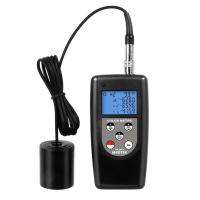
In the field of color measuring instruments, there are three common color measuring instruments, namely densitometer, Colorimeter, and Spectrophotometer . The following three measuring instruments are compared:
From the principle of operation, a densitometer measures light energy, not color, and it cannot accurately interpret color. However, the density value can directly reflect the relative amount of each component of the pigment , colorant, dye, and ink. The structure is simple, and it is especially suitable for process control.
Colorimeters measure color directly and are normalized to human perception in terms of accounting for color differences. In theory, the measurement of color is more accurate, but because the Colorimeter uses color filters to simulate the CIE tristimulus value function, it cannot be completely matched. Therefore, there is a principle error . In fact, the densitometer is more accurate than the Colorimeter in the process of controlling the color difference in production.
Spectrophotometers measure spectral data. The more spectral data, the more complete the definition of color, but it brings a relatively large and bulky . Now domestic Spectrophotometer s are generally used in laboratories. The measured data can be used to calculate the density value or color value .
Generally speaking, the density meter has a simple structure and is specialized; the Colorimeter has advantages in measuring color; the Spectrophotometer has the highest measurement accuracy, but its structure is large and complex, and it is not suitable for industrial production lines.