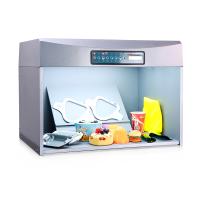
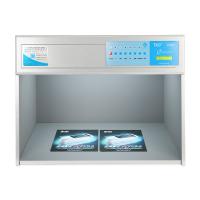
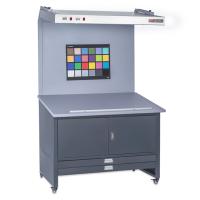
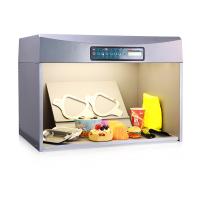
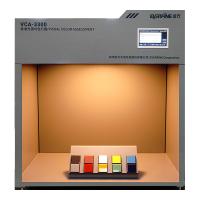
Standard light source observation environment means that the configured light source has a correlated color temperature of 5000K or 6500K, and the general color rendering index Ra is greater than 90. The illuminance in the area illuminated by the light source or the brightness of the illuminated surface of the light source meet the color observation requirements, and the illuminance or brightness uniformity is not Below 75%, there is no other color interference viewing environment.
ISO 3664:2009 stipulates five standard light source observation environment requirements from six aspects of illuminance/brightness, illuminance uniformity/brightness uniformity, correlated color temperature, color rendering index, chromaticity coordinates and background color, including reflective observation of printed matter (Pl) and transmission observation of transparent objects (T1) two strict comparison observation conditions, as well as the practical evaluation of printed matter (P2), projection observation of transmission small film (T2) and color display picture observation conditions. The article introduces the specific parameters of the two strict comparison observation conditions of reflective observation (Pl) of printed matter and transmissive observation (T1) of transparent object. These two observation conditions define the environmental condition parameters of the standard light source when comparing reflection and transmission observation between the replica and the original image or between multiple replicas. The standard light sources used are mainly D50 light source and D65 light source. Reflective observation conditions give specific requirements for the illuminance and uniformity of the standard light source corresponding to the illuminated area, chromaticity coordinates, correlated color temperature, and general color rendering index of the light source; And its uniformity, the chromaticity coordinates of the light source, the correlated color temperature, and the general color rendering index give specific requirements. The specific indicators of the observation environment of these two standard light sources are shown in Table 1.