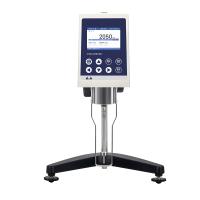
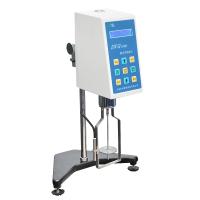
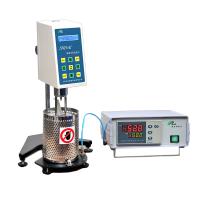
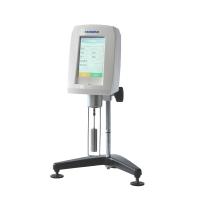
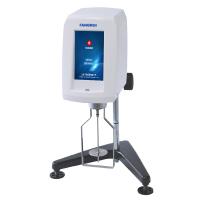
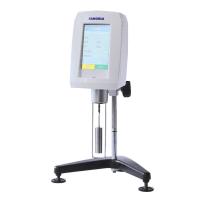
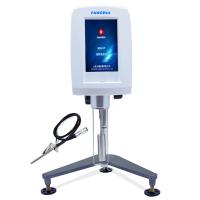
The Rotational Viscometer is a new type of instrument used to measure the viscosity of liquids. It is widely used to measure the viscosity of various fluids such as oil, paint, plastic, food, medicine, adhesive and so on. The performance of the Rotational Viscometer verified by us is better than the requirements of the national measurement verification regulations, especially the Testers of small and medium-sized enterprises have many problems in the process of use, and the data deviation of users is very large when testing samples.
1. The Rotational Viscometer should be checked periodically, and if necessary (the instrument is frequently used or in a critical state of qualification), an intermediate self-check should be carried out to ensure that its measurement performance is qualified and the coefficient error is within the allowable range, otherwise accurate data cannot be obtained.
Second, pay special attention to the temperature of the measured liquid.
Many users ignore this point and think it doesn’t matter if the temperature is slightly different. Our experiments have shown that: when the temperature deviation is 0.5°C, the deviation of the viscosity value of some liquids exceeds 5%, and the temperature deviation has a great influence on the viscosity. Therefore, special attention should be paid to keeping the temperature of the liquid to be measured constant near the specified temperature point, and it is better not to exceed 0.1°C for accurate measurement.
Third, the choice of measuring container (outer cylinder).
For the Rotational Viscometer, read the instrument manual carefully, and match the different rotors (inner cylinders) with the corresponding outer cylinders, otherwise the measurement results will deviate greatly. For a single-cylinder Rotational Viscometer, in principle, the outer cylinder radius is required to be infinite, and the actual measurement requires that the inner diameter of the outer cylinder, that is, the measuring container, is not less than a certain size. The experiment proves that especially when the No. 1 rotor is used, if the inner diameter of the container is too small, a large measurement error will be caused.
4. Correctly select the rotor or adjust the speed so that the indication value is between 20 and 90 divisions.
Rotational viscometer adopts dial plus pointer to read. Its stability and reading deviation are 0.5 divisions together. If the reading is too small, such as around 5 divisions, the relative error will be more than 10%. If you choose a suitable rotor or speed to use If the reading is in 50 divisions, then the relative error can be reduced to 1%. If the indication value is above 90 grids, the torque generated by the hairspring will be too large, which will easily cause creep and damage the hairspring, so the rotor and speed must be correctly selected.
5. Frequency correction.
The nominal frequency of domestic instruments is 50Hz, and the current power supply frequency in our country is also 50Hz. We use a frequency meter to test that the variability is less than 0.5%, so the general measurement does not need frequency correction. The correction formula is:
actual viscosity = indicated viscosity × nominal frequency ÷ actual frequency
Sixth, the depth of the rotor immersed in the liquid and the influence of air bubbles.
The rotary viscometer has strict requirements on the depth of the rotor immersed in the liquid, and it needs to be operated according to the instructions (some double-cylinder instruments have strict requirements on the amount of liquid tested, which needs to be measured with a measuring cylinder). There are often air bubbles when the rotor is immersed in the liquid. Most of them will float up and disappear after a period of time after the rotor rotates. Sometimes the air bubbles attached to the lower part of the rotor cannot be eliminated. The existence of air bubbles will bring large deviations to the measurement data, so tilt Slowly dipping the rotor is an effective method.
7. Cleaning of the rotor.
The measuring rotor (including the outer cylinder) should be clean and free of dirt. Generally, it should be cleaned in time after measurement, especially after measuring paint and adhesives. Pay attention to the cleaning method, soak it in a suitable organic solvent, and never use a metal knife to scrape hard, because serious scratches on the rotor surface will cause deviations in measurement results.