This article is excerpted from Cheng Liying's "Analysis of Influencing Factors on the pH Value Test Results of Chemical Products", mainly analyzing the four influencing factors that affect the pH value test results of chemical products, and correspondingly put forward solutions, as follows:
1. The influence of distilled water on the measurement results when preparing the samples to be tested
During the detection process, according to the description of the standard, it is necessary to prepare a 1% or other concentration of aqueous solution with distilled water. The distilled water used for testing complies with GB/T6682 "Analytical Laboratory Water Specifications and Test Methods". When the prepared solution to be tested is close to neutral, the pH value test result of the prepared product solution is affected by the pH value of the distilled water.
This is because on the one hand, because the ion concentration in pure water is very low, and the reference electrode salt bridge solution selects KCl with a high concentration of 3mol/L, the concentration difference between them is relatively large, which causes the change and instability of the liquid junction potential. The potential of the Ag/AgCl reference electrode itself depends on the concentration of Cl - . When the concentration of Cl - changes, the potential of the reference electrode itself will also change accordingly, causing the displayed value to drift.
On the other hand, the liquid junction of the compound electrode is very close to the pH-sensitive glass bulb. The salt bridge solution leaked from the liquid junction first gathers around the sensitive bulb, changing the total ion concentration near it. The measured value is only the sensitive bulb. The pH value near the bubble is changed and cannot reflect its true pH value. With an ordinary glass pH meter, the air in the measurement environment has the greatest influence. Distilled water is exposed to carbon dioxide in the air during storage, and is easily affected by CO 2 absorption, resulting in a decrease in pH. Pure water that has been placed for a long time is weakly acidic due to dissolved carbon dioxide.
Our distilled water absorption test for carbon dioxide shows that the 1# beaker is not heated to catch carbon dioxide, its pH=6.5; =7.1. It can be seen that the effect of carbon dioxide on the pH value of distilled water is very obvious. In order to reduce its impact on the experimental results and improve the accuracy of pH testing, the laboratory can use freshly boiled and cooled distilled water to reduce the impact of carbon dioxide, that is, boil the distilled water for 30 minutes, and then use it to prepare the test solution after cooling.
2. The influence of the stirring method of the prepared sample to be tested on the measurement results
Conventional pH meter and pH test paper detection methods are suitable for the determination of the acidity and alkalinity of aqueous solution. Drilling mud products are mostly in the form of powder and granules, and the implementation standards require that they be made into an aqueous solution to test the pH value. The solubility of the solution is also a factor that affects the value, that is, the stirring and dissolving process of the solution will affect the pH value test result. According to the performance of the product itself, the pH of the newly prepared solution is often low, and the pH value of the solution increases continuously with the dissolution process of the sample, and when the product is completely dissolved after stirring, the pH value is close to stable. Therefore, the standard should specify the stirring and dissolving time, stirring methods such as manual stirring, magnetic stirring or stirring paddle stirring, so as to ensure the reproducibility of the data, reduce the deviation of understanding of the standard caused by vague description, and avoid possible misinterpretation of the test. The results were controversial.
3. Defects in the detection method in the standard have an impact on the measurement results
Due to the variety of chemical products tested daily, the composition is complex, some products are oil-soluble, insoluble in water, and the hydrogen ions in the sample are not dissolved in the water, so neither the acidity meter nor the pH test paper method can detect the pH value of the sample, nor can it It cannot reflect the real pH value of the sample.
Some products contain polymer components, which will swell into a gel state after being formulated into an aqueous solution; some types of chemical products need to be added with an appropriate amount of film-dissolving agent when formulated into an aqueous solution; the color of the aqueous solution of some products is close to dark brown, and the solution The color coverage does not reveal the discoloration of the test paper itself. The standard should provide a detailed description of the testing operation for the nature of the tested samples, so as to avoid disputes on the testing results.
4. The mismatch between the detection method and the accuracy selection in the standard will affect the measurement results
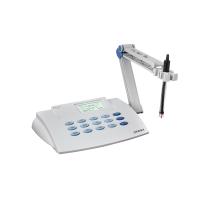
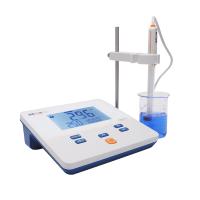
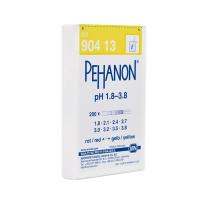
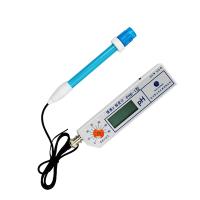
The index requirements for the pH value of chemical products are determined according to the needs of on-site production. The accuracy of the test data is required to be accurate to 0.1, and some are required to be accurate to 1. The wide range of pH test papers can only be accurate to 1, while the pH meter and precision test paper can be accurate to about 0.1 and 0.5 respectively. Because there is a certain data difference between rough measurement and fine measurement methods, if the standard requires an accuracy of 1 to meet the requirements, extensive pH test paper should be used for measurement, because the measurement results of extensive test paper do not require strict requirements on experimental conditions. If you choose precision test paper, because the measured data is more easily affected by the experimental conditions and the measurement range of the test paper, unnecessary precision requirements will bring difficulty in data judgment. Therefore, in the process of formulating standards, the matching of experimental methods and the accuracy of pH indicators should be fully considered. In particular, corporate standards are often not rigorous enough in the process of formulating, which brings unnecessary judgment errors to the testing work.
According to the above analysis, in the inspection process of chemical products, it is concluded that the detection of pH value is often affected by the following factors , and corresponding suggestions are put forward.
1) The influence of the distilled water used to prepare the samples to be tested on the measurement results: it is mainly caused by the dissolution of carbon dioxide in the air in the water. In the laboratory, freshly boiled and cooled distilled water can be used to reduce the influence of carbon dioxide, that is, after the distilled water is boiled for 30 minutes , and then used to prepare the detection .
2) The influence of the stirring method of the prepared sample to be tested on the measurement results: Since the stirring and dissolving will affect the pH value test results, it is recommended that the standard should specify the stirring and dissolving time, manual stirring, magnetic stirring or stirring with paddles Etc. stirring method, in order to ensure the reproducibility of the data, reduce the deviation of the understanding of the standard caused by the vague description, and avoid possible disputes about the test results.
3) Defects in the detection method in the standard have an impact on the measurement result: Since the pH value of the sample cannot be detected according to the standard operation, it is recommended that the formulation of the standard should select the detection method according to the properties of the sample to be tested, such as color and solubility, and conduct detailed testing Operation description to avoid disputes on the test results .
4) The mismatch between the detection method and the precision selection in the standard will affect the measurement results: due to certain data differences between the rough measurement and the fine measurement methods, unnecessary precision requirements will bring difficulty in data judgment. In the process of formulating inspection standards, especially enterprise standards, the matching of experimental methods and the accuracy of pH indicators should be fully considered, which may lead to unnecessary disputes over test results.