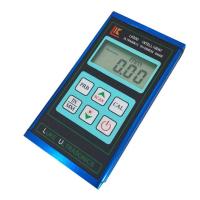
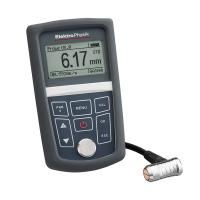
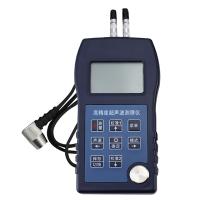
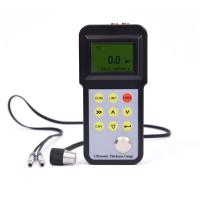
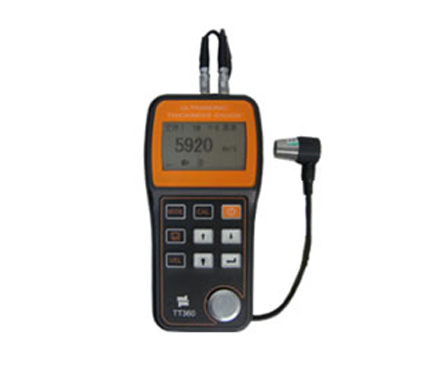
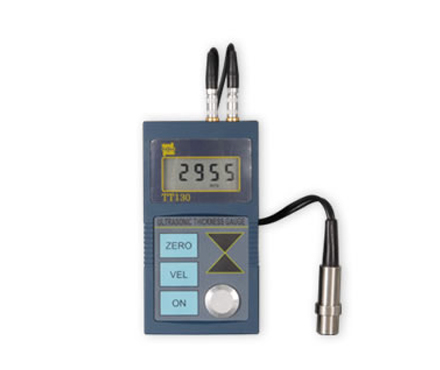
According to the principle of ultrasonic thickness measurement, it can be deduced that the factors affecting the accuracy of thickness measurement should at least include several aspects such as the quality state of the inside and outside of the measured object, instrument performance, coupling agent properties, and human factors in the operation process. Ultrasonic Thickness Gauge is used to measure the thickness of carbon steel plate and 18-8 stainless steel pipe with clean surface at room temperature, and then measure the test plate with oxide layer and dirt layer on the surface of the same material. The measurement results are shown in Table 1. Table 1 Comparison of the measured data before and after the change of the external quality state The following conclusions can be drawn by comparing the measurement results: 1.1.1 The oxide layer and oil dirt layer on the back of the probe contact have no obvious influence on the measured value of the wall thickness; 1.1.2 The probe contact The oxide layer and grease layer on the surface have an effect on the reading of the measured value of the wall thickness.
Factors affecting measurement of Ultrasonic Thickness Gauge

Guess you like it


Relevant knowledge
- 1Principle, Function, Application and Selection of Multifunctional Ultrasonic Thickness Gauge
- 2Principle, Application and Type Selection of Ultrasonic Thickness Gauge
- 3Principle, Application and Type Selection of Ultrasonic Thickness Gauge
- 4Principle, Application and Selection of Ceramic Ultrasonic Thickness Gauge
- 5The Principle, Application and Precautions of Copper Plate Ultrasonic Thickness Gauge
- 6Application, Principle Introduction and Precautions for Selection of Pipeline Thickness Gauges
- 7Principle, Characteristics and Application of FISCHER Coating Thickness Gauge
- 8Principle and Application of Ultrasonic Thickness Gauge
- 9Application of Film Thickness Gauge in automobile paint thickness measurement
Author:
李翔
Source:
影响超声波测厚准确性的因素
Products