Abstract: Starting from the definition of volatile organic compounds (VOC, Volatile Organic Compound) and the harm of VOC to the environment and human body, several international standard measurement methods and principles are introduced, and the application of gas chromatography in the determination of VOC, Qualitative and quantitative analysis methods and factors affecting the measurement results clarified the significance of research on VOC test methods in coatings.
Key words: volatile organic compounds (VOC); gas chromatography
0 Preface
VOC is the abbreviation of Volatile Organic Compound (volatile organic compound). The current international definition of VOC in coating products refers to any organic liquid or solid that can evaporate by itself under the normal temperature and pressure of the atmosphere in contact with the coating product. In my country, any organic compound in coating products with a boiling point not greater than 250 °C under normal pressure is usually defined as a volatile organic compound (VOC) [1].
VOC is a class of organic pollutants that are ubiquitous in indoor and outdoor air and have complex components. Its outdoor sources are mainly automobile exhaust and exhaust gases released by industrial enterprises; indoor sources mainly include: building materials, interior decoration materials, organic coatings, cleaning products, and spices, deodorants, etc. The appearance of these items has caused indoor air pollution. pollution, and they all occur in micro and trace amounts.
Most VOCs contain odorous groups, such as carbonyl, carboxyl, hydroxyl, etc., which not only produce odor pollution to the air, but also are harmful gases, which can directly endanger human health. VOCs are mostly fat-soluble solvents and thinners, which can easily enter the nerve center through the lungs and blood through human respiration, and then produce a strong anesthetic effect on the central nervous system. At this time, the human body will show trance, drowsiness and drowsiness. ; If the amount of inhaled VOC is too much, there will be systemic symptoms such as dizziness, tinnitus, pale complexion, nausea and vomiting, and even muscle spasms. Studies have shown that if exposed to VOC mixed gas, when the concentration is 25 µg/m3, headache, drowsiness, fatigue, and mental confusion will occur; when the concentration reaches 35 000 µg/m3, coma, convulsions and even death may occur. Long-term exposure to VOCs can easily lead to a variety of chronic diseases and malignant tumors, such as memory loss, neurasthenia, asthma, etc., and even cause fetal malformations, leukemia, and cancer in severe cases. Volatile organic compounds are the key to current scientific research because of their damage to human health. Therefore, in-depth research on VOC pollution has far-reaching significance for improving indoor air quality and improving people's health [2-5].
In order to reduce the harm and pollution caused by VOC, some developed countries abroad are committed to the research of low-VOC products, and have advocated zero-VOC for more than ten years, and products have come out. In 2001, my country established a mandatory limit standard for the VOC content of interior wall coatings (GB18582-2001) [6], and in 2005 introduced a new environmental protection industry standard (HJ/T201-2005) [7], promulgated in 2008 The newly revised mandatory limit standard GB18582-2008 has put forward higher requirements for the VOC content in water-based paints. The implementation of these standards has promoted the development of my country's interior wall paints in the direction of harmlessness. At present, some domestic scientific research institutions and production companies are also developing low-VOC and zero-VOC latex paints, and some have made breakthroughs. More and more low-VOC latex paints are appearing on the market. For these low-VOC or even For latex paint with zero VOC, the error in the result of VOC detection according to the original standard is very large, and the measurement error is large when the VOC content in the paint product is low.
Therefore, choosing a suitable method to accurately characterize the VOC content in paint products is a problem to be solved at present. The detection technology of volatile organic compounds in indoor air with simple operation, high sensitivity and high accuracy has been developed, and the indoor volatile organic compounds have been systematically developed. Influencing factors, distribution rules and pollution control of sexual organic compounds, and continuously improve the level of pollution monitoring and control, so as to improve the air quality of human living environment [3-4].
1 Research status of VOC testing methods
Coating products with different ranges of VOC content can use different methods to determine their VOC content. With the advancement of science and technology, more and more coatings and resin emulsions with low VOC content appear on the market, which requires a method for detecting low VOC content with small determination errors [8].
At present, there are four commonly used international standards for determining VOC content:
ISO 11890-1, Paints and varnishes -- Determination of volatile organic compound (VOC) content -- Part 1: Difference method. When the VOC content in the expected coating product is greater than 15% (mass fraction), the method of ISO11890-1 can be used for determination. This method is mainly used for the inspection of conventional solvent-based coating products with large VOC content. The following ASTM D3960-02 method is basically consistent with it in principle. The principle is to mix the components in the paint product in the correct mass ratio or volume ratio according to the regulations, and dilute with a suitable diluent if necessary, and use it as a spare sample for determination. Determine the non-volatile content, water content and exempt compound content in the spare sample respectively, and calculate the VOC content with a suitable formula [1].
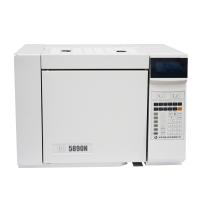
ISO 11890-2, Paints and varnishes — Determination of volatile organic compound (VOC) content — Part 2: Gas chromatography. When the VOC content in the expected coating product is between 0.1% and 15% (mass fraction), the method of ISO11890-2 can be used for determination. This method is mainly used for the inspection of coating products with low VOC content, such as high solid content coating products. The principle is to mix the components in the coating product in the correct mass ratio or volume ratio according to regulations, and use gas chromatography to separate the organic volatiles and exempt compounds in the spare samples. The volatiles (including organic volatiles and exempt compounds) in the spare samples are first qualitatively analyzed, and then the amount of each organic volatiles and exempt compounds in the spare samples is quantitatively determined by the value of the peak area using the internal standard method. Use a suitable method to measure the water content in the sample, and use a suitable formula to calculate the VOC content in the coating product [9].
ISODIS17895, Paints and varnishes - Determination of volatile organic compound content in water-based latex paints, ie determination of VOC by headspace sampling. When the VOC content in the expected coating product is between 0.01%~0.1% (mass fraction), it can be determined by this method. The boiling point of volatile organic compounds determined by this method can reach up to 250 ℃, which is mainly used to determine the VOC content is very low. VOC content in water-based latex paint samples. The principle is: use a headspace sampler with a septum-sealed vial and analyze it with a gas chromatograph, preferably with an automatic sample changer. When the sample is heated to 150 °C during sample injection, the volatile organic compounds in it are completely vaporized and transferred to the non-polar capillary separation column. The retention time of tetradecane (boiling point 252.6 °C) is used as the integration end point. The peak area integration of all components before. By measuring the diluted samples without the stock mixture and the diluted samples containing 4 kinds of stock mixtures with different mass fractions, all of them were calibrated to the peak area of 1 mg sample, and the average value was calculated for the added stock mixture. The amount of the amount of linear regression, the slope of the regression line and the intercept of the line on the ordinate to calculate the VOC content in the sample [1]. ASTMD3960.02 Determination of volatile organic compound (VOC) content in paints and related coatings [1].
At present, more accurate methods for analyzing VOCs include: gas chromatography (GC), gas chromatography-mass spectrometry (GC-MS), fluorescence spectrophotometry, and membrane-introduced mass spectrometry [10]. method, off-line supercritical fluid extraction-GC-MS method[11] and pulse discharge Detector method[12], among which GC and GC-MS are the most widely used. For example, Zhang Lin [13] used the adsorption-thermal desorption/GC-MS method to measure VOC in three typical indoor environments that are closely related to people: offices, school classrooms, and residential buildings, and found that indoor smoking and decoration levels are relatively high. Compared with non-smoking and simple decoration places, the aromatic hydrocarbon pollution is serious; Chen Yudong et al. [14] found through experiments that the large amount of decoration materials (especially boards, paints and polyurethane paints containing urea-formaldehyde resin adhesives) in room decoration volatilizes more VOCs, causing formaldehyde, benzene, xylene, etc. in the indoor air to seriously exceed the standard [3].
2 Determination of VOC by gas chromatography
The separation and analysis of complex and unknown samples is one of the hot spots and difficulties in analytical chemistry. Gas chromatography is a common tool for the analysis of volatile substances, and it is the basic separation method combined with mass spectrometry and infrared[15]. The analysis of volatile organic compounds occupies an important position in environmental research and evaluation, and many toxic organic compounds are volatile. Among the 114 organic priority detection substances stipulated by the US EPA, there are 45 volatile components, accounting for 40%. Gas chromatography is almost the only way to separate and analyze such components [16].
Gas chromatography mainly uses the differences in the boiling point, polarity and adsorption properties of substances to achieve the separation of mixtures. When gas chromatography is used to determine low mass fraction VOC, qualitative analysis can be carried out according to the retention value, and quantitative analysis can also be carried out by peak area. Qualitative analysis of gas chromatography can be qualitative by using known pure substance control, or using literature data such as relative retention value, retention index, etc., and can also be qualitative by using a method combined with other instruments. Gas chromatography can separate mixtures into individual pure components, while infrared, nuclear magnetic resonance, mass spectrometry, etc. can identify the structure of unknowns, but the identified unknowns are required to be pure components. Therefore, it is an effective means to solve the qualitative problem of unknowns by combining these two methods and giving full play to their respective strengths [17].
The quantitative analysis of gas chromatography usually adopts the peak area quantitative method. Commonly used quantitative methods are: (1) external standard method (standard curve method), which has the advantages of simple operation, convenient calculation, and high requirements for the stability of sampling technology and chromatographic conditions; (2) internal standard method. As an internal standard, a certain pure substance is added to an accurately weighed sample, and the content of the component to be tested is calculated according to the mass of the internal standard and the sample and the peak area on the chromatogram. The advantage of the internal standard method is that it is quantitatively accurate, the operating conditions do not need to be strictly controlled, and the injection volume does not need to be very accurate. The disadvantage is that the sample and the internal standard must be accurately weighed each time it is analyzed; (3) the normalization method, The advantage of this method is that the analysis result has nothing to do with the accuracy of the injection, and the change of operating conditions has little influence on the result. The normalization method requires all the components in the sample to be peaked, and the correction factor of each component is known or measured, while the sample in the paint analysis is more complicated, and there may be unidentifiable impurity peaks in the solvent. Therefore, it is not suitable for coating analysis; (4) the standard addition method (also known as the peak area increase technique) is to add the component to be measured under the absolutely same conditions such as sample volume, vapor phase temperature, and gas phase operating parameters. Pure method for sample analysis. The content of the components to be measured in the original sample can be calculated from the increase in the peak area of the sample caused by adding the substance to be tested in the sample. NBCHAO reminds you: Adding the substance to be tested cannot change the matrix, otherwise it will affect the activity coefficient of the component to be tested, destroy its quantitative relationship, and get wrong quantitative results. The sample preparation process of the standard addition method is similar to the internal standard method, but the calculation principle is completely derived from the external standard method, and the quantitative accuracy of the standard addition method should be between the internal standard method and the external standard method. For the complex multi-component VOC system in latex paint, the VOC in latex paint is divided into two parts: low-boiling VOC components and high-boiling VOC components. The methods of qualitative and quantitative analysis used by the two are different [17].
When using gas chromatography to determine VOC, the selection of Detector, selection of chromatographic column, selection of sampling method, selection of chromatographic conditions, determination of initial operating conditions and other factors will affect the detection results and the selection of detection methods. The core of gas chromatography is the chromatographic column, and the temperature of the chromatographic column directly affects the distribution coefficient K of components between the stationary phase and the mobile phase. Therefore, the selection of column temperature is one of the most important issues in gas chromatographic analysis. The selection principle of the column temperature is: under the premise that the difficult-to-separate components are well separated, the retention time is suitable, and the chromatographic peaks are not tailed, the column temperature should be as low as possible. At the same time, the selection of column temperature also needs to consider the boiling point of the sample. Higher column temperature should be used for mixture with high boiling point, and lower column temperature should be used on the contrary [18]. Gas chromatographic conditions depend on the product being analyzed and should be optimized with known mixtures for different samples. The injection volume and split ratio should be adjusted so that the sample volume does not exceed the column capacity and the response signal is within the linear range of the Detector [8].
At present, the domestic and foreign requirements for the standardization of the quality and testing methods of coating products have greatly promoted the application of gas chromatography analysis technology in coatings.
3 Conclusion
Several test methods for VOC in coatings introduced in this paper are the basis and international standard for current VOC test work. Due to its high detection sensitivity and wide application range, gas chromatography plays an important role in the determination of VOC. Reducing VOC is the development direction of coatings. For this reason, our country has invested a lot of manpower and material resources, especially in terms of standards, it has entered the international standard ISO14020. To this end, scientific researchers should conduct in-depth research work to cooperate with national initiatives [19].
references
[1] Peng Jufang. Definition and determination method of VOC in paint products [J]. Coating Industry, 2004, 34(1): 30-33.
[2] Zhang Shaomei, Shen Jinming. Research on Indoor Volatile Organic Compounds (VOC) Pollution[J]. Cleanliness and Air Conditioning Technology, 2003(3): 1-4.
[3] Li Chen, Liang Bing, Shi Yanping, et al. Pollution and detection methods of volatile organic compounds in indoor air[J]. Analytical Testing Technology and Instruments, 2005, 11(1): 39-45.
[4] Zhang Xintang, Wang Shu, Cheng Xiumin, et al. Discussion on the determination method of volatile organic compounds in waterborne coatings [J]. Coating Industry, 2002, 32(11): 42-44.
[5] 章博,庞奇志. 室内挥发性有机化合物污染及预防措施[J].中国环保产业,2004(5):22-23.
[6] 全国涂料和颜料标准化技术委员会. GB18582-2001,室内装饰装修材料内墙涂料中有害物质限量[S].北京:中国标准出版社,2001.
[7] 国家环境保护总局环境发展中心. HJ/T201-2005,环境标志产品技术要求水性涂料[S].北京:中国环境出版社,2005.
[8] 尹建武,曹磊.不同 VOC 含量的涂料应选择相应的检测标准[J].中国涂料,2003,18(5),45-46.
[9] 陈立军,陈丽琼,张欣宇,等.气相色谱分析法在涂料中的应用[J].涂料工业,2007,37(7):54-56.
[10] 沈学优,罗晓璐.空气中挥发性有机物监测技术的研究进展[J].环境污染与防治,2002,24(1):46-49.
[11] 游静,尤进茂,王国俊.离线超临界流体萃取和气相色谱质谱联用对实验室内空气中气相有机污染物的测试[J].分析化学,1998,26(7):86-89.
[12] GREMAUD G,WENTWORTH W E,ZLATKIS A,etal. Windowless pulsed-discharge photoionization Detector-application to qualitative analysis of volatile organic compounds[J]. Journal of Chromatography A,1996,724(1):235-250.
[13] 张林,袭著革,宋丽香.吸附-热解吸/GC2MS 法测定室内空气中有机污染物[J].中华劳动卫生职业病杂志,1998,16(6):
362- 363.
[14] 陈宇栋,沙春霞,张静.室内空气中主要挥发性有机物污染状况调查[J].中国卫生监督杂志,2002,9(2):84-85.
[15] Xue Xingya. Research on Theoretical Basis of Gas Chromatographic Separation and Analysis of Complex and Unknown Samples [D]. Dalian Institute of Chemical Physics, Chinese Academy of Sciences, 2004, B988003803.
[16] Wang Yonghua. Analysis principle and technique of headspace gas chromatography[J]. CHINA Environmental Monitoring, 2006, 22(2): 7-13.
[17] Du Bin, Zhang Zhenzhong. Modern chromatography technology [M]. Henan Medical University Press, 2001: 213-216.
[18] Zhang Zhijie. Development of gas chromatography analysis method [J]. Liaoning Chemical Industry, 2006, 35(5): 302-305.
[19] Yao Juan, Tang Jun. VOC test and control [J]. Chemical Standards, Metrology and Quality, 2004, 24(3): 31-32.