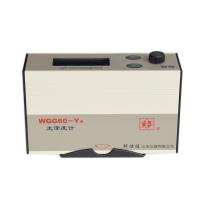
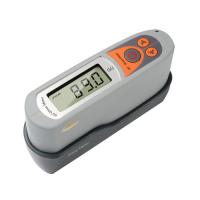
This paper introduces the measurement method of surface gloss of non-metallic materials. Based on the 20°, 45°, 60°, and 85° specular gloss methods, discuss their measurement principles, methods, accuracy and correction. Taking the ss-75 photoelectric Glossmeter formed by the 45° specular gloss method as an example, the application of this method in gloss measurement on the surface of building materials is explained.
I. Overview
The surface of metal and non-metal materials undergoes different processing processes such as grinding, polishing, rolling, and brushing, which will condense and present different degrees of reflection. The so-called "gloss" is to reflect the reflective ability of the surface of an approximate mirror surface. It is one of the appearance attributes of an object.
In the past, the measurement of object surface gloss was judged by human eyesight, which was partly subjective. With the development of international trade, the luster of the appearance of export materials is required to meet certain specifications. For example, three stones (marble, granite, terrazzo), porcelain and porcelain 1), paints and varnishes 2), plastic decorative panels, waxed paper and some metal panels 3) in building materials, etc., can all find corresponding Gloss inspection standard. Most of these standards are used to determine the surface gloss of objects by using instruments.
Quantitative detection and calculation of object surface gloss can also be used to study the ability of the surface to resist corrosion by acids, alkalis and substances in the atmosphere. According to the characteristics of the surface of the object and the distribution of the reflected light in space, the meaning of various surface gloss can be specified.
1. Specular gloss
For a certain light source and angular aperture of the receiver, the ratio of the reflected luminous flux in the specular direction of the sample surface to the incident luminous flux. (The incident luminous flux generally refers to the reflected luminous flux of the specified standard plate under the same conditions).
2. Image identification glossiness:
The sharpness of the outline of an object (referring to a discriminator with a certain shape) reflected by the surface of the sample. This definition and measurement method is usually used for porcelain with metal facings.
3. Brilliance
For a low-gloss sample surface, the glossiness of the specular surface at a large incident angle (about 85°).
4. Reflection blur
For metallic or high-gloss surfaces, the amount of diffuse scattering of reflected light near strong regular or specular reflections. It is divided into narrow-angle blur (2° angle to the mirror) and wide-angle blur (5° angle to the mirror).
2. Specular gloss method
1. Method induction
(1) Measured with 20°, 45°, 60°, 85° geometric conditions
(2) Application examples of various measurement geometric conditions are listed in Table 1
Application examples for various measurement geometries
| Classification of Determination Methods | 1 | 2 | 3 | 4 |
| method name | 85° mirror gloss | 60° mirror gloss | 45° mirror gloss | 20° mirror gloss |
| Application examples | paper and others | paint surface | ceramics and enamel | paint surface |
| scope of application | Use the 60° method. Specimens with a gloss level below 10, or gloss measurements on specimens with "brilliance" and approximate grazing incidence | It is more suitable to use this method to measure samples whose glossiness is lower than 70 | The gloss measurement reflects the resistance of the surface of the object to the corrosion of acids, alkalis and atmospheric substances | Measure the surface gloss of the sample with a gloss higher than 70 by the 60° method. |
2. Measuring device
(1) Structural components of the instrument
The device consists of an incandescent lamp source providing an incident beam, a positioning tool for the sample surface, and a receiver for receiving the cone-shaped beam reflected by the sample surface. The receiver should be a photosensitive element sensitive to visible radiation.
(2) Geometric conditions
The axis of the incident beam is at a specified angle to the normal to the specimen surface, and the axis of the receiver shall be the axis of the specular reflection of the axis of the incident beam. A flat polished black glass or other front surface mirror is placed at the position of the sample, and the image of the light source is formed in the center of the receiving field stop. The length of the illuminated area of the specimen shall be equal to or less than 1/3 of the distance from the center of this area to the receiving field stop.
The angle deviation between the incident beam axis and the receiver axis is allowed to be 0.1° from the nominal value of the geometric angle. Source and receiver dimensions and tolerances are shown in Table 2. The angular size of the field stop of the receiver is measured from the center of the receiving lens in the collimated light device in Fig. 1, and measured from the center of the measured area in the converging light device in Fig. 2 . The angular size tolerance of the light source and receiver field stops shall ensure that the reading error produced by each point of the scale is not larger than one gloss unit.


( 3 ) Vignetting
Any instrument has only one aperture stop, which determines the cross-section of the beam incident on the sample surface. In the incident beam, all rays separated from each other fall within the range determined by the field angle of the light source, and in the received beam, all rays separated from each other fall within the range determined by the field angle of the receiver. and are given equal weight by the measurement mechanism. If the aperture of the lens or opening is too small, vignetting will occur.
If the geometric conditions of the instrument specified in (2) are satisfied, the vignetting phenomenon can be eliminated.
( 4 ) Spectral Correction
Specular reflection is generally spectrally non-selective. Strict control of the spectral characteristics of the light source and receiver is only necessary when measuring highly chromatic and low-gloss specimens, or those that produce a significant color shift from the specular reflection of the color of the incident light.
In this case, the combination of light source, photocell and color filter should be corrected to give a spectral sensitivity similar to the standard illuminant C or D given by cI E. . The CIE photopic luminous efficacy function of the trade-off.
( 5 ) Diffuse Correction
在低光泽试样表面为了准确地测定镜面光泽度, 有必要进行漫射修正。测量修正值时,光线垂直照明试样, 用( 2 ) 规定的接收孔径, 在相应的几何条件的入射角方向上进行观测。
计算修正值时, 按照ASTM E 97 方法, 测量试样的45°/0方向反射率, 乘上被完全漫反射率。反射而以相同接收孔径接收的光通量有效部分。然后从光泽计读数中减去修正值。
从称心白色漫反射体散射而进入接收孔径的光通量中, 给出各种几何条件下光泽度的指示值。见表3

(6)偏振
如入射光通址是非偏振的,接收器对于反射光中的偏 振是不灵敏的。
(7)测量机理
接收器的测量机理将给出比例于通过接收孔径的光通 址的数字指示,误差在满标尺读数的1%之内。
三、参考标准
1.原始标准
高度抛光平的黑玻璃,平面度在每厘米2个干涉条纹以内,其折射率为1.567,指定对于各种儿何条件的镜面光泽度为100,作为测量非金属材料表面光泽度的原始标准。不同折 射率的黑玻喘,光泽度可由菲涅耳公式计算。若折射率有微小的 差别,则光泽度是折射率的线性函数。但是对于不同的几何条化。例如,折射率变化0.001,在 20°、45°、60°、85°几何条件 下,光泽度的改变量为0.27、 0.24、0.16、0.016。表4列出 了不同几何条件下,黑玻璃的折 射率及相应的光泽度。

用液体表面作为光泽原始标准, 它的光泽度是通过液体折射率和入射角, According to菲涅耳e>公式计算的。 但它受外界条件影响相当敏感, 因而放弃采用。
2. 工作标准
陶瓷砖、 玻璃塘瓷、 黑玻璃、 砂皮和其他有均匀光泽的材料, 都适合于做工作标准, 但 需要有良好的平面性、 均匀性和稳定性。 工作标准在指定的区域和照明方向, 应定期地与原 始标准作校对以检验精度的稳定性。 每种几何条件至少要具备不同光洋度的两块工作标准板。
3.标准板的精度
在原先校正的那个表面区测量, 才能保证复现标准板精度。
4. 标准板的保存和清理
把标准板存放在密封的干燥缸中, 保持其表面清洁, 排除可能擦伤和沾污表面的灰尘。 不能将标准板放在有灰尘和磨损的表面上。 要从棱边拿住标准板, 以免手指上的油脂附着在 标准面上。
标准面的清理s先用温水清洗,再用软性发泡洗涤剂”(每加伦水加一汤匙)洗刷标准 面,最后用蒸熘水(65.6℃)轻擦表面,去除由于清洗中残留下来的洗涤剂,再烘千。不要用肥皂水清洗, 因为肥皂膜和油脂会留在表面上, 对于金属瓦和高角度低光泽表面 有明显影响。
四、 测量和数据处理
1. 试样的选择和制备
表面光泽度试验需要制备试样, 亚规定试样的制备工艺, 选择有良好平面性的表面,任何表面弯曲、波纹、卷曲都会影响测试结果,表面纹理的方向或类似结构影响,应使该方向 平行于入射平面才能减小。
2. 仪器校正和测量
(1) 按仪器使用说明书操作光泽计。
(2) 仪器校正。
新仪器工作之前和工作一个时期之后, 或者频繁工作的间隙, 为了保持仪器的响应接近常数, 需要校正仪器。
校正时, 适当选定测量面的位置和方向, 调节仪器读数符合标准板光泽度值。然后读出 中间光泽范围的工作标准板的光泽度。 如果该读数值不符合工作标准的指定值,误差超过一
3. 报告
(1) 所用的儿何条件和平均镜面光泽度读数的报告。
(2) 如对表面的平度感兴趣,在一批试样中,其局部光泽度与平均值之差大于5%的试样的报告。
(3)当研究表面抵耐腐蚀能力时,需要计算表面光泽的损失或光泽保持率。光泽损失的百分比为:(Gi-Gf)/G,×100 光泽保持率为(Gi/Gf x 100
Gi处理前的光泽度平均值。
Gu处理后的光泽度平均值。
(4) 说明需要制备试样时,要不要统一制备试样的方法。
(5) 光泽计制造厂名称和设计型号的一致性。
(6) 工作标准和所用光泽标准的一致性。
4.精度
On the basis of in-laboratory research methods, single measurements of several ceramic tiles and painted panels at different times in various laboratories differ from visual assessment of gloss. Standard deviations within and between laboratories are presented in Table 5. Based on this standard deviation, use the following two criteria to evaluate the reliability of the results, at least 95% correct.
(1) Repeatability
Two results (each belonging to a single measurement) obtained on the same specimen and by the same person shall be considered suspicious if they differ by more than the maximum permissible error given in Table 6.

(2) Reproducibility
Two results (each an average of three measurements) obtained by different laboratories on the same sample are considered suspicious if their difference is greater than the maximum permissible error given in Table 6.

5. Application examples
The standard instrument for the gloss test of three stones (marble, granite, and terrazzo) of building materials——SS-75 Photoelectric Gloss Meter "is produced by Fujian Quanzhou Optical Instrument Factory. The instrument is designed by the 45° specular gloss method and has The fixed measurement aperture of 38X52 mm is especially suitable for the surface gloss measurement of large-area three-stone slabs. The electric meter reader of the instrument can measure 0-120 gloss units, the linear error is 1-2%, and the repeatability is one gloss unit.
When the instrument is used to measure marble, the light color pattern on the surface has little effect on the surface gloss, and no spectral correction is necessary.
Measure at least three areas of each sample, indicating the uniformity of surface gloss. The instrument is also equipped with a sample aperture, which is used to limit the site survey area. By using it to measure and judge the gloss change of the same area of a single sample, the degree of weathering and deterioration of the marble surface can be determined.
Due to the invariable geometrical angles of the instrument's illumination and receiving light axes, it is a limitation of the instrument that the diffuse correction cannot be performed on low-gloss marble samples.