1. Legal basis for VOCs detection
1. Safety production regulations
(1) Article 18 of the "Regulations on the Safety Management of Hazardous Chemicals" (Decree No. 344 of the State Council of the People's Republic of CHINA): The production, storage and use units of hazardous chemicals shall install alarm devices in the production, storage and use places.
(2) 5.3.1.c of "General Principles of Production Process Safety and Sanitation Requirements" (GB/T 12801 -2008): For the process that produces dangerous and harmful factors, monitoring and testing instruments should be equipped.
(3) Article 6 of the "Regulations on Production License" (Decree No. 397 of the State Council, 2004): To obtain a safety production license, an enterprise shall meet the following safety production conditions: (11) There are major hazard detection, evaluation, monitoring measures and emergency plan.
(4) "Specifications for the Installation of On-site Safety Monitoring Equipment for Major Hazardous Chemicals Tank Fields" (AQ 3036-2010)
2. Occupational health and hygiene regulations
(1) Article 23 of the Law of the People's Republic of CHINA on Prevention and Control of Occupational Diseases: For toxic and hazardous workplaces where occupational injuries may occur, the employer shall install alarm devices.
(2) "National Occupational Hygienic Standards - Hygienic Standards for Design of Industrial Enterprises" (GBZ 1 -2010) 6.1.6 In combination with the production process and the characteristics of poisons, in workplaces where acute occupational poisoning may occur, according to the technical development level of automatic alarm devices Design automatic alarm or detection device.
(3) "Occupational Exposure Limits of Hazardous Factors in the Workplace - Chemical Hazardous Factors" (GBZ2.1-2007)
(4) Article 11 of the "Regulations on Labor Protection in Workplaces Using Toxic Substances" (State Council, 2002, Article 352): In workplaces that may suddenly leak a large amount of toxic substances or easily cause acute poisoning, an automatic alarm device shall be installed.
3. Environmental regulations
(1) "National Environmental Protection "Twelfth Five-Year" Science and Technology Development Plan" (2011, Ministry of Environmental Protection) This article listed "Organic Pollutant Automatic Monitoring System" as a project "supporting key technology, equipment and product research and development".
(2) "Twelfth Five-Year Plan for Prevention and Control of Air Pollution in Key Areas" (2012, Ministry of Environmental Protection) This article stipulates that "industrial VOCs emissions will be gradually installed with online continuous monitoring systems, and VOCs environmental monitoring facilities will be installed at factory boundaries".
(3) "Guiding Opinions on Promoting Joint Prevention and Control of Air Pollution to Improve Regional Air Quality" (Guobanfa [2010] No. 33) (23) Local environmental protection departments should strengthen supervisory monitoring of key enterprises and promote their Install pollution source online monitoring device.
4. Production and use regulations
(1) "Petrochemical Combustible Gas and Toxic Gas Detection and Alarm Design Code" (GB50493-2009)
(2) Article 4.6.11 of "Code for Design of Fire Prevention in Petrochemical Enterprises" (GB50160-2008): In devices that use or generate Class A gases or Class A and Class A liquids, it is advisable to combine regional control and key control In principle, set combustible gas alarm probes.
2. Detection range of toxic VOCs
1. Determination basis
(1) "Petrochemical Combustible Gas and Toxic Gas Detection and Alarm Design Code" (GB50493-2009) 5.3.1(4) "The measurement range of toxic gas should be 0-300% of the maximum allowable concentration or 0-300% of short-term exposure allowable concentration".
(2) "National Occupational Health Standards - Occupational Exposure Limits of Hazardous Factors in the Workplace" (GBZ2.1—2007) 4.1 Allowable concentration of chemical substances in the workplace air: PC-STEL of benzene is 10mg/m3 (2.87ppm)
(3) "National Occupational Health Standards - Specifications for the Setting of Toxic Gas Detection and Alarm Devices in the Workplace" (GBZ/T223-2009) 5.3 The detection range of Gas Detectors is 0 to 10 times PC-STEL, and the minimum detection volume is ≤0.5 times PC-STEL.
2. The detection range of benzene
(1) According to the above regulations, the detection range of benzene is: 2.87ppm×3 = 8.61 ppm≈ 9 ppm (2) The actual measurement range of international and domestic benzene Detectors: ① Fixed type: 0-10 / 20 ppm ② Portable: 0-1,000/2,000 ppm (mainly used for leak detection)
3. Setting of alarm points for toxic VOCs Detectors (taking benzene as an example)
1. Setting basis
(1) "National Occupational Hygienic Standards - Hygienic Standards for Design of Industrial Enterprises" (GBZ 1-2010) 6.1.6.3 The alarm value of toxic substances should be set at least an alarm value and a high alarm value according to the toxicity of toxic gas and the actual situation on site. The forecast value is 1/2 of MAC or PC-STEL, without PC-STEL chemical substances, the forecast value can be set at 1/2 of the corresponding over-limit multiple value; the alarm value is PC-STEL value, without PC-STEL chemical substances Substances, the alarm value can be set at the corresponding over-limit multiple value; the high alarm value should be set after comprehensive consideration of various factors such as the toxicity of toxic gases, the conditions of the workers, the consequences of accidents, and process equipment.
(2) "Petrochemical Combustible Gas and Toxic Gas Detection and Alarm Design Code" (GB50493-2009) 5.3.3 (3) The alarm setting value of toxic gas should be less than or equal to 100% of the maximum allowable concentration or the allowable concentration of short-term exposure.
(3) 4.3.6 "Specifications for the Installation of On-site Safety Monitoring Equipment in Tank Farms with Major Hazardous Sources of Hazardous Chemicals" (AQ3036-2010) 4.3.6 Toxic gas alarms are divided into at least two levels, the first level alarm threshold is 75% of the maximum allowable concentration; The secondary alarm value is 2-3 times the maximum allowable concentration.
2. Alarm setting value of benzene Detector
(1) According to the above requirements, the alarm setting value of the benzene Detector should be: ① Low alarm setting value: 1/2 of PC-STEL 3.08ppm (10mg/m3 ), about 1.5ppm (actually 3-5ppm ); ② High alarm setting value: PC-STEL 3.08ppm (10mg/m3 ), about 3ppm (actually 5-7ppm).
(2) The recommended alarm setting values for benzene Detectors in practical applications are: ① Low-level alarm setting value: generally 1.5-3ppm (range 0-10ppm); ② High-level alarm setting value: generally 3-7ppm (range 0-10ppm).
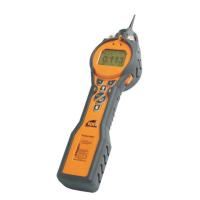
VOCS Detectors can be used in many fields such as home improvement, chemical plants, chemical laboratories, industrial emissions, factory environmental monitoring, public environmental testing, petroleum, organic agriculture monitoring, etc.