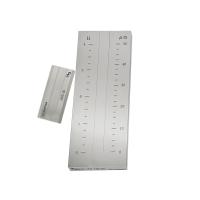
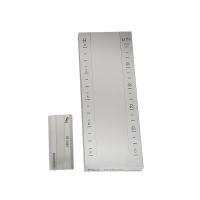
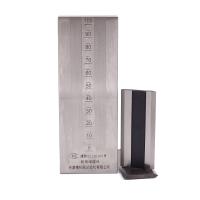
When the fineness is unqualified in production, it is necessary to analyze the specific reasons and adopt different methods to deal with it.
Abnormal situation 1
In paint production, thixotropic agent HPA202 and matting powder HP340 are usually added in the central control adjustment to adjust the viscosity and gloss of the paint. They are paste and powder respectively, which are not easy to disperse. According to experience, 15-20 minutes can Disperse, after adjusting and adding, need to reconfirm the fineness, if a small amount of large particles are found, the dispersion time can be extended. Recheck the fineness again, if there are still large particles, take more than half a cup of this batch of paint, filter the sample with a 200-mesh filter, then take the thinner that matches the paint to rinse the filter, check the remaining particles on the filter, Knife rolling, if the particles are relatively soft, it can be roughly judged that the thixotropic agent is not completely dispersed. The dispersing effect of the thixotropic agent HX-8800 is worse than that of HPA202, so adjust the batch adding HX-8800, and the dispersion time should be relatively long some. Due to the low stirring power of small batches of cylinder products, it is not easy to disperse, so special attention should be paid to the fineness after adjustment.
Abnormal situation 2
If it is found to be pigment or filler particles after adjusting the knife and rolling, it means that there are problems in the process of pre-dispersion or sand grinding. Check them one by one. The powder on the top needs to be scraped off with a spatula. There have been cases where at the end of sanding, the powder on the cylinder wall fell into the pipe, because there was no pre-dispersion, the powder was not completely wetted, resulting in unsatisfactory sanding results. When feeding at the same time, the production workers should avoid the packaging bags and barrel lids from falling into the tank, as foreign objects can easily block the pipes and jam the sand mill. If it is a problem during the sanding process, the dense particles will gather at 60-80 μm, and the board may even be full of particles. In this case, you should notify the production department and the person in charge of the sand mill whether you need to add glass beads or adjust the sanding. If the above method is used, there are still large particles on the fineness plate, the sand mill needs to be repaired, dismantled the machine, and the wear of the sand grinding wheel is checked. If the wear of the sand grinding wheel is serious, the sanding efficiency will drop significantly. New sanding discs need to be replaced every now and then. This batch of products is judged as unqualified, and sanding is carried out again.
Abnormal situation 3
If the filtered impurities remain, they cannot be crushed with a spatula, and there are scratches when scraping the fineness. When observed with a magnifying glass of 5 times, they are found to be broken glass beads. There have been complaints from the box factory that the gun was blocked during spraying. For this sample Sampling was taken at the scene and analyzed in the laboratory, and it was found that the substance blocking the gun was broken glass. Therefore, quality control should be carried out on the hardness of the sanding medium, and the metal filter screen at the outlet of the sand mill should be cleaned regularly. After the sanding beads are replaced with zirconium beads, the effect and efficiency of sanding will be significantly improved. The batch mixed with broken glass beads in the blending tank is filtered with 300 mesh, and then the plate is sprayed to confirm whether the plate surface is rough and there are no large particles visible to the naked eye. After filtering, carefully check whether the filter screen is damaged.
Abnormal situation 4
Alkyd topcoats and primers are prone to skinning when exposed to the air, and the fineness is also easy to return to coarse. After the adjustment, immediately pack with nitrogen gas to reduce the contact time with air. When dealing with sluggish products, the upper layer of skinning should also be removed Clean, a small amount of crust is stirred and broken, and dispersed into very fine particles, which will cause rough appearance of the coating film on the surface of the board, so it is necessary to increase the mesh number of the filter to filter. If the alkyd color paste is found to have a crust before use, it should be removed. After use, the lid should be closed to isolate the air.
Abnormal situation 5
Another situation is very special, and the probability is also small. During the inspection of the finished product, it was found that the sample had agglomeration and the fineness was poor, but there was no abnormality in the central control link. After filtering, the particulate matter was gelatinous. Epoxy resin or other kinds of raw materials, after a period of reaction and polymerization, the performance and index of the coating will change greatly. In this case, it can only be scrapped and not put into storage.
For more details, please refer to the full text of "Discussion on the Treatment of Abnormal Coating Fineness" (Wang Fei)