The scope of work:
Viscosity refers to the resistance of a fluid to flow. Fluids are divided into Newtonian fluids and non-Newtonian fluids. When the Newtonian fluid flows, the required shear stress does not change with the change of the flow velocity, and the solution of pure liquid and low molecular substance belongs to this category; when the non-Newtonian fluid flows, the required shear stress changes with the change of the flow velocity, and the solution of the polymer, the mixture Suspensions, emulsions and solutions of surfactants fall into this category. The rotary viscometer is suitable for measuring the viscosity of non-Newtonian fluids. There are several types of rotary viscometers: coaxial double-cylinder viscometer, single-cylinder Rotational Viscometer, cone-plate viscometer, and rotor-type viscometer.
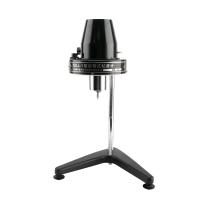
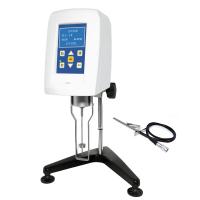
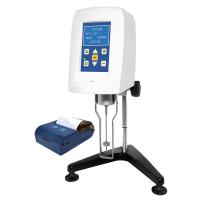
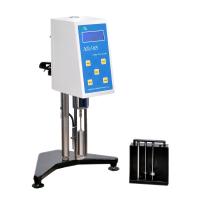
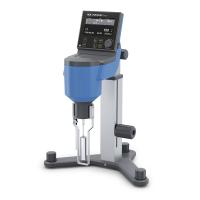
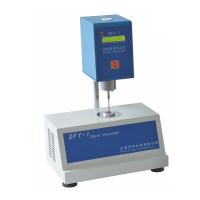
NDJ type viscometer is a liquid viscosity measuring instrument. Under the control of the computer, the measurement of the liquid viscosity is automatically completed, and the results are output by the display screen. It can be used to measure the viscous resistance of liquid and the absolute viscosity of liquid. It is widely used to measure the viscosity of various fluids such as oil, paint, plastic, food, medicine, adhesive, cosmetics, etc. When using the NDJ viscometer to measure non-Newtonian fluids, the measurement error is large and the experimental data is inaccurate due to poor grasp of the rotor type, rotor speed, and stirring time. There are no detailed records on the measurement methods of viscosity in the domestic literature. To solve the above problems, this experiment adopts the varieties stipulated in the Pharmacopoeia of the 05 edition, and uses the NDJ type viscometer to measure its viscosity. The good working range of the hairspring is used as the basis for the measurement to make the measurement results more accurate.
1 Experimental materials
The NDJ-8S digital display viscometer and rotors (No. 1, No. 2, No. 3, and No. 4) were provided by Shanghai Precision Scientific Instrument Co., Ltd. Povidone-iodine gel {Specification: 5 grams per tube: 0.5 grams (containing 1% available iodine)} is provided by Shenzhen Tsinghua Yuanxing Pharmaceutical Co., Ltd.
2 Methods and results
2.1 Prepare the liquid to be tested
Please put the liquid to be tested in a beaker or a straight container with a diameter not less than 70mm to accurately control the temperature of the liquid to be tested.
2.2 Selection of range, rotor and speed
2.2.1 Please estimate the viscosity range of the liquid to be measured first, and then select the appropriate rotor and speed according to the range table.
If the liquid of about 3000mPa·S is measured, the following coordination should be selected:
No. 2 rotor………………………………6r/min
Or No. 3 rotor………………………………30r/min
2.2.2 When the viscosity of the measured liquid cannot be estimated, it should be assumed to be a higher viscosity. You can try small to large rotors and low to high speeds. The principle is to use small rotors and low speeds for high-viscosity liquids. For low-viscosity liquids, use large rotors and high speeds.
2.2.3 Measurement upper limit (see Table 1)

2.2.4 The good working range of hairspring is 20%~90%
2.2.5 Since the data measured by different rotors are different, the same rotor is used for research at different speeds (the Water Bath temperature is the same). The measurement results are shown in Table 2.
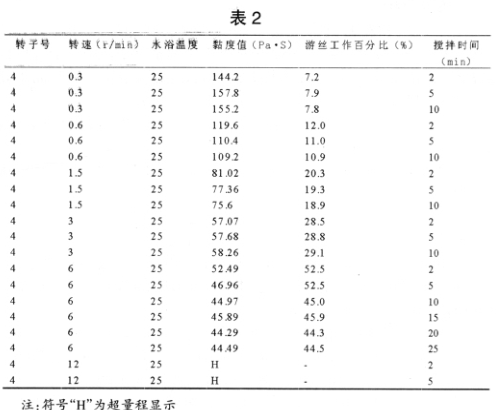
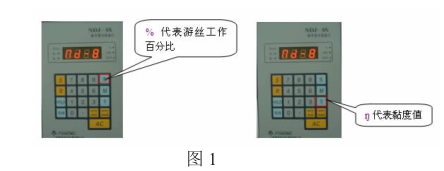
2.2.6 From the above results, it can be seen that the viscosity values measured at different speeds of the same rotor are quite different. When the good working range of the hairspring is close to 50%, the measured viscosity value is relatively stable and within the specified range (30-50Pa·S). Thus it can be determined that it is the No. 4 rotor, 6 rev/min, which is consistent with the Pharmacopoeia quality standard. (see picture 1)
3 Discussion
3.1 Accurate values can be measured by doing the following points
a. Accurately control the temperature of the measured object.
b. Immerse the rotor in the liquid for a long enough time to allow the temperature of the two to balance.
c. Place the rotor in the center of the container as much as possible during the measurement.
d. Ensure the uniformity of the liquid.
e. There should be no air bubbles on the surface of the rotor immersed in the liquid.
f. Use a protective frame for measurement.
g. Keep the rotor clean.
3.2 Many of the turbid liquids, emulsions, polymers and other high-viscosity liquids are non-Newtonian liquids, and their measurement should specify the rotor, rotational speed and time.
3.3 After specifying the rotor, speed, Water Bath temperature, and stirring time, the measured viscosity value is more accurate, and the good working range of the hairspring is between 20% and 90%. When it is close to 50%, the measured data is extremely accurate. It can be seen that a good working range of the hairspring is a parameter required to provide accurate and reliable experimental data.
3.4 There is no detailed information on the measurement method of viscosity in the domestic literature. It is suggested that when formulating drug quality standards, not only the instrument model, rotor, rotation speed, Water Bath temperature, but also the stirring time should be specified, and the good working range of the hairspring should be investigated at the same time. If the model of the instrument is different, the data that the fine working range of the hairspring is around 50% can be used as a reference basis, and the data obtained from this is accurate and reliable.
references
[1] ChP (2010) Vol Ⅱ Appendix Ⅵ G
[2] ChP (2010) Vol Ⅱ [s]. 2010: 1094
About the author: Huang Shouli, female, assistant engineer.