The close relationship between adhesion and coating protection performance is mainly determined by the adhesion and the corrosion process of the metal under the organic coating. The corrosion of metal under the organic coating is mainly caused by the electrochemical corrosion of the phase interface, and the quality of adhesion has a significant impact on the electrochemical corrosion. First of all, good adhesion can effectively block the penetration of the external electrolyte solution to the matrix and delay the formation of interfacial corrosion cells; secondly, strong interfacial adhesion can greatly prevent corrosion products—metal cations from diffusing to the cathode region through the interphase side. The cation diffusion is to balance the negatively charged hydroxide ions generated by the cathodic reaction.
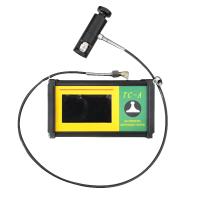
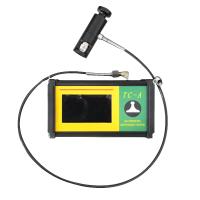
The diffusion of cations through the coating to the cathode is a rather slow process. When the adhesion (detection instrument: adhesion Tester) is reduced, the diffusion from the side of the phase is much easier. It has been reported in the literature that for samples without adhesion (the coating is only attached to the base metal and sealed around the sample), the corrosion interface presents a macroscopic distribution of very discontinuous anode and cathode regions, while for adhesion Membrane samples, on which the area of the anodic region is much smaller, indicate that adhesion significantly affects the diffusion of cations along the metal/coating interphase side.
For more information, please refer to the full text of "Research Progress on Adhesion between Coating and Substrate Metal" (Song Yusu, Yao Shuren)