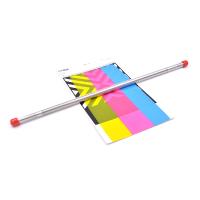
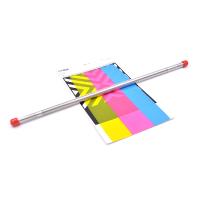
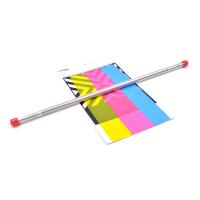
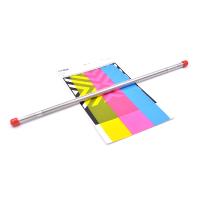
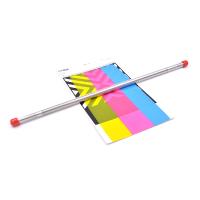
![Coating rod type, process, brand, operation/maintenance method, selection [full] with picture 1](//img.nbchao.com/upload/editor/image/20160421/1461227131835036103.jpg) 1. What types of coating rods are there?
1. What types of coating rods are there?
![Coating rod type, process, brand, operation/maintenance method, selection [full] with picture 1](http://img.nbchao.com/upload/editor/image/20160421/1461227131835036103.jpg)
[Brand list]
Domestic: Zhanyi, Pushhen, Modern Environment, Jingke, Kexin, and some brands or factories without brands, there are quite a few; International
: American RDS, Japanese OSP, British RK, Dutch TQC, A few brands such as BYK in Germany.
【Craft】
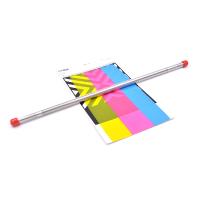
There are generally only two types of coating rods: wire winding type and extrusion type (also called forming type), and some shorter length rods have matching handles.
The original standard coating rod is called Mayer in the world, which stipulates that a steel wire is wound on a stainless steel rod, the wet film thickness is controlled through the gap between the steel wires, and the dry film thickness is calculated according to the solid content.
【use】
As a general experimental device for preparing coating films, coating rods are widely used in the preparation of coatings, inks, and electronic appliances, machinery, automobiles, plastics, rubber and other coatings derived from their coatings. In addition to coatings, Most of the quantitative film layers can be prepared by coating rods. In recent years, coating rods on medicine (such as pharmaceutical sugar coating) have also been gradually used.
Second, the service life of the coating rod
Take wire winding as an example. The steel wire of the smallest US RDS coating rod is smaller than a human hair, and laboratory engineers need to prepare hundreds of samples a day. Abrasion, abrasion and unclean cleaning will cause the wet film of the actual coating rod to change. Small, most users choose better new coating rods for this. According to the big data of NBCHAO Mall, the average replacement cycle of customers for coating rods is 6.7 months. (It should be pointed out that the frequency of use of the coating rod, the influence of the substrate on the wear of the coating rod and the maintenance method have a great impact on the replacement cycle)
Another consideration is that if the purpose of coating is that the accuracy of the coating thickness is not high, the service life of the coating rod can be extended appropriately. On the contrary, if it is for the precise preparation of the wet film, it is recommended to replace the new coating in time. It is recommended to purchase an embossing bed, which not only ensures better reproducibility, but also buffers the contact between the coating rod and the substrate, killing two birds with one stone.
3. How to use and maintain the coating rod correctly
Step 1: Prepare a substrate of appropriate size for proofing to ensure that the surface of the substrate is flat.
Step 2: Fix the substrate for proofing. If the requirements are high, you can consider configuring an embossing bed.
Step 3: Choose a suitable type of wire rod and place it on the edge of one end of the proofing substrate.
Step 4: The fluid used for proofing is placed about 1cm below the coating rod. (Turn the coating rod at the same position until the fluid is evenly poured on the rod)
Step 5: Hold both ends of the coating rod with both hands, and pull the coating rod towards the operator at a constant speed and pressure, please Be careful not to turn the wire rod during operation.
Step 6: After proofing, put the coating rod into a suitable solvent to clean before the fluid dries (different proofing fluids use different solvents for cleaning, and the experimenter cleans it better and wipes it dry with a cloth. Please note that it should Keep the proofing scraper in a dry state frequently.
![Coating rod type, process, brand, operation/maintenance method, selection [full] with picture 2](http://img.nbchao.com/upload/editor/image/20160421/1461227344788094189.gif)
4. How to choose a suitable coating rod
General users may ask another question besides the preparation requirements: is the wire-wound type or the extruded type better? Objectively speaking, any manufacturer's products cannot be reviewed comprehensively, accurately, and without any interest purpose. Through experiments, we found that it can be replaced in terms of leveling, precision, and preparation of a complete film layer. From a technical point of view, the advantage of the extruded coating rod is that there is no possibility of broken wires, and it is easier to clean. The advantage of the wire-wound type is that it more strictly follows the mayer-bar test principle. The principle of forming grooves is different between the wire winding type and the extrusion type. During the experiment, the actual coating amount used may be different. Therefore, it is recommended that customers follow the type they think they are using when choosing a wire-wound or extruded coating rod, so as to ensure the consistency of the experiment.
It is undeniable that there is no possibility of broken wires in the extruded type, which is advertised by most extruded type manufacturers, but objectively speaking, according to the data disclosed by the North and South Tide Mall, the RDS winding wire is due to various reasons (whether it is You break it on purpose, or use it improperly) The possibility of breaking the wire is two in a thousand. We might as well make an assumption that everyone will buy electronic products (which have not yet reached the testing level), such as mobile phones. You buy 1,000 mobile phones and suddenly find that 2 of them cannot be returned or exchanged. Do you think it is normal? Therefore, whether it is wire winding or extrusion, whatever the customer's instrument uses, you can use whatever you want in the future. As for the advantage of easy cleaning of the extrusion type, it is indeed an advantage. However, for a product with a replacement cycle of less than 7 months, wear is the main reason for the reduction in wet film thickness. Cleaning is a basic requirement in the experimental operation rules. How much difference does the question have?
5. How to prepare more accurate membranes
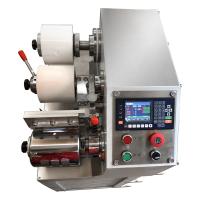
Reference 1: Using an automatic coating proofing machine to control the thickness of the coating film and coating speed through motorization, this precision;
Reference 2: Vacuum plate + embossing bed + high-end coating rod + correct operation method The
last sentence: one point You get what you pay for, and the prices are similar, which is called competition. If the price difference is too large, then. . .