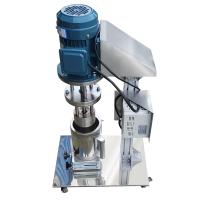
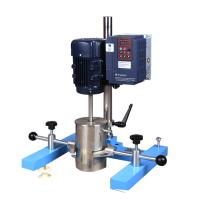
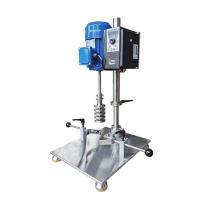
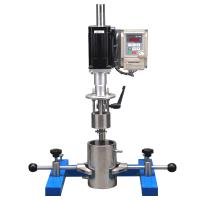
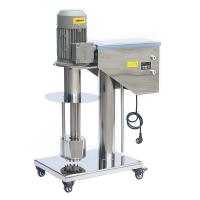
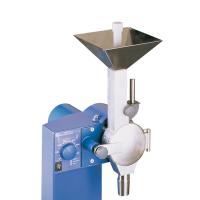
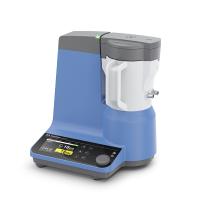
A grinding machine is a grinding machine that grinds the surface of a workpiece with a lapping tool that is coated or embedded with abrasives. It is mainly used for grinding high-precision planes, inner and outer cylindrical surfaces, conical surfaces, spherical surfaces, threaded surfaces and other profiles in the workpiece. The grinding machine has the same grinding track and speed at all points on the surface to be ground , and the movement characteristics of the grinding movement direction changing at a constant rate.
Precision and ultra-precision processing technology is the basis for the development and progress of high-tech such as national defense cutting-edge technology, microelectronics technology and information technology. With the rapid development of high-tech technologies such as microelectronics, optoelectronics, semiconductors , sensors and lasers, the requirements for the processing quality of material surfaces are getting higher and higher. Grinding is an important precision and ultra-precision processing technology, which is almost suitable for the processing of various materials. Grinding can obtain high dimensional accuracy and shape accuracy, and even reach the limit of processing accuracy. The grinding device is simple and does not require A large number of complex machinery and not demanding equipment precision conditions.
Grinding is the process of using abrasive tools to act on the surface of workpieces through abrasives to perform micro-processing. The dimensional accuracy, shape accuracy, grinding tool life and grinding efficiency of the surface of the ground workpiece depend to a large extent on the grinding movement. In order to make the workpiece surface grind evenly, the following optimal kinematic :
(1) The workpiece moves in a plane relative to the grinding tool, and it should be ensured that each point on the workpiece to be ground has the same or similar grinding trajectory relative to the grinding tool;
(2) The grinding movement is realized by the relative movement between the workpiece and the grinding tool, and the grinding movement speed of each point on the surface of the workpiece should be the same as possible;
(3) The direction of grinding movement should be constantly changing, and the grinding lines should be staggered and varied to facilitate the reduction of the surface roughness of the workpiece, but it should be avoided that the curvature of the grinding track of each point on the surface of the workpiece to be ground relative to the grinding tool changes too much;
(4) The shape accuracy of the working surface of the grinding tool or polishing disc will be reflected on the surface of the workpiece, so the movement track of the workpiece should be spread over the entire surface of the grinding tool and distributed evenly, so as to facilitate the uniform wear of the grinding tool;
(5) The workpiece has a degree of freedom of movement relative to the grinding tool in the removal direction , which can avoid errors caused by the low precision of the grinding machine.