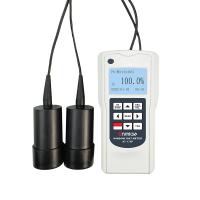
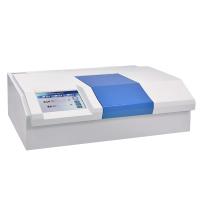
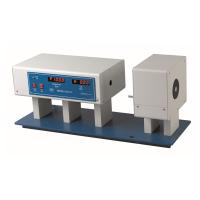
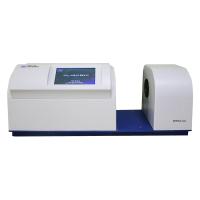
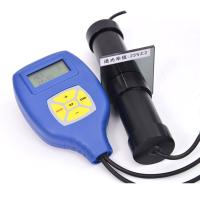
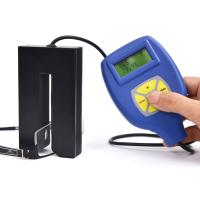
The light transmittance/haze meter is mainly suitable for the determination of the light transmittance and haze value of materials such as transparent packaging films, plexiglass, aviation and automotive glass. When a parallel beam of light is incident on a medium (such as transparent plastic), due to the inhomogeneity of the optical properties of the material, surface defects, uneven internal organization, the presence of bubbles and impurities, etc., the beam of light will change direction (diffusion and deflection), resulting in some disorganized light called scattered light. Internationally, it is stipulated that the ratio of the scattered luminous flux and the transmitted luminous flux that deviates from the direction of the incident ray through the sample is expressed as a percentage, which is the so-called haze. A sample with a large haze will feel more blurred.
Transmittance Meter is an instrument used to measure the light transmission properties of transparent or translucent materials. Its working principle is based on the transmission and absorption properties of light.
Transmittance meters usually consist of the following main components:
Light source: Transmittance meters use a stable light source, usually a white light source or a light source of a specific wavelength, such as visible or ultraviolet light.
Sample holding device: The sample holding device is used to place the sample to be tested in the optical path of the transmittance meter to ensure that light can pass through the sample.
Optical System: An optical system consists of components such as lenses, filters, and Detectors in a transmittance meter. They work together to ensure that light passes through the sample in a predetermined way and converts light passing through the sample into an electrical signal.
Transmittance meters work by measuring changes in the intensity of light passing through a sample, thereby determining the light transmittance of a material. The higher the light transmittance, the better the transparency of the sample and the less light intensity loss when light passes through the sample. By measuring changes in light intensity, transmittance meters can provide quantitative information about the transparency properties of materials, such as light transmittance measurements for materials such as glass, plastic, and films.