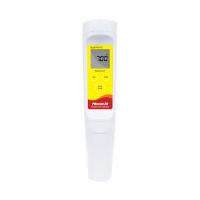
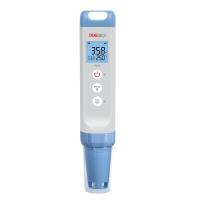
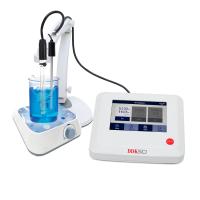
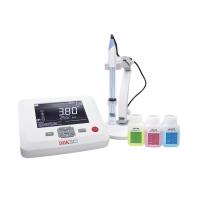
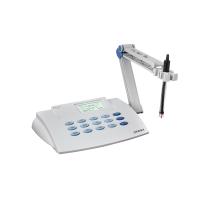
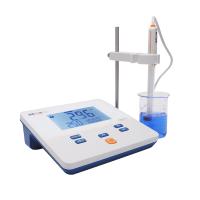
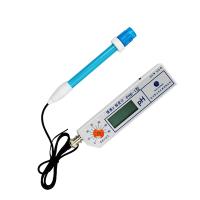
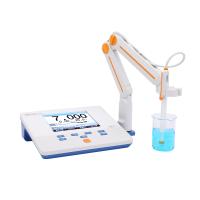
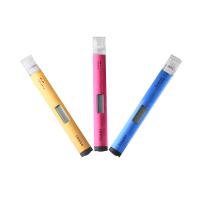
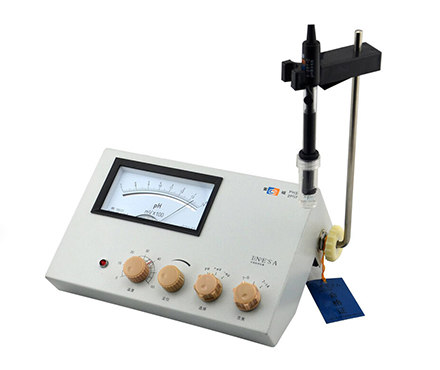
The glass electrode pH meter is very common in industrial pH meters. It can be made into various forms and sizes according to different purposes. Its working principle is: when the glass electrode is in contact with the material to be measured, the solution inside the pH sensitive membrane ( A hydrogen ion equilibrium state is established between the reference solution) and the measured material. The glass electrode is greatly affected by the temperature when used. When using it, the thermal resistance should be inserted at the same time, and the measured temperature value (resistance value) should be connected to the measurement circuit to compensate the influence of temperature on pH.
Since the glass electrode is so widely used, how should it be selected correctly? There are the following points:
(1) When the submerged type is used in the container, if the measured medium has the characteristics of adhesion or Graduation, the cleaning type should be selected; when the flow type is used in the pipeline, the flow rate should not be too high, so as not to wear out and reduce the service life; When there is pressure in the medium, the pressure flow type should be selected, and the pressure should be within the allowable range of the instrument. In the case of large temperature changes, temperature compensation should be considered.
(2) Pay attention to the temperature of the process medium. The high temperature resistant glass electrode is generally used below 100 °C. If the medium temperature exceeds 100 °C and the accuracy requirement is not high, an antimony electrode can be used.
(3) If the working environment is in a dangerous area, secondary instruments with corresponding explosion-proof grades should be selected.
(4) Select the pH meter according to the pH value of the process medium. Generally, the pH meter requires that the conductivity of the process medium is not less than 50 μS/cm, otherwise, some special glass electrodes should be selected according to the conductivity.
(5) The pH meter is extremely susceptible to interference from electromagnetic fields, so it should be installed away from places with substations and large motors. When installing, it needs to be grounded together with the process pipeline or equipment, and cannot share a grounding wire with the motor or other electrical equipment.
(6) The internal resistance of the glass electrode is very high, the signal is very small, and it is very easy to be interfered by the outside world, so the distance between the measuring electrode and the preamplifier should be as short as possible and connected with a low-noise special shielded cable.
(7) The pH meter is not allowed to vibrate. The vibration not only affects the pH meter itself, but also affects the cable. Although the shielded cable is not affected by external electromagnetic fields, it is insulated with polyethylene, which can generate static electricity when vibrating and affect the indicated value, especially when the cable is long.
Due to different application occasions, different industries, different environments and other factors, the selection and use of glass electrodes will also be different in order to obtain more accurate measurement results.
The above part refers to Zhang Li's "Application of Industrial pH Meter in Production"