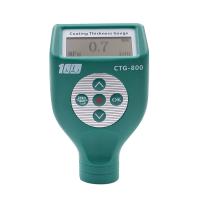
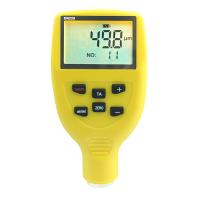
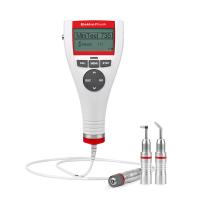
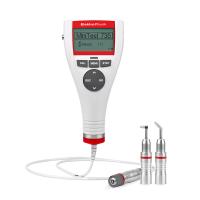
The magnetic Thickness Gauge can conveniently, quickly and non-destructively detect the thickness of non-magnetic coatings such as copper, zinc, tin, chromium, etc. In addition, it can also be used for the following tasks.
1. Use the comparison method to monitor the quality of Cu/Ni/C: or Ni/Cu/Ni/Cr plating parts in large and medium batch display production. The method is as follows: select the lower limit value of the process parameters in the production line that has been finalized, electroplate a certain part, take the part in the middle of the rack, measure the thickness of the coating with a magnetic Thickness Gauge, and record the value (called the comparison value) ). Use a magnetic Thickness Gauge to regularly detect the coating thickness of the parts in the middle of the hanger in mass production, and compare it with the comparison value. When the measured coating thickness is equal to or greater than the comparison value, the appearance of the part is qualified, indicating that the process and bath are normal. If the measured value is lower than the comparison value and the appearance of the plated parts is qualified, it may be that the plating time is insufficient. If the measured value is lower than the comparison value, and the surface quality of the part is slightly reduced, it may be that there is a problem with a plating dry in the process line. With this method, the cause can be found quickly, loose objects can be eliminated, and a large number of reworked products can be prevented. The comparison positions of different types of parts are measured separately to ensure the reliability of the quality of the parts monitored by the comparison method.
2. Make the electroplating hanger structure of multiple hard capital parts more perfect at one time. Utilizing the convenience, rapidity, and non-destructive characteristics of the coating, use it to measure the coating thickness of various parts on the hanger, and report the difference in the thickness of the side measurement to improve the structure of the hanger (or appropriately increase mJ). Auxiliary use. Anode), so that the thickness of the coating on each part of the hanger is basically the same, ensuring product quality.