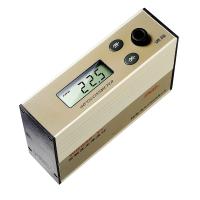
Regarding the inspection method of gravure plastic ink, there are three commonly used inspection methods:
1. Glossmeter test method
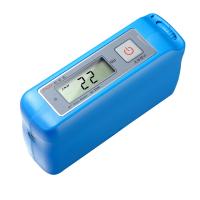
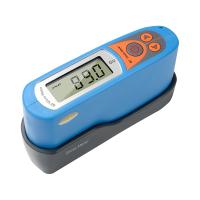
Its working principle is that under the irradiation of the rated light source, the ratio of the reflected light of the sample to the standard surface is used to express the gloss of the sample ink; the materials to be used include: low-density polyethylene film, black backing paper, and scrubbing solvent ; The instruments that need to be prepared include: KCZ-1 specular gloss meter (60° angle), light measuring platform, silk rod and glass rod; the inspection needs to be carried out under the conditions of temperature (25 ± 1) ℃ and humidity 65% ± 5% conduct. The device inspection steps are as follows:
Use a glass rod to place the test ink on the low-density polyethylene film, use a silk rod to scrape the ink into a thin layer from top to bottom, a print sample with a width of 60 mm and a length of 100 mm, and place it for 2 hours before taking photometry. Place a well-adjusted gloss meter head on a low-density polyethylene lined with black paper at the bottomOn the scraped sample of the olefin film, use the photometer to lay the film flat and read the data.
Second, the fineness test method
The working principle of the fineness test is to measure the grinding degree and dispersion of ink particles with the sub-plate Fineness Meter, expressed in microns. The materials and equipment needed for the inspection include veil, scrubbing solvent ethanol, scraper Fineness Meter and glass rod; the inspection needs to be carried out under the conditions of temperature (25 ± 1) °C and humidity 65% ± 5%; the inspection steps are as follows :
(1) Wipe the scraper Fineness Meter and scraper clean, and mix the tested ink thoroughly with a glass rod.
(2) Use a glass rod to take a small amount of ink, and place it in the 50µm of the scraper Fineness Meter. The amount of ink should be enough to fill the groove, but it is advisable to have a little excess.
(3) Hold the scraper with both hands, place the scraper vertically on the upper end of the polished plate (at the edge of the sample), and within 3 seconds, pull the scraper from the deep part of the groove to the shallow part, so that the ink sample fills the groove , and there is no remaining ink on the flat plate, after the scraper is pulled, immediately observe the particle concentration point (not more than 10 particles) in the groove, and record the reading.
Three, color inspection method
The working principle of the color inspection is to compare the tested ink sample with the standard ink sample by parallel scraping method to check whether the ink color meets the quality standard of the standard ink sample. Materials such as low-density polyethylene film, rubber pad, scrubbing solvent ethanol or gasoline, and coated paper are required; at the same time, glass rods and silk rod instruments need to be prepared; the inspection should be at a temperature of (25 ± 1) bar, and a humidity of 65% ± 5%. When checking the complexion, it should be at an angle of 45 degrees. scholar? 45 under the D" standard illuminant. ± 5. Under the standard illuminant of D65; the inspection steps are as follows:
(1) Mix the standard sample and sample thoroughly with a glass rod. Then take a small amount of the standard sample and drop it on the upper left side of the low-density polyethylene film that has been covered with a rubber pad and fix the upper end, and then take a small amount of the sample and drop it on the upper right side. The two should be adjacent and not connected.
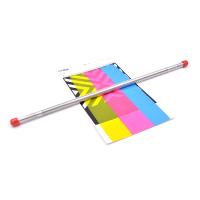
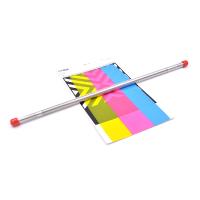
(2) Use a wire stick to scrape the ink into a thin layer on the low-density polyethylene film from top to bottom. As shown in Figure 10-8.
(3) When inspecting, it is lined with 150g/m2 coated paper.