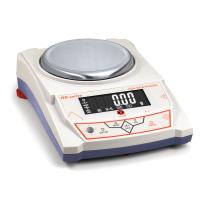
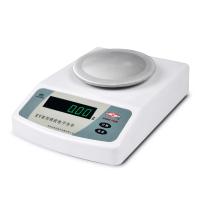
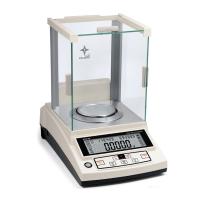
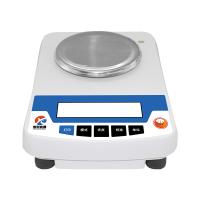
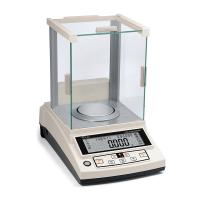
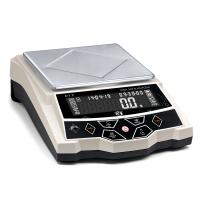
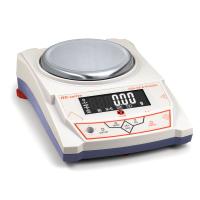
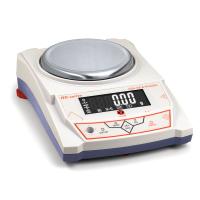
In daily use, if it is not standardized, there will be some common failures in electronic balances. However, before adjusting the balance, it is necessary to check the power first, record the abnormal state of the balance, and preliminarily determine the fault location to adjust and repair accordingly. Common faults and solutions for electronic balances are as follows:
(1) "OL" is displayed on the electronic balance display.
Cause of failure: The weighing of the electronic balance exceeds the maximum load.
Solution(s):Load shedding and do not weigh beyond the maximum load
(2) "UL" is displayed on the monitor of the electronic balance.
Cause of failure:The weighing of an electronic balance is underloaded.
Solution: Carefully check the weighing pan or weighing pan holder of the electronic balance to see if it is caused by not being put on or not being placed properly.
(3) When the display of the electronic balance is not lit.
The causes of the fault are: (1) the power supply is not connected or the external power failure; (2) There is a problem with the transformer connection; (3) transformer damage; (4) The balance is not turned on.
Repair method: (1) If the power supply is not connected, carefully check whether the bolt and wire are disconnected or have poor contact, and rule them out; (2) Properly connect the transformer; (3) Replace the transformer of the same specification and model; (4) Turn on the balance.
(4) The display value of the electronic balance is constantly changing.
The reasons for the failure are: (1) the balance is seriously not level, and the inclination is too large; (2) The balance installation environment does not meet the requirements; (3) The weighed object is volatile or moisture absorption, etc.; (4) It is caused by a large difference between the weighed object and the room temperature.
Adjustment method: (1) adjust the electronic balance to make it in a horizontal state; (2) Select a qualified installation environment and work surface to install an electronic balance; (3) Use utensils to hold volatile or moisture-absorbing items for weighing, effectively preventing the volatilization and moisture absorption of the weighed items; (4) The weighed object is placed in the weighing room for necessary constant temperature treatment, and then weighed.
(5) If the display result of the electronic balance is obviously wrong.
The reasons for the failure are: (1) the electronic balance is not tarewed (or tathered) heavy; (2) the balance is not adjusted well; (3) The balance has not been calibrated for a long time; (4) The balance correction is inaccurate; (5) Environmental impact.
Adjustment method: (1) Pay attention to the tare weight removal during the weighing process; (2) Carefully check the adjustment balance to make the electronic balance in a horizontal state; (3) The balance should be calibrated regularly, especially before accurate weighing; (4) If the balance calibration is inaccurate, it can be corrected for the problem or external calibration and linear adjustment; (5) The influence of temperature, airflow and humidity on the balance should be avoided.
(6) If the electronic balance is not displayed or only displays dashes.
Cause of failure: The stability of the electronic balance is set too sensitively.
Adjustment method: Re-set the stability of the electronic balance until it is suitable.
(7) The display in the electronic balance calibration flashes constantly.
Causes of failure: (1) The balance is seriously unlevel; (2) The balance installation environment does not meet the requirements; (3) Use external weights that do not meet the requirements.
Adjustment method: (1) Adjust the horizontal state of the electronic balance; (2) Install the electronic balance on a stable table and ensure that the environment meets the environmental requirements of the electronic balance; (3) Avoid using external calibration weights that do not meet the requirements, or redefine them before calibration.
(8) After turning on the electronic balance, there is no display on its display.
Causes of failure: (1) The balance is not really turned on; (2) No power supply or temporary power outage; (3) The power bolt is not in good contact; (4) The fuse is damaged; (5) The transformer rectifier is damaged; (6) Improper selection of electronic balance voltage block; (7) The power supply voltage is disturbed instantaneously; (8) The display is damaged; (9) There may be a problem with the electronic balance A/D converter; (10) The microprocessor of the electronic balance may be faulty.
Adjustment method: (1) Reopen the electronic balance; (2) Check the external power supply with a voltmeter, and after confirming that there is no power, only turn off the power and wait for power; (3) Carefully check the power bolts and make them in good contact, and use a multimeter to check whether the wires are broken if necessary; (4) Replace the fuse of the same specification and model; (5) Overhaul or replace the power transformer rectifier; (6) Correctly select the voltage block of the electronic balance to make it consistent with the local voltage; (7) If the power supply voltage is too low, it should be temporarily shut down, and then re-open the flat after the power supply voltage is stable; (8) Overhaul or replace the display of the electronic balance; (9) Overhaul or replace the A/D converter of the electronic balance; (10) Overhaul or replace the microprocessor of the electronic balance.
(9) The display of the electronic balance only shows the lower half.
Causes of failure: (1) The weighing system has friction jamming; (2) The weighing pan is not installed or is wrongly installed; (3) After the balance is opened, remove the item from the weighing pan.
Adjustment method: (1) Check the weighing system and remove faults such as jamming; (2) Install the weighing pan well, if there are several installed at the same time, do not make mistakes; (3) After the balance is opened, the items should be removed from the weighing pan, and the machine should be turned off and reopened, and the operation should be standardized.