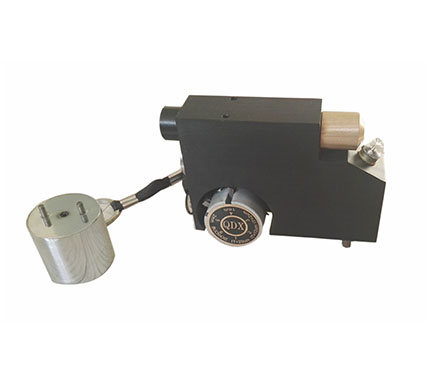
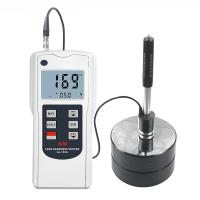
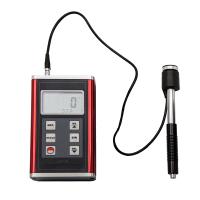
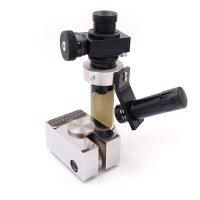
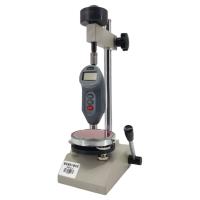
The main structural components of the Brinell Hardness Tester include motor, reducer, reversing switch, indicator light, etc. These parts are semi-automatic devices that compose the Brinell Hardness Tester control mechanism for loading, unloading and controlling the duration of the load. In practical applications, these components often have some common failures. Next, analyze the failures of each component and their solutions.
Reducer failure and its solution
(1) The large worm wheel and worm are worn, the key of the large worm wheel is worn, the crank is loose or the crank key is worn, resulting in gaps and displacements, resulting in shocks and vibrations at the beginning of each load, causing rapid damage to blades, bearings and other components . In particular, the unstable load affects the accuracy of the test results. If the above phenomenon is found, it needs to be ruled out according to the inspection situation.
(2) The reducer does not move when the motor rotates. This situation is generally due to the loosening of the connector fixing screws between the motor and the reducer. At this time, you can remove the weight, open the back cover of the body, press the start switch button, and observe the rotation of the coupling when the motor rotates. If the motor rotates but the coupling does not move, it must be that the fixing screw of the coupling is loose. , turn off the power and tighten this screw.
(3) The reducer makes noise. The noise of the reducer is due to the serious lack of lubricating oil, or the rotating parts such as bearings are worn and damaged, which reduces the flexibility. At this time, the reducer should be cleaned, lubricating oil should be refilled, or worn bearings should be replaced.
Faults of the reversing switch and their solutions
The reversing switch is a device that automatically controls the forward and reverse rotation of the motor during the loading and unloading process, that is, the device that controls the entire operation process of the Hardness Tester. The faults that often occur in use and the troubleshooting methods are as follows.
1. After pressing the button, the motor does not rotate and there is no sound. You should first check the power fuse. If it is normal, it may be the following:
(1) The extension screw of the button itself is adjusted too short, and the shrapnel of the reversing switch is not pushed away, and the circuit is not connected. In this case, the button should be removed, and its length should be checked and adjusted; if the adjustment is still invalid, you should check Whether the contact of the power switch is good, whether the spring on the switch positioning rod has fallen off and the switch is out of order.
(2) If the contacts of the reversing switch are not in good contact, or the wires are broken and the circuit is broken, it should be dealt with separately according to the inspection situation.
2. When the start button is pressed, the motor hums and does not start. This should also be found in the circuit and the reversing switch, such as whether the connectors in the circuit are loose or fall off, whether the rotor of the reversing switch rotates flexibly, whether the contacts are connected properly, Check whether the contact is burnt out and cause poor contact, whether the fuse is blown, etc., and eliminate the fault according to the inspection situation.
3. The speed control dial rotates in the opposite direction
When loading under normal conditions, the speed control dial should be turned clockwise. This situation is most likely to occur after the circuit is overhauled. If it is rotating in the opposite direction, the power supply should be turned off immediately and the circuit should be adjusted.
4. The motor always rotates in one direction, but cannot automatically reverse or stop. The reasons may be:
(1) The speed regulating disc is not fixed tightly, so the movable baffle cannot toggle the reversing switch, and the motor cannot reverse.
(2) The spring piece is too soft or the shape is wrong, and it cannot block the positioning rod so that it cannot be positioned. At this time, the shape of the spring leaf should be adjusted or the spring leaf should be replaced.
5. After loading, the circuit in the reverse direction of the switch is blocked, the motor stops rotating, and the load cannot be removed automatically
The reasons are: the reverse contact point of the switch is burned out, the spring of the contact piece is out of order, the tension spring of the positioning rod is out of order, etc. Check whether the function of the switch is intact, find out the reason, and deal with it according to the situation. If it is not the above situation, it may be because the reversing switch body is not fastened or the switch body is not rigid enough. When the adjustment baffle plate that has not overcome the spring tension of the positioning rod hits the stop pin, the reversing rotor rotates, causing the switch to rotate. The body is dislocated or deformed, so that the baffle cannot move the switch, and the reverse circuit cannot be connected. In this case, the switch body should be tightened or replaced.
6. After the load is unloaded, the motor continues to rotate in a loaded cycle and cannot stop. It may be because the long screw of the button is adjusted too long or the button is not flexible. After pressing it, it does not jump back, so that the spring piece does not return to its original position, or it may be because The spring piece is too soft or the support end is deformed, and it cannot support the positioning rod. The button should be removed to check whether it is flexible, whether the extension screw is appropriate, and whether the position of the spring leaf is correct, and then deal with it according to the inspection situation.
Faults of indicator lights and their solutions
(1) After the load is fully applied, the load indicator light does not light up. It may be: the bulb is broken, the circuit of the lamp head is blocked, the circuit is broken or the insulating plate on the large lever loses its insulation effect. Handle separately according to the inspection situation.
(2) The indicator light of the load holding time is always on after loading. This is because the rollers on the support rod and the support top plate on the large lever are not in good contact. This phenomenon.