Storage stability means that the physical or chemical properties of the coating product . It reflects the degree to which the coating product can resist the changes in performance such as odor, thickening, skinning, thickening, sinking, caking, dryness reduction, and acid value increase that may occur . The test method is to seal the liquid paint and varnish in a container, store it in a natural environment or under accelerated conditions, and measure the resulting viscosity change, pigment sedimentation in the paint, the ease of remixing the paint to be suitable for use, and Other performance changes that need to be detected according to product regulations.
1. Instruments and Materials
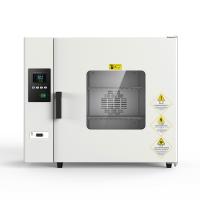
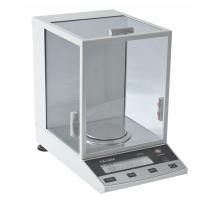
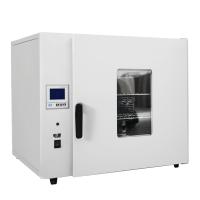
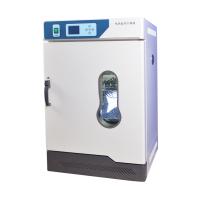
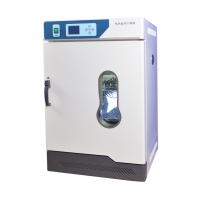
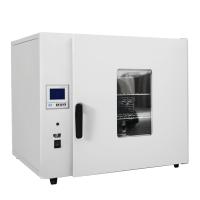
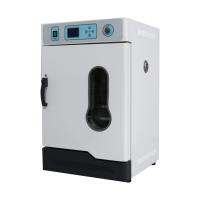
Constant temperature Forced Air Drying Oven, capable of maintaining (50±2)°C ; container, a standard gland-type metal paint can with a volume of 0.4L ; balance, with a division value of 0.2g; viscometer, coated with -4 viscometer Tu-1 viscometer or other suitable viscometer; stopwatch, with a division value of 0.1s; thermometer, 0-50°C, with a division value of 0.5°C; adjusting knife, about 100mm long, about 20mm wide, with a mass of about 30g; wolf hair brush, 25mm wide; test plate, flat glass plate of 120mmX90mmX(2-3)mm.
2. Measurement method
(1) According to the sampling regulations in Section 1 , take out three samples and put them in three containers. The amount of samples should be about 15mm from the top of the tank.
(2) Before the storage test, measure the viscosity of a can of the original sample, check the state in the container and the paint film particles, rubber blocks and brush marks etc., for comparison.
(3) After tightly covering the other two cans of samples, weigh the sample mass to an accuracy of 0.2g, then put it in a constant temperature Drying Oven, and store it under accelerated conditions of (50±2)°C for 30 days. Store under ambient conditions for 6-12 months.
(4) After the sample is stored for the specified period, take the sample out of the constant temperature Drying Oven, place it at room temperature for 24 hours, and weigh the sample weight. If the difference from the weight before storage exceeds 1%, it can be considered as a small container. Due to the imprecise sealing, the performance test results are questionable.
Note: Storing for 30 days under accelerated conditions at (50+2)°C is roughly equivalent to half a year to one year under natural environmental conditions. If there is any dispute or doubt about the test results of (50+2)°C accelerated conditions, it can be stored at standard temperature [(23±2)°C or (25±1°CJ) and stored for 6-12 according to the storage period specified by the product. After one month, check the performance again as an arbitration test.
3. Result presentation
(1) Inspection and evaluation of skinning, pressure, corrosion and putrefaction. When opening the cover, pay attention to whether there is pressure or vacuum in the container. After opening the container, check whether there is crusting, container corrosion and putrefaction, stench or sour smell. The quality of each item is scored on the following six scales: 10 =none; 8=very slight; 6=slight; 4=moderate; 2=serious; 0=serious.
(2) Inspection and evaluation of the degree of settlement If there is a crust, carefully remove the crust, and then place the adjusting knife vertically on the center of the painted surface without vibrating or shaking the container Align the top surface of the paint can, drop the adjusting knife from this position, and use the adjusting knife to measure the degree of settlement. If the pigment has settled and forms hard lumps at the bottom of the container, pour the suspended part of the upper liquid into another clean container and keep it for later use. Stir the pigment block with a spatula to disperse it, add a small amount of the spare liquid poured out , re-mix and disperse, and stir well. Then add the poured-out standby liquid one after another, stir and mix until the pigment is remixed and dispersed to form a uniform color paint suitable for use, or it has been determined that the pigment block cannot be remixed and dispersed into a uniform color paint by the above operation . The evaluation of the degree of settlement is as follows: 10 means complete suspension, compared with the original state of the color paint , there is no change; 8 means there is an obvious sinking touch and a small amount of deposited pigment on the spatula, and there is no obvious difference when the blade is moved Resistance; 6 is the pigment block with obvious settlement, which can pass through the paint block and fall to the bottom of the container with the weight of the spatula , and there is a certain resistance when pushed by the surface of the spatula, and the lumps in the condensed part can be transferred to the container. On the knife; 4, because the self-weight of the adjusting knife cannot fall to the bottom of the container, it is difficult for the adjusting knife to pass through the paint block, and then it is difficult to move it with the surface of the adjusting knife, and there is slight resistance when moving the adjusting knife edge , but it can be easily re-mix the paint into a uniform state; 2. When the spatula penetrates the pigment sedimentation , it is difficult to push the spatula on the surface of the spatula, and there is obvious resistance to the blade of the spatula along the edge of the tank, but the paint It can be re-mixed into a uniform state; 0 means that it forms a very hard block, and these hard blocks cannot be re- mixed .
(3) Inspection and evaluation of paint film particles, rubber blocks and brush marks. Brush the stored color paint on a test board. After the paint film is completely dry, check the test board with a diameter of about 0.8mm. Particles and larger lumps, and brush marks caused by such particles or lumps. For paints that are not suitable for brushing, use a 200-mesh filter to filter the thinned paint to be tested, and observe the particles or rubber blocks. Each item is rated on the following six scales: 10 =none; 8=very slight; 6=slight; 4=moderate; 2 =serious; 0=serious.
Note: If the test sample is significantly thickened, it is allowed to use a solvent within 10% or dilute it according to the product regulations, and then carry out the brushing test.
(4) Inspection and evaluation of viscosity change If the sample can be stirred according to the above (2) to make all the sediments evenly dispersed, immediately measure the viscosity of the paint with a viscometer. If there is unevenly distributed sediment or crusted fragments, use a 100-mesh sieve before testing. When measuring the viscosity, the temperature of the sample can be kept at (23±2)°C or (25±1)°C (the temperature should be specified) according to the requirements of the product regulations . The viscosity is expressed in time (s), accurate to 0.ls . After the paint is evenly stirred and filtered , measure the viscosity with a suitable viscometer specified by the product, and evaluate the viscosity change value according to the following grades according to the ratio of the viscosity after storage to the original viscosity: 10 means that the viscosity change value is not greater than 5%; 8 6 means the viscosity change value is less than 25%; 4 means the viscosity change value is less than 35%; 2 means the viscosity change value is less than 45%; 0 means the viscosity change value is greater than 45%.
The final evaluation of this method is conclusive with "pass" or "fail".
4. Reference standard
National standard GB/T6753.3-1986.