In recent years, the development of water-based paint is very rapid. Water-based paints include water-soluble paints and latex paints. Water-soluble paint uses water-soluble resin as the main film-forming substance. Latex paint uses emulsion as the main film-forming substance. The emulsion referred to here is usually a synthetic resin emulsion. The common varieties of synthetic resin emulsions are: polyvinyl acetate, vinegar acrylic, vinegar shun, vinegar tert, VAE, styrene acrylic, pure acrylic, Silicone acrylic, fluorocarbon emulsion, etc. Latex paint is mainly composed of emulsion, pigments and fillers, various additives and water. This article briefly describes the production process of general latex paint for construction.
1. Dispersion and grinding of solid powder such as pigments and fillers
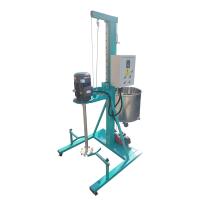
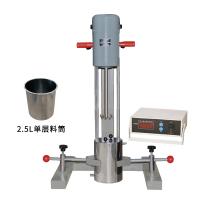
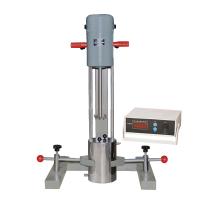
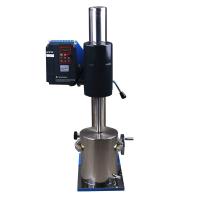
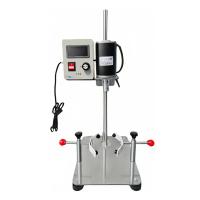
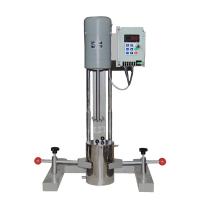
The dispersing equipment of latex paint is usually a high-speed disperser, and the pigment aggregates that cannot be depolymerized by the high-speed disperser still need to be ground. Grinding is a supplement to dispersion. The purpose is not to grind coarse particles into fine particles, but to apply high shear force to the difficult-to-disperse particle clusters formed by the aggregation of a large number of primary particles to disperse them. Commonly used grinding equipment includes sand mills, three-roll mills, ball mills, colloid mills, etc.
The dispersion of pigments and fillers in latex paint can be decomposed into three interrelated processes:
1. Wetting. Use pigment wetting agent and dispersant to replace the air and water originally adsorbed on the surface of the pigment, and prepare for the dispersion and stabilization process;
2. Scatter. Apply shear force to pigments and fillers, separate pigments and fillers agglomerates and aggregates through high-speed dispersers and Grinders, and at the same time disperse and wet the newly exposed surface with wetting agents and dispersants;
3. Stabilization. After wetting the surface of the pigment and filler, the dispersant is adsorbed on it, and stabilizes the dispersion by means of electric double layer, physical shielding, hydrogen bond, etc. The dispersion and stabilization of pigment is the balance of mutual attraction and mutual repulsion between pigment particles. In order to get a good dispersion of pigments and fillers and maintain a stable dispersion state in the coating, two points are very important: one is to select a suitable wetting and dispersing agent according to the characteristics of the pigments and fillers; the other is to use effective dispersing and grinding equipment to Pigments and fillers are dispersed (particle separation).
2. Preparation of initial coating
Add the white slurry with qualified grinding fineness to the emulsion in batches at a slow speed, and add the next batch after the first batch is added and stirred evenly. The mixing speed of the white pulp in the emulsion is generally 100-200r/min. The stirring impeller should not be a serrated disc, but an anchor type, three-blade paddle type, etc. The purpose is to require the entire material to be mixed at a low speed. Can turn all over without dead ends. What needs to be explained here is why the white pulp is slowly added to the emulsion in batches, rather than the emulsion is slowly added to the white pulp in batches. This is because the relative content of additives in the white pulp is relatively high, especially the film-forming additives, which have greater cohesiveness to the emulsion and can easily damage the chemical stability of the emulsion. Add the white pulp slowly in batches Stirring and mixing in the emulsion is to avoid contact between the emulsion particles or particle clusters and high-concentration film-forming aids, and to prevent damage to the chemical stability of the emulsion as much as possible. Of course, in the production formula of latex paint, if the amount of film-forming aids is small, the amount of solid powder is large, and the amount of emulsion is not too high. When added to the white pulp, there will be no abnormal phenomenon or no abnormal phenomenon can be seen with the naked eye. For example, in the production formula of a certain high-gloss latex paint, the total amount of various film-forming aids used is 70-85kg (referring to the production of 1000kg latex paint, the same below), the total amount of pigments and fillers used is 160-180kg, the emulsion The amount used is as high as 600-700kg. When producing this kind of latex paint, if the emulsion is added to the ground white pulp, it is very easy to make the emulsion particles aggregate and produce small soft particles like fish larvae. A phenomenon of emulsion breaking. Therefore, in the production process of latex paint, the production process of slowly adding white pulp to the emulsion in batches and stirring and mixing is relatively safe in terms of preventing emulsion coagulation and demulsification and ensuring product quality.
3. Preparation of latex paint products. The primary paint becomes the finished latex paint after defoaming, color matching and thickening.
1. Defoaming of latex paint: the method of adding antifoaming agent and defoaming agent in latex paint, it is better to add part of antifoaming agent and defoaming agent (mainly antifoaming agent, generally 1/3-1/2 of the total amount can be used) ) before dispersing and grinding the white pulp, and the rest are added to the primary paint, and even a small amount can be added before the latex paint is ready for production and packaging, and the latter is mainly defoamer. As for the type and total amount of antifoaming agent to be added, it should be determined according to the viscosity of the latex paint, the type and amount of emulsion and other factors. It should also refer to the recommended dosage of antifoaming agent manufacturer or supplier and It is determined by the coating effect after standing for 24 hours after the latex paint is made.
2. Color matching of latex paint: The color matching of latex paint should be under the guidance of the color paste manufacturer, through the repeated process of practice and practice, in order to achieve satisfactory results.
3. Thickening of latex paint: Thickening of latex paint is usually diluted with water first, and slowly added in batches to the initial paint, that is, the unthickened latex paint in a trickle manner under low-speed stirring, and fully stirred evenly. Make the latex paint reach a satisfactory and suitable consistency.