I. Introduction
Polyvinyl acetate is a very important chemical raw material. It is formed by emulsion polymerization of vinyl acetate under the action of peroxide and other initiators. It is mainly used as coating and adhesive. The more prominent features of PVAc latex paint are: large molecular weight, low viscosity, no organic solvents, etc.; when used as an adhesive, it can be directly modified with a variety of additives, with high mechanical strength and no lack of glue; when it is used As a water-based adhesive, it has the advantages of no pollution to the environment, making it a widely used product in polymeric adhesives. There are more expensive polyvinyl acetate paints on the market, so do your research.
2. Experimental part
2.1 Main experimental instruments and drugs
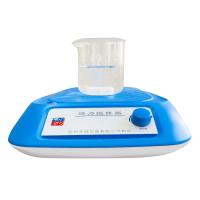
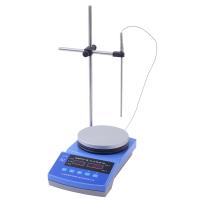
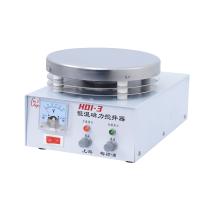
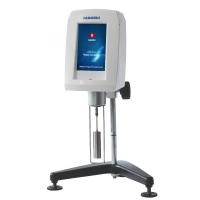
Viscometer, oven, stirrer, constant temperature Water Bath, reflux condenser; vinyl acetate, polyvinyl alcohol, OP-10, ammonium persulfate, dibutyl phthalate, sodium bicarbonate, filler, carboxymethyl cellulose Sodium polymethacrylate, sodium hexametaphosphate, sodium pentachlorophenate, sodium nitrite. The specifications are in line with the experimental standards.
2.2 Synthesis of polyvinyl acetate emulsion
2.2.1 Preparation process of emulsion
The emulsion polymerization system has low viscosity and is easy to dissipate heat; the reaction rate is high and the molecular weight of the product is large; the price is cheap and very environmentally friendly; the obtained emulsion can be used directly. Therefore, this synthesis adopts emulsion polymerization.
Preparation Process:
a. Preparation of vinyl acetate solution.
b. Add OP-10 and vinyl acetate and 10% ammonium persulfate aqueous solution.
c. Add vinyl acetate monomer dropwise.
d. Add the remaining ammonium persulfate, then add sodium bicarbonate solution, DBP, stir and cool to about 40 ℃ and discharge.
2.2.2 Orthogonal experiment scheme design
This experiment mainly investigates the influence of temperature, time and the amount of emulsifier on the viscosity and solid content of the product.
Orthogonal experiment, three factors and three levels: temperature (70°C, 75°C, 80°C), time (2h, 2.5h, 3h), emulsifier dosage (0.5g, 1.5g, 2.5g).
2.2.3 Experimental data recording
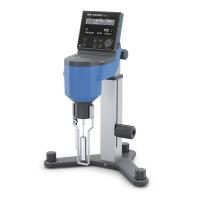
According to GB/T 2794-1995, use NDJ-8S digital display viscometer to measure the viscosity of the emulsion; analyze the data and find that the conditions for a good reaction are: temperature 75 ℃, time 2.5 h, emulsifier dosage 0.5 g, that is, monomer amount 1%. There is no such combination in the orthogonal experiment, so a verification experiment is also carried out.
2.2.4 Verification experiment
According to the experimental procedure in 2.2.1, do a verification experiment to test the viscosity of the emulsion.
2.2.5 Changing emulsifiers to synthesize emulsions
The emulsifier selected for the polymerization reaction is OP-10. Considering that its commercial price is relatively expensive, calcium dodecylbenzenesulfonate, which is cheaper, is selected as the emulsifier to synthesize polyvinyl acetate. The experimental procedure is the same as 2.2.1, the above-mentioned very good synthesis conditions, and then test its viscosity.
2.3 Synthesis of polyvinyl acetate coatings
Coating preparation process:
a. Synthesize the emulsion according to good reaction conditions.
b. Add distilled water, filler, carboxymethyl cellulose, sodium polymethylpropionate and sodium hexametaphosphate into a three-necked flask equipped with a stirring device, and stir evenly.
c. Disperse at high speed, add synthetic emulsion, sodium pentachlorophenate, sodium nitrite at low speed, stir evenly, and discharge.
3. Experimental results and discussion
Synthetic experimental data processing is as follows:
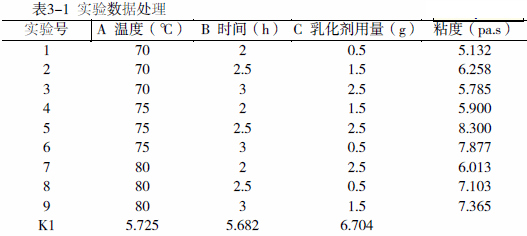
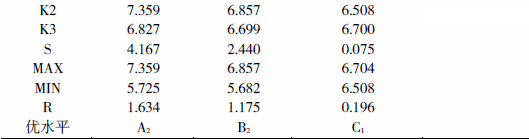
Experimental data processing
It can be seen from the above table that the range values of temperature, time, and emulsifier dosage are: 1.634, 1.175, and 0.196 respectively. It can be seen that the order of primary and secondary factors affecting the viscosity of polyvinyl acetate emulsion is: temperature > time > emulsifier dosage.
It can be seen from Table 3-1 that as the reaction temperature rises, the viscosity of the emulsion first increases and then decreases, and the viscosity of the emulsion reaches the maximum at 75°C. It can be seen that the emulsion can achieve better results when the temperature is 75°C. With the increase of the reaction time, the viscosity of the emulsion also showed a trend of increasing first and then decreasing, so when the reaction time is 2.5h, the emulsion can achieve a better effect.
When the dosage of emulsifier is from 1% to 3% and then to 5%, the emulsion viscosity shows a trend of first decreasing and then rising, and when the dosage is 1% of monomer, the performance is better, and from the perspective of production cost, the dosage of 1% is selected for comparison suitable.
The viscosity of polyvinyl acetate emulsion measured by the verification experiment is 7.932pa.s. Considering various factors, especially from the perspective of improving the viscosity of polyvinyl acetate emulsion, a good synthesis scheme is: temperature 75 ℃, time 2.5 h, the amount of emulsifier is 0.5 g, which is 1% of the monomer amount.
3.1.1 Effect of temperature on polymerization reaction
Polymerization temperature is an important factor affecting the polymerization reaction. When the polymerization temperature is too low, the reflux will be larger when the temperature rises later, the reaction will not be complete, and there will be more remaining monomers; The temperature rise at the end of the late stage of the polymerization reaction should not be too fast. Otherwise, a large number of bubbles will be produced, and the particles of the emulsion will become coarse and agglomerate, resulting in the loss of viscosity of the polymer.
3.1.2 Effect of time on polymerization reaction
Polymerization time is an important factor affecting the reaction. The longer the reaction time, the more complete the polymerization reaction. The larger the molecular weight, the greater the viscosity of the emulsion, but the cost performance must also be considered.
3.1.3 Effect of emulsifier dosage on polymerization reaction
The amount of emulsifier is an important factor affecting the polymerization reaction. According to the analysis of experimental data, the viscosity of the emulsion decreases first and then increases with the increase of the amount of emulsifier. From the perspective of production cost, it is better to choose a low content (1%) emulsifier. It can also be seen that the amount of emulsifier has little effect on the quality of polymerization.
3.2 Performance testing of coatings
3.2.1 Water resistance
Refer to GB 9152 to prepare test panels, and prepare paint films on three tinplate panels according to GB 1727. For testing the water resistance of coatings, refer to GB/T 1733-1993 and use the boiling water test method. The test results of the experiment are: the three test panels coated with the paint synthesized by the two emulsifiers have no peeling off, no blistering, and no wrinkling phenomenon observed by the human eye, which meets the requirements of JC/T 423-91 water-soluble interior wall paint. skills requirement.
3.2.2 Appearance of coating film
Referring to GB 11175-89, observed by human eyes, the paint synthesized by the two emulsifiers has no visible coarse particles and impurities, and the appearance is smooth and uniform in color, and the appearance is qualified.
3.2.3 Viscosity
Referring to GB/T 2794-1995, the viscosity of the paint synthesized by OP-10 as emulsifier is detected by NDJ-8S Rotational Viscometer, which is 18.425 pa.s, which meets the national standard; calcium dodecylbenzenesulfonate is used as emulsifier for detection. The viscosity of the paint is 13.537 pa.s, which is also in line with the national standard.
Four. Conclusion
In this experiment, polyvinyl acetate coatings were synthesized with vinyl acetate, ammonium persulfate, polyvinyl alcohol and emulsifiers as raw materials, and the optimum conditions for polymerization were found through the orthogonal experiment scheme: the temperature was 75°C, the time 2.5h, emulsifier dosage is 1%. Discuss the influence of temperature, time and emulsifier dosage on the viscosity of polyvinyl acetate emulsion. And replace the OP-10 synthetic paint with calcium dodecylbenzenesulfonate. Although the viscosity of the synthesized paint is low, the result is also in line with the national standard. The economic benefits, so calcium dodecylbenzenesulfonate can be regarded as a satisfactory emulsifier.