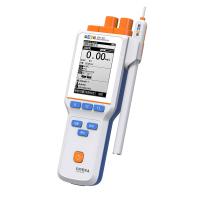
The oxygen content in water can fully show the degree of self-purification of water. For biological treatment plants using activated sludge, it is very important to know the oxygen content of the aeration tank. The increase of dissolved oxygen in the sewage will promote biological activities other than anaerobic microorganisms, thus removing volatile substances and natural oxidation. ions to purify sewage. There are three main methods for determining oxygen content: automatic colorimetric analysis and chemical analysis measurement, paramagnetic method measurement, and electrochemical method measurement. The amount of dissolved oxygen in water is generally measured by electrochemical method. Oxygen can dissolve in water, and the solubility depends on the temperature, the total pressure of the water surface, the partial pressure and the salts dissolved in the water. The higher the atmospheric pressure, the greater the ability of water to dissolve oxygen. The relationship is determined by Henry's law and Dalton's law. Henry's law holds that the solubility of a gas is proportional to its partial pressure [1].
How are dissolved oxygen analyzers and pH meters used in sewage treatment?

Guess you like it



Relevant knowledge
- 1Principle and Application of Standard pH Meter
- 2Method for determining amino acid pH value
- 3Basic principle and application analysis of anti-fluorine pH meter
- 4Proper use and maintenance of pH meters
- 5Understanding and Addressing Common Challenges in the Use of pH Meters
- 6How to use pH meter
- 7Differences between three STIP-scans: pH Meter, Conductivity Meter, and Dissolved Oxygen Meter
- 8PH meter conversion of mv and ph value
- 9Common types and application differences of STIP-scan
Author:
宋雯雯
Source:
溶解氧分析仪和pH 计在污水处理中的应用
Products