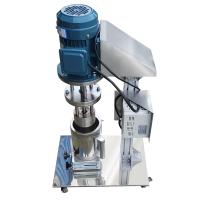
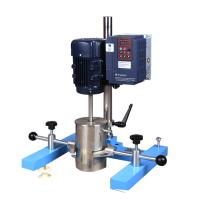
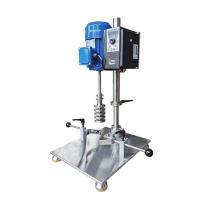
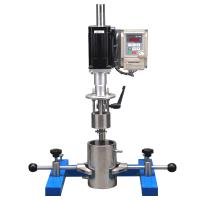
The production of paint can be simply summarized as follows: the process of paint production is to crush solid pigment particles by external force and disperse them in resin solution or emulsion to form a uniform and fine suspension dispersion. The paint production process typically employs four steps.
1. Pre-dispersion
Raw pigments need to be processed commercially, including crushing and drying. During the drying process, the finer pigment particles will agglomerate, making their particle size many times larger than the original particles. Therefore, they cannot be directly used for coloring and need to be pre-painted. Distributed processing.
Mix the pigment with part of the paint in a certain equipment to prepare the mixed color paste that belongs to the semi-finished product of the pigment color paste, and at the same time facilitate the subsequent grinding;
2. Grinding and dispersion
The pre-dispersed mixed color paste is fully dispersed through a grinding and dispersing device to obtain a pigment color paste.
3. Paint mixing
Letting down usually refers to the process of stabilizing ground paint slurry in the production process of paint (paint), including adjusting color, solid content, viscosity, filling materials, etc., and then obtaining the required liquid paint products.
Letdown includes both paint letdown during paint production and paint letdown during paint use.
Paint mixing is to add the remaining base material, other additives and solvents to the ground pigment paste, and to adjust the color when necessary to meet the quality requirements of the paint.
4. Purification packaging
Various impurities and large particles are removed by filtering equipment, and the finished paint is packaged. The main equipment for coating production includes dispersing equipment, grinding equipment, paint mixing equipment, filtering equipment, conveying equipment, etc.