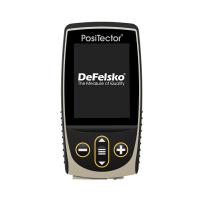
Defelsko Coating Thickness Gauge for double coated Film thickness measurement
The Defelsko PsoiTector6000 FNDS Coating Thickness Gauge can simultaneously measure coating thickness and galvanized layer thickness in one composite coating system.
background
Steel corrodes when an electrolyte (such as water) connects the anode and cathode on the steel surface. The corrosion of batteries is caused by flakes of iron oxide called rust.
To avoid rust, it is necessary to prevent the formation of corroded cells. Two common methods for corrosion protection of steel:
Catholic protection (using sacrificial anode).
Create a barrier that blocks the electrolyte from contacting the steel.
Double coating combines cathodic protection (galvanizing) and barrier layer (paint or powder coating).
application
Two-coat systems combine two corrosion protection systems – usually paint or powder coating on galvanized steel (thermal, electric or galvanized metal). Corrosion-causing dual-coat systems are superior to single-use protective systems.
Benefits of a two-coat system:
Extended life of coating systems and underlying substrates
Delayed maintenance cycle less maintenance, lower maintenance costs
color coded
aesthetics
measurement challenge
Measuring the thickness of these layers with traditional instruments is challenging.
Typically, magnetic watches such aspositector 6000 F1 or non-magneticIron is used to measure zinc layer thickness. The same instrument then measures the total thickness of the zinc and paint layers together. The difference between the two readings is the paint thickness. This method assumes no change in the thickness of the zinc layer.
In reality, the zinc layer thickness is not uniform throughout the part or structure. Coating thickness depends on thickness, roughness, chemistry, steel is galvanized and design. Any or all of these factors may produce a galvanized coating of non-uniform thickness.
The second conventional method uses a combination of magnetic field and eddy current probes etc.positector 6000 FN3. Two readings, paint thickness in eddy mode, second in magnetic mode for total coating thickness.
The difference between the two readings is the thickness of the zinc layer. Again, this method assumes that the zinc layer thickness does not exceed the structural variation.
These two methods are time-consuming and error-prone. thispositector foundDual probes perform this operation at a glance, simply and accurately.
DeFelsko's solution
thispositector 6000 FNDS3A dual coat Thickness Gauge measures the individual thickness of the paint and a single reading of the zinc layer of a two coat system.
In duplex mode, thePositector 6000 FundSimultaneously calculates and displays individual paint and zinc layer thicknesses using magnetic (ferrous) and eddy current (non-ferrous) principles.
The magnetic principle is applied to the measurement of combined paint/zinc layer thickness on ferrous substrates, and the eddy current principle is applied to the measurement of paint thickness on non-ferrous metal zinc coatings.
The zinc layer thickness is calculated by subtracting the paint thickness from the combined paint/zinc thickness measurement.
When not in duplex mode, the gauge behaves like a conventional magnetic/non-magnetic dual purpose Thickness Gauge (similar to the positector 6000 FNS probe). Suitable for measuring the thickness of non-magnetic coatings on magnetic metals and non-conductive coatings on non-magnetic metals.