Coating Adhesion Test Cases according to ASTM D4541
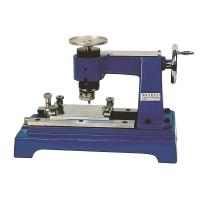
In a recent coating project, adhesion testing was based on ASTM D4541. The specified requirement is to test at least once per 1,000 square feet of coating and once every 100 square feet of coating repair. The coating specification itself requires a minimum adhesion of 1000 psi. However, the coating specifications are for specific 100% volumetric solid polyurethanes, and the PDS advertises an adhesion value of 2000 psi. Before starting work, it was decided that at least 1900 psi of coating was needed for testing. It seems reasonable that the coating adhesion should be at least 95% of the advertised value (95% psi of 2000 psi = 1900 psi). Many tests were 2000 psi or higher with no adhesion failure. Unfortunately, many tests do not meet the minimum requirement of 1900 psi. Several failed tests with a small total area meant that the contractor had to reblast and coat large areas. Boy, is he stuck?!
This is necessary, the coating substrate is well bonded, and adhesion testing seems to be a simple task. But the adhesion of coatings is very complex and difficult to understand. Simple adhesion tests, etc., attempting to use putty knives or knives to detect elevator floors are subjective. The pull-out tensile adhesion test is simple in concept, and it provides a single discrete amount of force needed to cause a fracture. In the case of bonding and cohesive failure should be noted from the nature of the coating fracture, as well as the relative area, sometimes it is, but it is a discrete quantified value for people .
Although the result of the test is a single value, any such test is merely an indication of the relative performance. There are more coating adhesion tests than the numerical values obtained using the tool The result can be taken as a pass/fail. ASTM D4541 Test Method is specified, but it provides information that this item is completely ignored.
The test reflects the material and instrument parameters. Different tools and different adhesives give different values. Varying temperatures, humidity, and other factors are complex. Even the stiffness of the substrate affects the test results. For examples, all other things being equal, the test values are generally higher, compared to 1⁄4-inch-thick steels and 1⁄8-inch-thick steels.
The main problem is the lack of reproducibility of the test method. ASTM D4541 6.1.1 says that at least three repetitions are usually required to perform a categorical statistic test area (one per 1000 square feet of test work compared to the requirements of the test). With SSPC-PA 2, the aim is to statistically classify the area, not to look for and find a lower value.
ASTM D4541-02 contains a section of Resolution Accuracy and Table showing the expected variance of laboratory test results (within a laboratory done in the same laboratory, as well as inter-laboratory-a comparison between different laboratories). 3. Change takes on different forms. The first is the coefficient of variation, which is a decimal place or divided by the standard deviation of the sample that means the proportion (mean) that is determined. The second is in terms of degrees of freedom, which involves samples of the t-distribution. (In the familiar bell curve.) think) these terms, only one statistician can. Thankfully, the third method is a good fit for coating professionals—a maximum acceptable percentage difference.
The table shows that depending on the instrument type, the acceptable percentage difference between the two values could be about 25% and 58% respectively. This provides a clear indication that testing is quite variable, but one example helps. For the same laboratory Type IV instrument, Table 1 of ASTM d4541-02 gives a coefficient of variation of 8.5% with 48 degrees of freedom, and the maximum acceptable difference is 29%. The different percentages are determined relative to the simple equation of the two test results below.
Now consider two test values: 2100 pounds and 1600 pounds. The plugging equation gives a result of 27%, which is less than 29% of the maximum acceptable ASTM difference. The prescribed accuracy test method is poor, and these two values are not, 2100 pounds or 1600 pounds, which can be declared as one is correct. A very small sample has very few measurements, and these two values should be treated as almost identical results. It's not common sense, but it's accurate, or lacking.
Accuracy and precision are sometimes thought of more or less the same thing when in fact, they are very different. Accuracy is a matter of purpose. Accuracy is a matter of repeatability and reproducibility. For example, when throwing a dart and aiming at the bull's-eye, if you throw three darts every inch landed from the center of the bullseye but spaced at one corner of an equilateral triangle, it has good accuracy, but poor accuracy. Darts are close to the target, but they are not close to each other. In fact, they are targeted in every way. Conversely, if all three darts land in a double 20 slot, the accuracy is inferior but accurate. Good precision and good precision are required to bring all three darts close to the bull's-eye and close each other.
The disadvantage of the tensile test method is that the accuracy of the various pull-out tests can be calibrated well, however, the accuracy is not very good. Not very precise in the laboratory. Don't expect it to be better in field conditions.
Specifying the minimum tensile strength of the 1900 psi adhesion value to obtain 5% on this item Ad adhesion 2000 psi coating www.paintsquare.com jpcl/April 2004 PCE 19 use seems reasonable if one does not know what about coating materials, instrumentation, and ASTM D4541 standard test methods. The adhesion of the coating is not like the tensile strength of steel and the compressive strength of concrete. Coating with an adhesion value of 2000 psi is not twice as good as an adhesion value of 1000 PSI. In fact, a lower coating adhesion value can be better for the performer. PSI is a convenient and familiar unit of measurement. The coating can be applied in square feet without performing or by squaring what fails. Don't stop at magic numbers.