In order to satisfynowadaysAn increasing number of discerning customers expect highly complex multi-step finishing furniture style finishing systems are becoming more and more commonly used rather than the exception in all industries of the woodworking industry. These trends in finishing require the use of glazes, coloring, toners and other high performance. With these systems collated, players need to be more vigilant in testing to ensure that the adhesive performance of the system will successfully meet the expectations for product performance.
Adhesion is a topic of concern placed on the adhesion properties of coatings formulated in the laboratory, however, from the user's point of view, adhesion is often overlooked or misunderstood. From a terminator's point of view, this is my intention, to provide a complete test of the knowledge of coating adhesion and methods of coating adhesion.
The adhesion of the coating to the substrate is called the "adhesion ability of the substrate," and the ability of the coating to adhere in the system is called "cross-layer adhesion to the multi-coat." ”
Mechanical and chemical bonding
There are two factors that affect the ability of a coating to adhere to a surface: mechanical and chemical bonding.
Mechanically adhered coatings insist on grinding and scratching the surface of the profile, and the fibers of the substrate on the surface of the mechanical safety film. Deeper and larger sand profiles increase the adhesion of the coating while the shallow profile and smooth surface hinder the ability of the coating to hold adequately.
Chemical adsorption refers to the ability of a coating to adhere to the chemical composition of a paint formulation under the influence of various chemical coatings. The coating needs to have enough wetting properties to penetrate the surface of the pores and wet the fibers of the surrounding matrix. The coating system mixes solvents so that the coating is fired within the coating system. The resin properties of the coating change, affecting the ability to adhere.
On the scale of movement in the general law of coating technology, the performance of polyurethane polyester adhesives is significantly improved by converting varnish from paint to two-part polyurethane polyester adhesive.
It cannot be assumed, however, that the products will be equal in each category. Each product will have its own degree of specific adhesion properties. The Terminator is responsible for verifying that the selected coating system will meet the necessary adhesion requirements for each specific finishing project. The same coating system will also exhibit varying degrees of chemical adhesion to a variety of wood species and substrates. The resin in wood and asphalt and oil can significantly affect the chemical adhesion of the coating. Keeping in mind that all the different factors that affect bonding performance, trimming requires making the right decisions about the coating system that is used.
Detailed completion progress and standard operating procedures should be approved in writing from the paint supplier's representative and signed. Verification The selection of a sound, safe, and finishing coating system requires adequate testing of the adhesive film prior to production.
Three methods to assess adhesion
There are three different methods to evaluate the resistance of coatings to separating substrates and to provide different membrane adhesion analysis: cross-testing,scrapeAdhesion test and pull-out test.
The scrape test method utilizes weighting, balancing beams with a round pen or attached to a beam ring. The plate with a dry paint film is underneath the pen and beam loaded with more and more weight until the finish scrapes loose from the substrate. The calculator uses a weight in kilograms to be removed from the film, to specify a value for the adhesive properties of the coating. This procedure includes American Standard Test Method (ASTM) - d2197, d2248, d2454, 5178, depending on the coating and substrate are. The full test method may be found on the ASTM website。
Second, the cross-cutting test, a commonly used test method in the wood industry. This test is quick and easy to perform with an inexpensive cross-cut assay kit (Paint adhesion Tester)。 A lattice pattern is cut into a lacquer film to the substrate, using a cross knife. Test the area and then brush it five times, each time diagonally to remove any loose particles from the film to finish.
Then there is the test, the special tape adheres firmly to the application cross test area and the pull tape comes back to the test area to reveal the coating amount and the test tape that lifts off quickly removes. Cross-hatching test area immediately compared to the (ASTM) standard and d3359 3002.
The image above, from left to right, is a cross-cut test. First, cut across the hatching to complete the cross-hatching of the film on the substrate. Then brush across the hatching area. With the application area of the cross belt, unplug. Finally, the cross-test area was compared to the ASTM adhesion standard, which was lower. Photo courtesy of the American Wood Fiber Society.
In the standard there are five drawings with different degrees of cinematic visual drawing. ASTM Class 5b states that there is no representation of the highest level of pull-off adhesions. ASTM Class 1B states that the film is removed between 35% and 65% on behalf of poor adhesion. Classes 2b-4b represent different degrees of adhesion decline between class 1B and class 5B. Naturally, this visual comparison results are sometimes subjective and ambiguous, and the test is related to a numerical value.
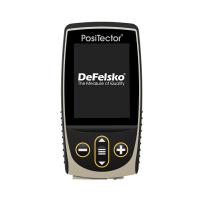
The third method uses a hydraulic pull-out Tester to measure pounds per square inch of tensile stress (PSI) required perpendicular to the substrate direction of the separating membrane. To perform this test we use the DeFelsko Negotiable Adhesion Tester, which follows ASTM D4541 to perform this. Metal-loaded trolleys are fixed with adhesives or adhesives provided perpendicular to CA's dry film surface (cyanoacrylate or "super glue").
Standard ASTM adhesion
When the adhesive cures, the trolley is connected to the hydraulic application of the hydraulic unplugging equipment and gradually increases until the trolley pulls the coating off the substrate. The pressure displayed in the test gauge (PSI) is required to separate the membrane from the substrate.
The result is a definite number of adhesive properties that may be assigned to the coating. There may be differences due to different wood substrate density test panels and readings obtained in different areas. In the range of high-low, unplugging pressure is achieved to achieve the expected value of the coating adhesive that should be dispensed to acceptable.
According to our research, there is no finding that the standard expects to pull out each type of coating suitable for a variety of substrates that need to be evaluated by a specific coating system to determine the pressure terminator.
How much time lapse should occur before curing and adhesion testing? Post-initial curing coating and post-occurrence inspection of long-term treatment are recommended. Coatings should follow the manufacturer's recommendations regarding when to perform adhesion testing. Quantitative factors such as mining applications, air drying or curing forced drying methods and types of coatings need to be tested when considered.
Typically, a second trial should be conducted after 30 days. As the coating continues to cure, the adhesion properties change. Some coatings will improve adhesion and the coating will continue to crosslink, reducing the adhesion rate of different substrates or coating interlayer shrinkage systems within other coating systems.
Players need to always let go of the adhesion to prevent unqualified. Where major product failures can lead to bankruptcy costs to your terminator and your work.