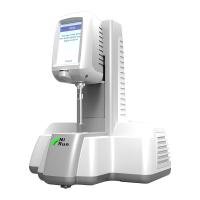
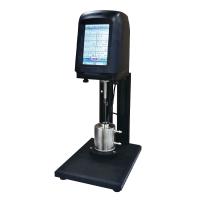
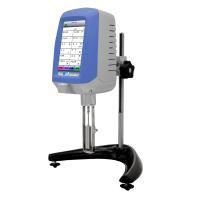
Getting a new car is always exciting. The automaker's online configuration tools allow me to turn my fantasy into a two-dimensional or even three-dimensional reality on my computer screen. Many questions came to mind, of which the following seemed particularly important to me: Which car paint should I choose? Color - an expression of my personality. Its quality - guarantees the body against environmental influences. In this article, you'll learn the basics of painting a car and how a rotational rheometer can help you.
Origin of rust
I remember my parents constantly discussing the rust on our car.

In my childhood, I naturally had no idea where the appearance of this copper coin originated, causing the surface to flake off at worst. Now, as a chemist, let me explain why the quality of your car's paint is so important to preventing rust. Once the anode, cathode and electrolyte are present, rust develops. The body of our car acts as the anode/cathode, and water - like simple rainwater - serves as the electrolyte. Once the car paint is chipped or scratched, the protective effect of the car paint is lost, and an electrochemical process occurs, which leads to corrosion. Since the car body is mainly made of different kinds of steel, it will produce different iron oxides, which will cause rust. Once the protective layer is broken and rusted, its progression does not occur significantly.
The process of drawing a car body
Automotive coatings are usually applied to the body in several layers, each a few microns thick. There can be more than 20 process stages (including cleaning, degreasing, drying, etc.). In this article, I'll summarize the top 5:
Preparation: The bodywork is effectively cleaned and degreased. A phosphate coating is used as the first layer. It acts as a corrosion protectant and later provides the necessary layer to bond the paint.
This step is followed by electroplating. Solid paint particles are deposited onto the substrate by electrophoresis.
Spraying processes (e.g. by spray booth systems) are used to apply the primer. The primer acts as a leveling and protective layer.
Afterwards, a primer is sprayed on the body. The final product of the primer can be, for example, solid or metallic. Although solid particles have better machinability, metal particles are more difficult to apply to car bodies because the solid particles need to be aligned in one direction to obtain a smooth surface.
The final step is to apply the varnish. Clear coats are used to protect bodywork, usually made of steel, from abrasion and UV exposure. Given the bright, clear, reflective and glossy exteriors that most cars have, a recent trend among automotive automakers has been embraced by consumers - matte finishes. Matt finishes are mainly applied in this process step and result in a hazy appearance.
Painting Cars: How Rotational Rheometers Can Support Automotive Paint Applications
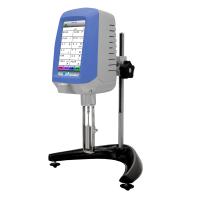
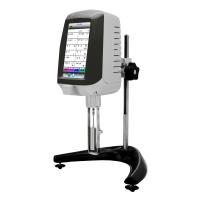
Understanding the viscosity of an automotive coating cannot be overstated in its importance to its application process, final quality and long-term durability. There are two main applications of rotational rheometers that can help you achieve good processability and finish in automotive paint:
The paint is usually pumped through a pipe to the nozzle. A rotational rheometer can help you study the flow behavior of automotive paints at different shear rates. Thus, your pipe shape can be designed to your heart's content.
Studying the thixotropic behavior of automotive paints is important for the final appearance of the car. Of course, I want my car to be smooth and well-surfaced. The three-interval thixotropic test (3ITT) simulates the behavior of automotive paint during spray application:
Low Shear Interval: Evaluating the Behavior of Static Automotive Coatings.
High Shear Interval: Loading is applied to the sample to cause structural breakdown. This step is equal to the stress that is applied to the coating of the car during the spraying process.
Low Shear Intervals: How Does Automotive Paint Regenerate and Adhere to Primer? Structural recovery needs to be adjusted to ensure good flow behavior and prevent sagging.
This valuable information is highly relevant to the entire Paints and Coatings industry.
in conclusion
The application of automotive paint to the body is one of the most demanding process steps when painting a car. To protect it from wear and ensure a uniform protective layer, for example against UV rays or moisture, a good high-quality surface is required. A rotational rheometer can help you achieve good processability. It supports quality control steps before and during construction - ensuring long-term corrosion protection and a good 'finish' of the car.