Screen Printing - measurement (mesh, emulsion, template Film thickness)
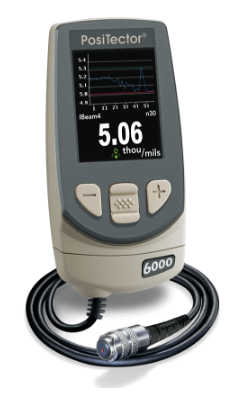
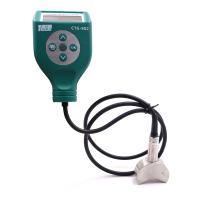
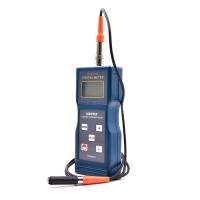
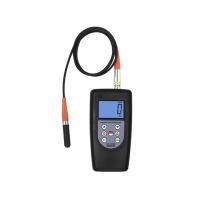
The Positector 6000 FS accurately and non-destructively measures the thickness of grids, emulsions and stencils, as well as substrate and dry ink deposit thicknesses. positector6000 FS uses the principle of magnetic induction to quickly measure the thickness of magnetic materials.
Origin of screen printing
The modern screen printing process was patented in 1907. It involves silk stretched over a frame to support a hand-painted template. In 1914, the process was expanded to a multicolor printing and screen process. The popularity of silk increased at this time, and the industrial printing process began for flags, banners, and billboards in stores. The equipment and materials for screen printing have improved in quality, but little has changed in the actual process. Screen printing is used everywhere these days. Applications include store displays, posters, billboards, electronic equipment marking, textiles, apparel and bumper stickers.
screen printing process
The process begins with a fine nylon mesh stretched over a wooden or aluminum frame. The mesh is coated with a photosensitive emulsion or film that, when dry, blocks the holes in the mesh. The image to be printed is output onto the film transparency. The positive transparency and coated mesh are put together and then exposed to UV light. A jet of water is used to wash any emulsion from the screen that has not been hardened by ultraviolet light, producing a stencil that corresponds to the image on the film. The screen fits into the printing press and the printed substrate is placed under the screen. Ink is placed on top of the screen and a rubber squeegee is pulled over the top of the screen, forcing the ink through the screen onto the substrate. When printing multiple items the scraper floods the screen and returns to stroke again. Each item is then heat cured to permanently set the ink. This process is repeated as often as needed for multicolor projects.
Mesh Thickness Measurement
The positector 6000 FS Thickness Gauge (screen printing) is specially designed for thickness measurement on fabrics and stencils. The mesh of the bridge for wide face probes allows the probe to always measure grids and templates from node to node. Since the thickness of the mesh varies during tensioning compared to the thickness determined by the manufacturer, it is important to determine the thickness of the mesh on the extended screen during printing tension. After zeroing the probe of the PosiTector 6000 FS including the ferrous substrate, the gage is ready to provide an accurate thickness measurement of any substrate or screen lying flat on the substrate.
Accurate mesh thickness measurements are important because they are a key factor in the formula used to predict a mesh's wet ink deposit. Due to variations in screen thickness, repeatability can be improved using statistical pattern selection models. Statistical function, the meter automatically calculates the running average reading. The measurement range in FS is 60 mils (1.5mm). The positector FS has 1% variable accuracy up to 0.05 mm (1 micron) resolution.
Template build thickness measurement
With the ability to measure the thickness of webs and stencils, users can predict and control critical elements in the screen printing process. Process control is to control the surface mesh and latex thickness on the formwork. The thickness of the stencils should also be checked regularly with a positector 6000 fs gauge, especially for shop, hand coat screens.
For non-UV ink applications and general printing for jobs that do not require extreme detail, emulsion build-up at about 20% grid thickness usually provides very good print resolution and edge definition. A measured 20% EMR (in mesh to emulsion) provides sufficient emulsion build-up to effectively lift the thread off the surface of the print while reducing any printed image loss allowing ink to fill the entire image area of the shoulder.
Applications involving detail, multicolor or UV printing require a thinner overall stencil thickness. 10% EMR is more common as it provides enough relief from the stencil on the substrate side of the mesh, but still greatly reduces the thickness of the screen (mesh plus emulsion), and very fine details can be released from it without bleed.
The coarser the mesh, the thicker the latex paint required the encapsulated mesh to form a mold with a smooth mold surface (RZ value). Fine meshes are generally easier to coat and provide a smooth formwork at a given thickness.
Template thickness
To determine the surfacing thickness of the mold, the first step is to zero-stretch the mesh FS probe. By including the grid under the metal substrate, reaching a mean value of zero (accounting for variations in the grid), the grid becomes zero-valued. The meter will display EOM when the measurement is on the screen (emulsion builds up the grid on the screen). Like all rough substrates or coatings, better repeatability can be achieved by averaging multiple measurements.
Thickness measurement of emulsion
If the emulsion coating is too thin, it will not provide a proper gasket seal. The ink will bleed below the stencil. This will result in a print with uneven edges (see teeth). Other symptoms include latex-painted images with insufficient thickness, loss of dots obtained in highlights and shadows. If the emulsion builds up too high, the shoulder of the print will have a vertical wall or column too high, and the ink may or may not completely fill this area. If the ink does not fill the areas, the print will show voids. If ink does fill the column it must not release properly during printing. Even when the ink is not released, too much ink can be deposited in the image.
Dry ink layer thickness measurement
Using a similar method to measure dry ink emulsification, deposition thickness can be achieved. Place the metal substrate and zero FS probe on the bare substrate. After reaching an average value of zero (accounting for variations in substrate thickness across the substrate) the value becomes zero. The gauge will only show dry ink thickness when measured on a printed substrate.
Dry ink deposition measurements on substrates clearly demonstrate the use of electronic gauges in most mechanical thickness measurement devices (calipers and micrometers). In addition to its accuracy and simplicity, the digital meter can easily measure any area of the print without cutting the substrate enabling access to the measuring device.