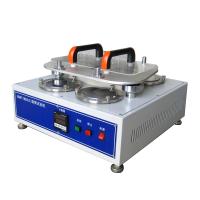
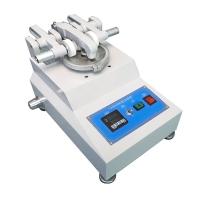
motion This means:Type of weardevice –The test setup should be a robust design that provides reproducible and reproducible results. Loads, speed parameters, equipment construction, positioning stiffness, and supply of abrasives require adequate control to ensure stable wear conditions.Materials involved – Worn architectures include specimens and antibodies (usually some kind of abrasive). Note that different materials can be worn in different situations and can also be affected by the wear and tear of other contacts.Abrasive (Anti-abrasive) – Popular types of abrasives include textiles, sandpaper, abrasive, and engineering. While abrasive particles may not be the main cause of actual wear, they are often used to speed up experiments. Abrasive particles, whether they are embedded in the adhesive material or loosen the effect on the wear rate.Angular or "lumpy" shapes can produce up to ten times the wear rate compared to the shape of round particles – particles. The size of the particles is self-evident in its importance, and the smaller particles are less proportional than the larger ones, causing wear. Type – Popular abrasive particles include silicon carbide and alumina. Create a thin scraping pattern with sandpaper, silicon carbide and usually reduce faster due to clearer particles than alumina. Both types can be used as an open or closed coat coat sandpaper. (Open coat to help prevent clogging of the voids and open spaces between the sand particles.) Closed coating abrasive materials such as metallic finishes but easy to clog better. ) Brittleness – how easily the grinding is damaged, the fragments are locally under heat and pressure, creating new sharp edges. Contact geometry – Include the shape of the grinding head or abrasive, and contact between it and the specimen. Some systems may require specimen and abrasive "wear" to establish a uniform, stable contact geometry. While point contact eliminates many of the alignment problems associated with geometries of other contacts, stress levels can be used as a development variation for wear, requiring more sophisticated data analysis and comparison techniques.Contact pressure (Loading) – With accelerated testing, the load may exceed what is actually seen in the field. This parameter typically includes the force, when the abrasive material is pushed against the specimen in a frictional motion.Sliding speed (Sliding velocity) – how quickly the abrasive movement in the specimen is. While the acceleration is desirable in the test, if the speed is too fast for the material (abrasive), the accuracy of the test can be compromised by introducing different phenomena.Lubrication condition – Lubrication affects the frictional properties of the material. Formulations that usually involve metals and plastics also include lubricants.Preparation of specimens – Specimen preparation and test control with different details of testing and materials. For example, surface roughness, specimen microstructure, geometry, uniformity, and hardness need to be controlled for testing involving metals. Similar control is also necessary for the reverse and abrasion of the resulting medium.environment – Many materials are sensitive to changes in temperature and humidity, and changing the test environment can affect the results.
How to choose a Wear testing machine

Guess you like it

Relevant knowledge
- 1Introduction to common wear resistance test methods
- 2Principle, Application and Selection of Adhesive Tape Wear testing machine
- 3Briefly introduce the working principle, application and selection precautions of rubber Wear testing machine
- 4Basic Principle and Application Analysis of Asphalt Wear testing machine
- 5Basic Principle and Application of Lubricating Oil Wear Resistance Tester
- 6Demonstration of RCA wear-resistant tape machine
Air - 《南北潮》
- 7The principle, application, operation and selection of wear-resistant testing and wear-resistant testing machines
- 8How to extend the service life of rubber?
- 9Briefly describe how different industries view product packaging