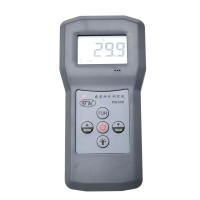
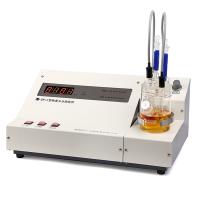
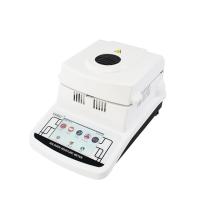
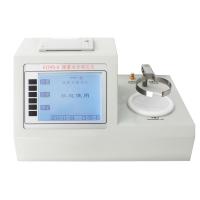
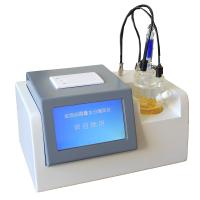
Trace moisture analyzer is widely used in electric power, petroleum, chemical and pharmaceutical, food and solar panel cutting fluid and other fields. Today, Shanghai Danding will explain to you the basic knowledge points of the trace moisture analyzer. The following mainly introduces the characteristics, preparations before use, common problems, causes and solutions of the trace moisture analyzer:
Features of Trace Moisture Analyzer
Small in size and light in weight; it can display the titration process in Chinese and can input and output in Chinese and English.
Color LCD screen display, graphical interface, simple and convenient operation, easy to master.
The LCD screen directly displays the dew point, tiny water (ppm), ambient temperature, ambient humidity, time and date, battery power, etc.
With touch screen input, the complicated detection process can be completed independently with just a single click.
Prepare before use
1. Handling the electrolytic cell: specific operation: shake the electrolytic cell a few times to make the water on the inner wall of the cell bottle fully absorbed by the electrolyte, then put the electrolytic cell into the holder, turn on the stirring switch, and adjust the stirring speed. Make the liquid surface form a small vortex, insert the measuring electrode plug and the electrolytic electrode plug into the corresponding socket of the host, make them in good contact, and turn on the electrolytic switch.
Note: In the state of over-iodine, the green lights of the measurement signal indicator and the electrolysis signal indicator are all off, and only one red light is on respectively, and the digital display does not count.
2. Adjust the balance of the electrolyte: Specific operation: If the electrolytic cell is still in the state of deep iodine, press the start button, inject it into the electrolytic cell several times through the hole in the middle of the sample injection cock, and observe the electrolyte at any time. The color changes until the electrolyte turns light yellow, the measurement signal light and the electrolysis signal light are green, and the counter starts counting. After the counting stops, stop stirring again, pick up the electrolytic cell and shake it gently for a few times, so that the water on the inner wall of the cell bottle is absorbed again, and the calibration can be carried out after the end point alarm.
3. Calibration: Specific operation: After the electrolyte is stable, draw a small amount of distilled water with a micro sampler, wipe the needle with filter paper, press the start button, inject it below the liquid level, the instrument starts counting, reaches the end point, displays the water volume, and continuously calibrates for 2 ~3 times, the counting values are all within the required range, indicating that the instrument is accurate.
Note: When calibrated with distilled water (100%), the allowable error is within ±10%.
common problem
1. The color of the anolyte is not bright yellow, but between brown and dark yellow.
Reason: The color of the electrolyte of the moisture analyzer is too dark, which means that the response ability of the electrode to the electrolyte is reduced.
Solution: You can clean the double platinum needle electrode with a paper towel to remove the adsorbate on the surface; check whether the measuring electrode is connected normally; the measuring electrode may be faulty.
2. Pre-titration of fresh anolyte, drift too high
Cause: There is residual water in the titration system.
Solution: You can replace the molecular sieve and silica gel in the drying tube, check whether the electrode interface and the plug interface of the titration stand are tight; you can properly apply silicone grease to some loose interfaces.
3. What is the reason for the high drift during standby titration?
Reason: The water in the cathode cell penetrates into the anode cell through the diaphragm.
Solution 1: You can replace the anode cell electrolyte; add a small amount of single-component volumetric Karl Fischer reagent to the cathode electrolytic cell for drying; keep the liquid level of the anolyte higher than the liquid level in the cathode cell.
Solution 2: Effectively clean the titration cup to remove the continuous side reactions caused by the residual sample from the previous test; check the tightness of the titration system.
4. The drift value of the sample after titration is very high
Cause: The test sample had a side reaction with the anolyte, and the reaction produced water.
Solution 1: Change to other types of anolyte or change to other sample pretreatment methods
Solution 2: Allow some volatiles in the sample to react side-by-side with the Karl Fischer reagent.
Solution 3: Improve the sample pretreatment method.
5. The titration time is long, and the titration does not stop
Reason 1: Improper selection of control parameters.
Solution: You can use the relative drift termination as the end parameter, increase the relative drift termination value, and increase the end point.
Reason 2: Anolyte conductivity is too low
Solution: The anolyte needs to be replaced.