Are you still manually calculating the kinematic viscosity value of the paint through the calculation formula?
Do you still need to manually record the calculated viscosity value one by one?
Can you simply estimate the viscosity of the sample based on experience?
If you are, you are OUT!
The editor today shares a method to quickly calculate the kinematic viscosity value, and quickly calculate the corresponding kinematic viscosity value through the outflow time of the Viscosity Cup test. And the data results of your test can be sent to you in the form of a report, which can be archived and recorded.
Where is the artifact so powerful?
" Viscosity Calculator " - Produced by NBCHAO
The viscosity calculator developed by NBCHAO can quickly calculate the viscosity value corresponding to the outflow time of various standard Viscosity Cups, save the data and send it to the mailbox, and provide the conversion function of kinematic viscosity and dynamic viscosity.

So how to use this tool to quickly calculate the kinematic viscosity value?
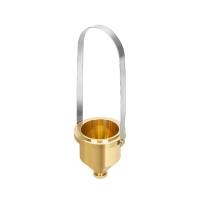
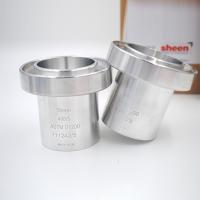
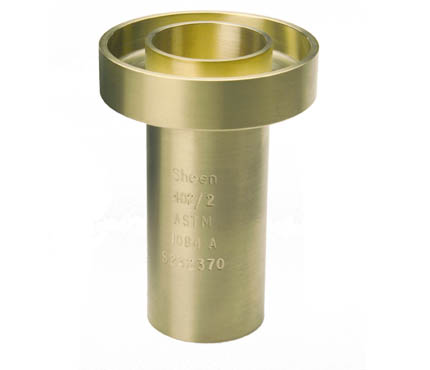
First, search the applet "Viscosity Conversion Tool" in WeChat, find the Viscosity Conversion Tool, and enter the homepage. Click on "Viscosity Cup Kinematic Viscosity Calculator". Go to the "Viscosity Cup Number Selection Page" or "By Standard Number Selection" page. Viscosity cup numbers include Zion cup, ISO outFlow Cup, DIN cup, Ford cup, Tu 4 cup, Tu 1 cup and other cup numbers, and standard numbers include ISO, DIN, ASTM, and GB standards.
The user selects the cup number or standard number, and the tool will automatically match the corresponding kinematic viscosity calculation formula and automatically calculate the result.
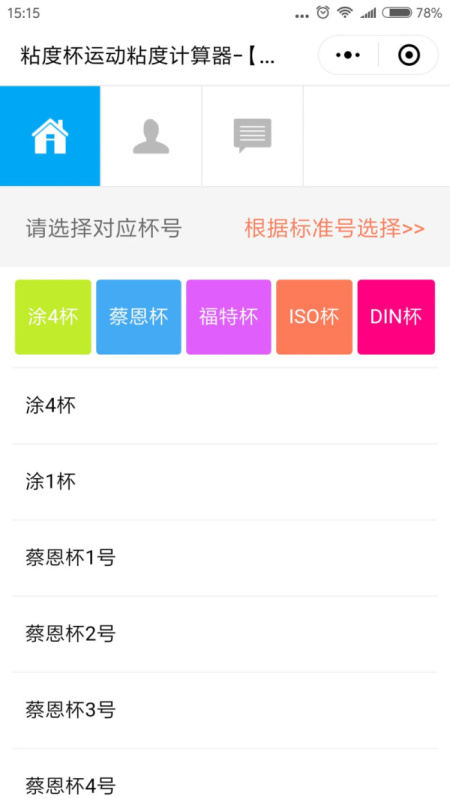
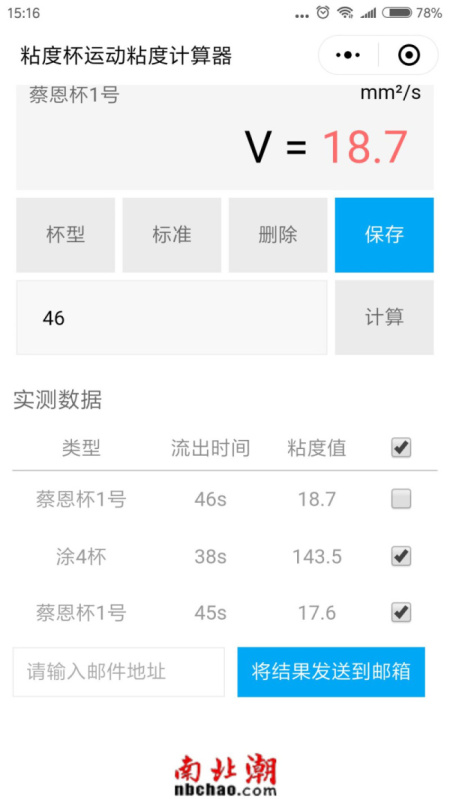
Furthermore, select the Viscosity Cup number or standard number you need to test, and click to enter the calculation page. Enter the outflow time of the test and click Calculate to automatically display the corresponding kinematic viscosity value. When the time you enter exceeds the standard time range of the Viscosity Cup, the system will automatically prompt an error.


If you need to save the test data, click the "Save" button to save the test data. In addition, you can also select the test data you want and send it to the mailbox.
Isn't this much simpler and faster than manual calculations?
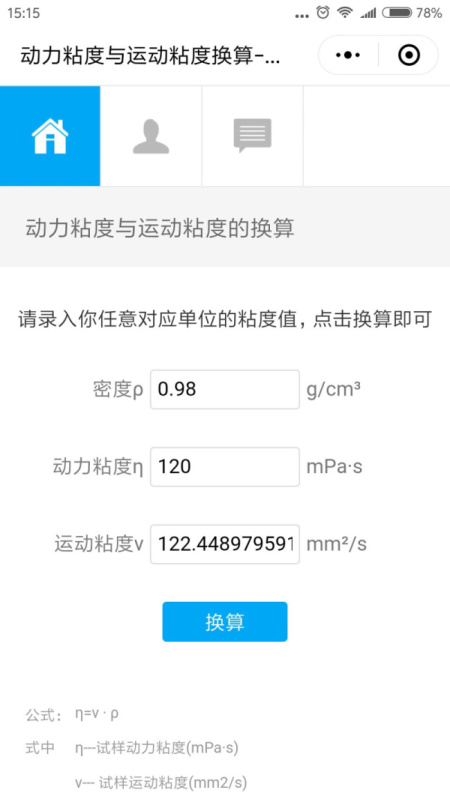
Of course, the function of this viscosity conversion tool is not so simple, it can also support the conversion of kinematic viscosity value and dynamic viscosity value. Let the editor take you down. Click "Conversion of Dynamic Viscosity and Kinematic Viscosity" on the home page to enter the conversion page. According to actual needs, input the density and kinematic viscosity or dynamic viscosity value of the sample, and convert the corresponding dynamic viscosity value or kinematic viscosity value.