Detailed steps of fineness determination
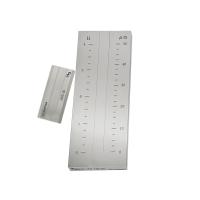
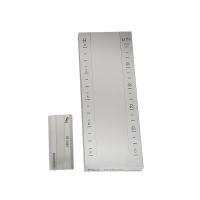
Predict the sample first to select the most suitable Fineness Meter. If the fineness is in the range of 40~90µ,rn, you should choose a Fineness Meter with a range of 100µm; if the fineness is in the range of 15~40µ,m, you should choose a Fineness Meter with a range of 50µm; if the fineness is in the range of 5~15µm , you should choose a Fineness Meter with a range of 25µ,m; if the fineness is in the range of 1.5~12µ,m, you should choose a Fineness Meter with a range of 15µ.m. Clean and dry the fineness gauge with a solvent, then use a small paint knife to fully stir the sample, then drop 2~3 drops of sample into the top end of the fineness gauge, and scrape it from top to bottom within 1N2 seconds However, within 3 seconds, make the line of sight and the surface of the board form an angle of 20~30 degrees, observe the dense particle point with the light, record the reading, observe the dense particle point of the sample, and find that the number of particles should not exceed 5~10 For each strip with a width of 3mm, the upper limit reading of the strip is taken as the fineness value, and the scattered particle points appearing in front of the place where dense points appear may not be considered.

Factors Affecting Fineness Determination
Representativeness of the sample: The sample should be fully stirred before the test, and a representative sample should be taken out.
Viscosity of the tested paint liquid: Generally, the viscosity is inversely proportional to the fineness, because the low viscosity causes the solvent to volatilize quickly, and the particles are easily exposed.
Solvent volatilization speed: The solvent volatilization speed is fast, and the fineness value after measurement is relatively high
Reading time: The reading time is long and the fineness value is high, because the solvent volatilizes and the multi-particles gradually protrude, so it should be read within the specified time.
Air bubbles: Stirring the sample before the test will often bring air into the paint, causing air bubbles to appear on the fineness gauge, resulting in reading errors. Therefore, the sample after stirring should be left for a while before testing.
After the measurement, be sure to wipe and dry the scraper fineness gauge, especially for water-based paints, so as not to affect the use due to surface corrosion of the fineness gauge.
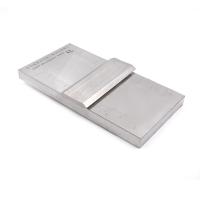
The scraper is slightly softer than the Fineness Meter, and the scraper is susceptible to wear after long-term use, resulting in inaccurate measured values, so the scraper should be checked before use.