1. Preparation of coating film
This method is applicable to the preparation of test panels for the determination of general properties of paint films. When preparing the coating film, the materials . This method introduces the material requirements and treatment methods of five kinds of substrates, and lists six board making methods, which are the standard test boards and painting methods used in the general sample methods of related products. For specific methods, please refer to national standard GB/T 1727-1992, national standard GB/T1736-1989, national standard GB/T 92712008 and national standard GB/T 9278-2008.
2. Drying time
Drying, also known as curing, refers to the physical or chemical change process of liquid paint applied to the surface of an object from a fluid layer to a solid paint film , commonly known as the drying of paint. The drying process is generally divided into three stages: surface drying, actual drying and complete drying. Since the paint requires a long time to completely dry, it is generally used to measure the surface dryness and actual dryness .
(1) Surface drying assay
1. Scope and Description
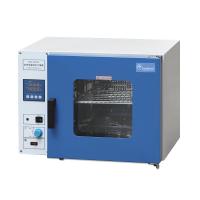
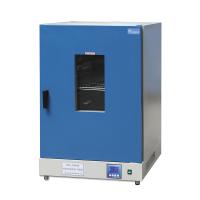
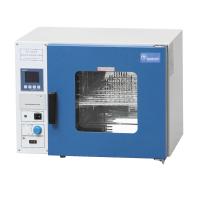
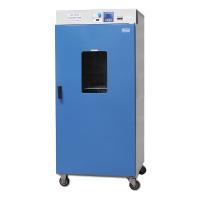
This method is applicable to the determination of the drying time of paint film and putty film. The surface drying time refers to the time for the liquid layer to form a film on the surface under specified drying conditions. This method is to check whether the surface of the paint film is dry within the range of not less than 1cm from the edge of the film surface after the product reaches the time specified in the standard (the dried paint film and putty film are taken out of the electric blower box, and should be kept at constant temperature and humidity. placed under the conditions for 30min test).
2. Apparatus and Materials
Absorbent cotton balls, lcm3 loose cotton balls; small glass balls, 1sq-250µm in diameter; soft brushes; timers, stopwatches or clocks.
3. Measurement method
(1) Blowing cotton ball method Gently put a absorbent cotton ball on the surface of the paint film, and gently blow the cotton ball along the horizontal direction with the mouth 10-15cm away from the cotton ball. If it can be blown away, there will be no cotton thread left on the film surface, that is, Consider the surface dry.
(2) Finger touch method Touch the surface of the paint film lightly with your fingers. If you feel a little sticky, but no paint sticks to your fingers, the surface is considered to be dry.
(3) Small glass ball method Lay the sample flat, and drop a small glass ball weighing about 0.5g and with a diameter of 125-250µm onto the surface of the paint film from a height of 50-150mm. After 10 seconds, keep the template at 20° from the horizontal plane, and gently brush the paint film with a soft brush. Check the surface of the paint film by direct vision. If the small glass balls can be brushed off without damaging the surface of the paint film, the surface is considered dry. The small glass ball method is only suitable for self-drying coatings.
4. Results presentation
Record the maximum time required to achieve surface dryness, expressed in hours or minutes. Judge pass or fail according to the specified surface dry time.
5. Reference standards
National standard GB/T 1728-1989, national standard GB/T 6 753.2-1986.
(2) Practical measurement method
1. Scope and Description
This method is applicable to the determination of the drying time of paint film and putty film. The actual drying time refers to the time when all the liquid layers form a homogeneous coating film under the specified drying conditions. This method is to check whether the paint film is actually dry within a range of not less than 1cm from the edge of the film surface after the product reaches the time specified in the standard (dried paint film and putty film are taken out of the electric blower box, and should be kept at constant temperature and humidity. placed under the conditions for 30min test).
2. Apparatus and Materials
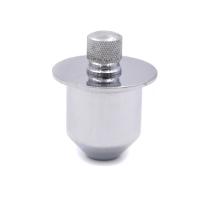
Qualitative filter paper, standard weight 75g/m2, 15cmX15cm; stopwatch, graduation 0.2s; drying Tester, mass 200g, bottom area 1cm gas-absorbed cotton balls, lcm3 loose cotton balls; safety blades; aluminum box, 45mmX 45mmX20mm (aluminum sheet thickness 0.05-0.1mm); balance, the sensitivity is O.01g; electric Forced Air Drying Oven; polyamide screen, a square screen woven from monofilament, the size is 25mmX25mm (the monofilament thread of the screen The diameter is 0.120mm, the hole diameter is about 0.2mm); the rubber disc, the diameter is 22mm, the thickness is 5mm; the cylindrical weight is 200g, 500g, 1000g, and the diameter is not less than 22mm.
3. Measurement method
(1) filter paper method
Put a piece of qualitative filter paper on the paint film (smooth surface is in contact with the paint film), gently place the drying Tester on the filter paper, start the stopwatch at the same time, remove the drying Tester after 30 seconds, turn the model over (paint film facing down), filter paper If it can fall freely, or tap it with the index finger of the hand holding the board on the back, the filter paper can fall freely and the filter paper fiber is not stuck on the paint film, that is, the paint film is actually dry. For paints that are allowed to have a slightly sticky paint film in the product standard, if the filter paper still cannot fall freely after the sample is turned over and tapped with the index finger, place the sample on a glass plate and clamp the pre-folded filter paper with a clamp. At one corner, pull the filter paper lightly in the horizontal direction. When the sample does not move, the filter paper has been pulled down. Even if there are filter paper fibers sticking to the paint film, it is considered that the paint film is actually dry, but it should be marked that the paint film is slightly sticky.
(2) Cotton ball pressing method
Put a degreasing cotton ball on the surface of the paint film, gently place the drying Tester on the cotton ball, and start the stopwatch at the same time, after 30 seconds, remove the drying Tester and cotton ball, leave it for 5 minutes, and observe whether there is any cotton ball in the paint film Traces and loss of gloss, if there are 1-2 cotton threads left on the paint film, which can be gently removed with a cotton ball, it is considered that the paint film is actually dry.
(3) blade method
Use a safety blade to cut and scrape the paint film or putty film on the model, and observe that there is no adhesion between the bottom layer and the film (if the putty film needs to wet the model with water, polish it with water sandpaper specified in the product standard, if it can form a uniform and smooth surface, non-stick sandpaper), that is, the film of paint or putty is considered to be actually dry.
(4) thick layer drying method (suitable for insulating paint
Wipe the aluminum box with xylene or ethanol and dry. Weigh 20g of the sample (based on 50% solid content, it should be converted when the solid content is different), stand still until there are no bubbles in the sample (use a needle to pick out the bubbles that do not disappear), and put it horizontally into the electric blower heated to the specified temperature Inside. Dry according to the heating rate and time specified in the product standard. Then take it out to cool, and carefully tear open the aluminum box to peel off the test block completely. Check whether the surface, interior and bottom layer of the test block meet the product standard requirements. When the test block is cut into two parts from the middle, there should be no mucus, and the cut section is closed and then pulled apart, and there is no wire drawing phenomenon, it is considered thick Actually dry. Parallel test three times, if two results meet the requirements, it is considered that the thick layer is dry.
Note: The oil-based paint sample cannot be dried in the same electric blower as the nitro paint sample.
(5) No imprint method
Put a 25mmX25mm polyamide screen on the surface of the paint film, and put a rubber disc in the center of the square screen, and then carefully place the required weight on the rubber disc so that the axis of the disc is in line with the disc The axes coincide and start the stopwatch at the same time. After 10 minutes, remove the removal code, the rubber disc and the screen, and observe whether there are marks on the paint film to evaluate the degree of drying. If the time without marking is measured, start shortly before the estimated time of marking free, and repeat the above test steps at appropriate intervals until the test shows that the coating has no markings, and record the time when the coating is just completely free of markings.
4. Results presentation
Record the maximum time required to achieve actual drying, expressed in hours or minutes. Pass or fail is judged according to the specified hard work time. The non-marking rule records whether the coating reaches no mark (pass and fail) or the time when the coating just has no mark after the specified time, expressed in h or min.
5. Reference standards
National Standard GB/T 1728-1989, National Standard GB/T 9273-1988.
(3) Instrumental method
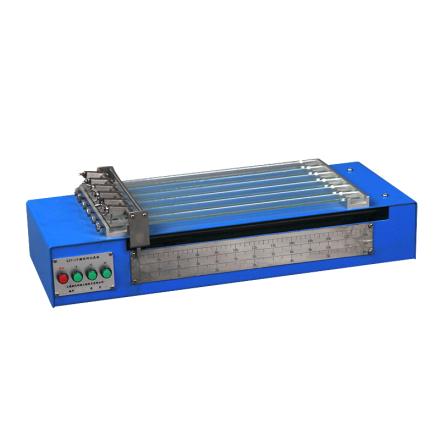
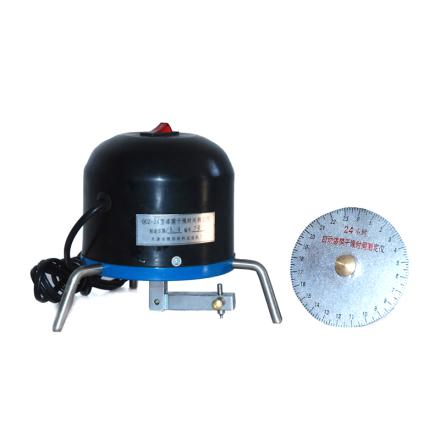
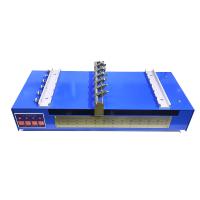
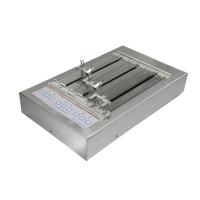
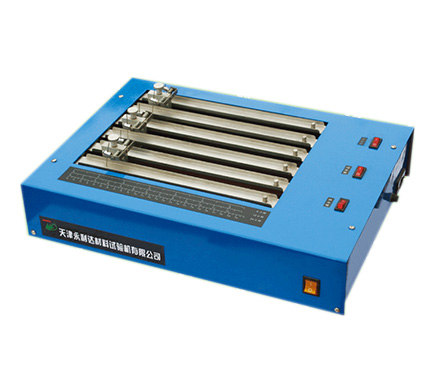
Since the drying of the paint and the formation of the coating film are a relatively slow and continuous process, in order to observe the progress of each drying stage, an automatic drying time Tester can be used in the form of gear type, sand falling type and needle type. The recent development trend all adopts needle-marking type, there are linear needle-marking type (see Figure 1-20) and circular needle-marking type (see Figure 1-21).