Color performance is one of the important performance indicators of pigments, and the production of color is closely related to disciplines such as optics, physiology and psychology. The color of the pigment mainly depends on the chemical composition and structure of the pigment, the size and crystal form of the particles, and is also related to factors such as the light source and the observer.
The color of the pigment is the basis for the variety of paint colors. There are tens of thousands of colors in the chromatogram, which can be roughly divided into red, orange, yellow, green, blue, blue, purple, black, gray and white. There is a certain internal connection between various colors. Hue, lightness, and saturation are three parameters describing a color. Each specific color has a specific parameter in the three-dimensional model of the color. At present, the Munsell color system is widely used in the world (will be described in chapter eight. A detailed description) to calibrate the color, the symbol is HV/C, where H stands for hue (Hue), V stands for value (Value), and C stands for saturation (Chroma). Through these three parameters, a color can be accurately identified. The condition that the two colors are exactly the same is that the values of the three elements of H, V, and C are all the same.
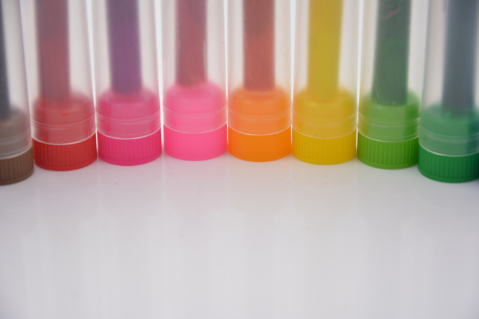
1. Lightness
Brightness is the human eye's perception of the brightness of a light source or an object, and can represent the lightness and depth of a color. Brightness reflects
The color is different in the aspect. That is, representations are perceptual properties of how much light an object reflects. The lightness is related to the reflectivity, the higher the surface reflectivity of the object, the higher the lightness, white is higher than gray, yellow is higher than red. The greater the brightness of the light source, the higher the brightness; black and white images are described by grayscale and grayscale.
Brightness is determined not only by the degree of illumination of the object, but also by the reflection coefficient of the surface of the object. If the light that people see comes from the light source, then the brightness depends on the intensity of the light source. If what people see is the light reflected from the surface of the object, then the brightness depends on the intensity of the illuminating light source and the reflection coefficient of the surface of the object.
2. Hue
Hue is also called hue, which means the characteristics of red, yellow, blue, purple and other colors, and is a visual perception attribute. The hue of an object depends on the spectral composition of the light source and the ratio of the radiation of each wavelength reflected (or transmitted) on the surface of the object. It is the characteristic of the color that distinguishes each other. Different wavelengths in the visible light band stimulate the human eye to produce different Tone reflects the "quality" of the color.
3. Saturation
Saturation is the purity of the color expressed on the basis of hue, so saturation is also called chroma. It is whether the wavelength band is "narrow" and the frequency is single in the absorption spectrum. When the object reflects the monochromatic light The stronger the color, the greater the saturation. The saturation depends on the ratio of the color component and the achromatic component (gray) in the color. The larger the color component, the greater the saturation; the larger the achromatic component, the higher the saturation Small. Black and white are only described by lightness, not hue or saturation.
 |  |
 |  |