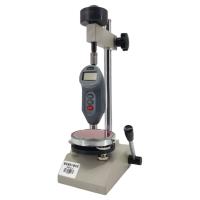
This paper mainly analyzes the influence of the test force, indenter, indentation measurement system and other factors on the errors of the various parts of the Hardness Tester. Analyze the causes of errors in common problems, so as to deal with the problems in practical applications.
1. Test force
(1) Phenomenon: Brinell Hardness Tester, model: HB-3000, when the initial test force is applied, the handwheel is turned, but the specified load is not applied, the handwheel and the screw nut have been relatively slipped, or a large load is applied, The handwheel and the lead screw nut still do not slide relative to each other. Reason: The Hardness Tester has been used for a long time, and the steel ball elastic positioner has failed.
Solution: put the dynamometer on the workbench, turn the hand wheel to raise the workbench, adjust the tightness of the adjusting screw of the steel ball elastic positioner, if the load is too small, screw in the adjusting screw; otherwise, unscrew the adjusting screw to reach When the initial test force (generally 1kN is better) meets the specified requirements, the handwheel and the screw nut will slide relative to each other.