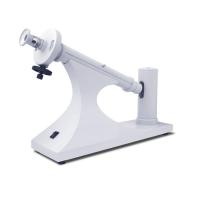
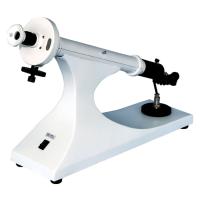
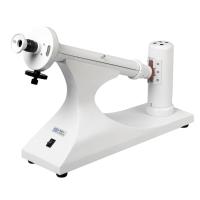
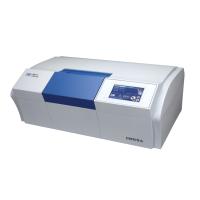
A polarimeter is an instrument for measuring the optical rotation of a substance. By measuring the optical zero position of the optical rotation of the sample, the concentration, content and purity of the substance can be analyzed. WZZ—2A digital display automatic polarimeter adopts the principle of photoelectric detection and automatic balance, and the measurement results are displayed by numbers.

The structure and principle of the instrument
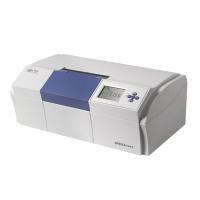
The appearance structure of the instrument is shown in Figure 1, and the principle block diagram is shown in Figure 2. The instrument uses a 20-watt sodium lamp as the light source, and consists of a small aperture diaphragm and an objective lens to form a simple point source collimator (Fig. 2). The parallel light is transformed into plane polarized light by a polarizer, and its vibration plane is 0° (Fig. 4a), when the polarized light passes through the magnetic gyro coil with the Faraday effect, its vibration plane produces a 50 Hz β-angle reciprocating swing (Figure 4b), and the light is projected on the photomultiplier tube through the analyzer, resulting in alternating photoelectric signal.

The instrument takes the time when the optical axes of the two polarizers are perpendicular (ie OO⊥PP) as the optical zero point, at this time, α = 0° (Figure 3). The β-angle swing generated by the magnetic coil produces a 100Hz photoelectric signal (curve C´) at the optical zero point, and a 50Hz signal when there is an α1° or α2° sample, but their phases are just opposite (curve B´ , D´). Therefore, a servo motor whose operating frequency is 50 Hz can be rotated. The servo motor rotates the polarizer reversely through α° (α=α1 or α=α2) through the worm gear, and the instrument returns to the optical zero point. Under the control of the 100Hz signal, the servo motor reappears the balance indication.


Instructions
(1) Operation method
1. Insert the power plug of the instrument into the 220-volt AC power supply, [requires the use of an AC electronic voltage stabilizer (1KVA) and connect the ground to the ground. 2. Press the power switch, at this time the sodium lamp should be lit, so that the sodium in the sodium lamp is fully evaporated and the light is stable. It takes about 15 minutes to warm up.
3. Press the light source switch to light the sodium lamp under direct current (if the sodium lamp goes out after the light source switch is pressed, press the light source switch again 1 or 2 times).
4. Press the measurement switch, the machine is in the state of automatic balance. Press the retest once or twice, and then press the reset button to reset.
5. Put distilled water or other blank test tubes into the sample chamber, close the lid, and press the reset button to reset after the decimal is stable. The foggy water droplets at both ends of the transparent surface of the test tube should be wiped dry with a soft cloth. The mule cap of the test tube should not be screwed too tightly, so as not to generate stress and affect the reading. Pay attention to the position and direction of the mark when placing the test tube.
6. Take out the test tube, inject the sample to be tested into the test tube, put it into the sample chamber in the same position and direction, and close the lid. The instrument readout window will display the optical rotation of the sample. Wait for the reading to stabilize before taking the reading.
7. You can press the retest button successively on the instrument, such as the positive number, press the retest + button, and if the negative number, press the retest - button, and take the average value of several measurements as the test result of the sample. In the same way, the same operation can also be performed by operating the PC software.
8. If the sample exceeds the measurement range, the instrument will oscillate at ±45°. Take out the test tube at this time, and the instrument will automatically return to the zero position.
9. After using the instrument, turn off the measurement, light source, and power switches in sequence.
10. When the transmittance of the dark sample is too low, the repeatability of the readings of the instrument will be reduced, which is a normal phenomenon.
11. The instrument can also be tested under the condition of sodium lamp AC power supply, but the performance of the instrument is slightly reduced.
(2) Determination of concentration or content
Firstly, a standard or reference sample of known purity is dissolved into several samples with different concentrations according to a certain ratio, and their optical rotations are measured respectively. Then take the concentration on the horizontal axis and the optical rotation on the vertical axis to draw an optical rotation curve. Generally, the optical rotation curves are made into check form by arithmetic interpolation method. When measuring, the optical rotation of the sample is measured first, and the concentration or content of the sample is found from the optical rotation curve according to the optical rotation. The optical rotation curve should be done with the same instrument and the same test tube, and attention should be paid to the measurement.

(3) Determination of specific rotation and purity
First prepare the solution according to the concentration specified in the Pharmacopoeia, measure the optical rotation according to the law, and then calculate the specific rotation [a] according to the following formula: where a is the measured optical rotation (degree) C the concentration of the solution (g/ml) L The length of the solution (decimeter) From the measured specific rotation, the purity of the sample can be obtained:

(4) Determination of international sugar content
According to the international sugar content standard, it is stipulated that 26 grams of pure sugar should be used to make 100 milliliters of solution, and measured by sodium light at 20 ℃ with a 200 mm test tube. Its optical rotation is +34.626, and its sugar content is 100 sugar degrees.