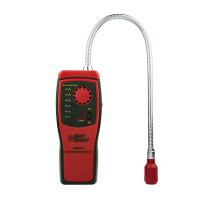
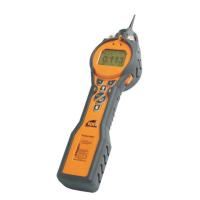
Key definition and operation instructions
Return key: ESC key
Menu key: MENU key. Enter and exit the menu, press it to silence the sound when the alarm is sounded, after the sound is silenced,
A mute icon appears on the upper right of the display, press the return key (ESC) to cancel the mute state
ⓛ key: power key, confirmation key. Press and hold for 5 seconds to power on, press and hold for 5 seconds to power off after power on,
《《》 key: direction key, move the cursor to the left, and play the role of shifting when modifying the number
"" key: direction key, move the cursor to the right, adjust the size of the value and turn the page when modifying the value
Display the address number and software version of the device when it is turned on
Displays the countdown time required for POST and sensor warm-up
Enter the test interface after the countdown
Press the confirmation key "ⓛ key" to switch between different
Display mode, press "" key to switch channels


Menu Operation Instructions
1 Operation Instructions for Zero Calibration

When the zero drift of the sensor is too large, or it needs to be accurate
The zero point calibration operation is only performed when detecting very low concentrations.
In the test interface, press the menu button or the "menu" button to enter the menu,
Select the "Zero Point Calibration" menu through the "<<" and ">>" keys,
Press the "ⓛ" key to enter the zero point calibration interface, as shown in the figure:
Then press the "ⓛ" key to perform zero calibration
After the calibration is successful, it will display: "Calibration successful"
After CO2 is successfully calibrated in air, it will display around 400ppm
If the calibration is not successful, it will display: "Calibration failed" O2 or N2 calibration zero point in the air will be


Concentration Calibration Operation Instructions
The deviation between the concentration detected by the instrument and the standard gas concentration can be corrected by concentration calibration or changing the display coefficient.
In the test interface, press the "Menu" button to enter the menu, select the "Concentration Calibration" menu through the "<<" button and ">>" button, and then press the "ⓛ" button to enter the concentration calibration interface, as shown in the figure:


The cursor appears at the position of the first-level concentration by default, press the "ⓛ" key
Then press the “《《》” and “》” keys to modify the concentration values at all levels.
After modification, press "ⓛ" key to save. Then pass in the standard gas or the gas to be measured, move the cursor to the "calibration" position, and then press the "ⓛ" key to calibrate, if successful, the word "success" will appear, if not successful, "failure" will appear
Precautions:
Usually only need to calibrate the primary concentration to meet the accuracy requirement.
Set the concentration value to be calibrated or the concentration value of the standard gas in advance, and then pass in 500 ml/min of the gas to be tested for 30 seconds before calibrating.
三级校准浓度值设置规则:
一级浓度值 < 二级浓度值 < 三级浓度值
三级浓度校准顺序:
一级浓度校准→二级浓度校准→三级浓度校准
恢复出厂操作说明
在测试界面按一下“菜单”键进入菜单,通过“《《”键和“》》”键选择到“恢复出厂”菜单,
按“ⓛ”键进入恢复出厂界面,如图:


选择要恢复的通道,再按“ⓛ”键进入可选选择“恢复浓度”、“恢复报警”、“全部恢复”,再按“ⓛ”键进行恢复,如果恢复成功就会出现“成功”字样,不成功就会出现“失败”字样.
当设置错误或测试浓度不准确时需要进行恢复出厂 的操作,如果是人为因素造成的不良可以得到恢复,
可以恢复出厂的参数: 零点校准值、浓度校准值、报警值、报警方式、 报警模式、最大量程 .
数据记录操作说明
在测试界面按一下“菜单”键进入菜单,通过“《《”键和“》》”键选择到“数据记录”菜单,按“ⓛ”键进入数据记录界面:如图:选择要查询记录的通道,再按“ⓛ”键选择 “《《”键和“》》”键选择到“开始时间”,
按“ⓛ”键进入设置查询起始时间“《《”键和“》》”键选择到“结束时间”,
按“ⓛ”键设置查询结束时间选择查询的类型,按“ⓛ”键选择“全部数据”或“报警数据”


选择“开始查询”,按“ⓛ”键查询
如果没有查询到记录,如图:
说明了数据存储功能没有开启
需要在“系统设置”→“存储设置”里
开启存储功能。选择“定时存储”即实时存储功能
并设置存储周期(时间间隔)
报警设置操作说明
在测试界面按一下“菜单”键进入菜单,通过“《《”键和“》》”键选择到“报警设置”菜单按“ⓛ”键进入报警设置界面:
报警数值设置,可以通过“ⓛ”键和“《《”键和“》》”键修改。
低报限值:即一级报警值,可修改
高报限值:即二级报警值,可修改
报警方式:可选声光、振动、声光+振动、无报警
按“ⓛ”键选择
报警声音:3 种声音可选
报警回差:即报警回程差,可设置每一通道的报警回差值,如果设置为 0,只要数值达到报警设定值就马上报警,若不想数值在报警设定值的临界点发生频繁报警,可以把报警回差设置一定的数值
报警模式:
一般不需要设置,已默认设置好。
O2 和 N2 默认设置为 <AL&>AH 报警
其它气体默认设置为 >AL&>AH 报警
可以修改或设置为“关闭报警”
系统设置操作说明
在测试界面按一下“菜单”键进入菜单,通过“《《”键和“》》”键选择到“系统设置”菜单, 按“ⓛ”键进入系统设置界面.
量程设置:显示的是各个气体的最大检测范围, 出厂时已设定好,若要修改,请致电厂家确认是否可以修改,因为有些传感器过载测量会损坏传感器。
时间设置:修改日期和时间,按“ⓛ”键以后,通过“《《”键和“》》”键选择和修改,再按“ⓛ”键保存。
背景设置:According to个人的喜欢,修改字体的颜色、 背景颜色、背光休眠时间,也可以选择“恢复默认”恢复默认的设置通过“《《”键和“》》”键选择和修改,再按“ⓛ”键保存.
存储设置:将光标移到“存储设置”按“ⓛ”键进入设置界面.
存储方式:可设置定时存储、报警触发两种模式
“定时存储”是在每个存储周期时间内存储数据一次“报警触发”存储方式是只存储报警的数据,只有当浓度值达到报警设定值的时候才开始存储,不报警的时候不存.
存储周期:存储数据的时间间隔,1-9999 秒可设
存储功能:选择开启或关闭数据存储功能
通讯设置:不连电脑或数据传输时无需设置
单位设置操作说明
在测试界面按一下“菜单”键进入菜单,通过“《《”键和“》》”键选择到第二页“单位设置”菜单,按“ⓛ”键进入设置界面。
各单位之间自动换算,可以切换的单位:ppm、Vol%、LEL%、ppb、pphm、mg/m3、mg/L
其它设置操作说明
在测试界面按一下“菜单”键进入菜单,通过“《《”键和“》》”键选择到第二页“其它设置”菜单,按“ⓛ”键进入设置界面.
预热时间:传感器需要的预热稳定时间,不建议修改。
语言选择:默认中文,可选英文
气体名称:默认显示气体的名称分子式
显示最大值:选择打开就在单通道界面显示本次测量的最大值和上次测量的最大值.
显示最小值:选择打开就在单通道界面显示本次测量的最小值和上次测量的最小值.
本机信息说明
在测试界面按一下“菜单”键进入菜单,通过“《《”键和“》》”键选择到第二页“本机信息”菜单,按“ⓛ”键进入查看界面.
设备信息:可查看本台设备的相关信息
传感器信息:可查看本台设备上的传感器的寿命及使用年限,避免超期使用影响准确性和可靠性.
维修记录:记录本台设备的维修信息.
故障指导:介绍简单的故障处理方法目前暂无法查看.
常见故障及解决对策
故障 1:低浓度的时候检测不出来
解决对策:
1、如果是泵吸式测量,先检查泵是否工作,泵正常工作的时候有轻微的振动,并且用手指堵住进气口 5 秒钟可以感觉到有明显的吸力。然后再检查进气口是否被堵塞或连接处没有密封好导致漏气而无吸力。
2、通入氮气校准零点或在洁净空气中校准零点,校准完以后马上进行检测
3、校准零点以后还检测不出被测气体,需要进行恢复出厂设置操作
4、恢复出厂设置以后还检测不出来,需要再次通入氮气或在洁净空气中进行零点校准操作,校准完以后马上进行检测
5、检查传感器的连接线有没有被人为损坏或接触不良
6、以上四个步骤都做了还是检测不出来,需要确认一下现场是否存在被测气体,或者被测气体的浓度确实很低,如果低于仪器的最小检出限值就无法检测
故障 2:在空气中,没有被测气体,但是数值波动很大或乱跳
解决对策:
1、一般短时间零点波动范围小于最大量程的 1%属于正常范围,在没有被测气体的情况下长时间漂移小于最大量程的 2%属于正常范围,若超出此范围,需要确认现场是否存在被测气体,或空气中的温度和湿度波动较大,导致数值不稳,一般情况下温度和湿度波动大会造成仪器检测数值短时间波动较大,待空气中的温度和湿度恒定以后,数值也会相对比较稳定。
2、确认是否对仪器进行了零点校准或目标点校准操作,若在有被测气体的场合进行了零点校准操作就可能检测不出低浓度的气体,若在有被测气体的场合进行了目标点校准,但是校准的浓度值和实际浓度值不符,可能造成仪器数值波动很大或检测到的数值偏小,这 2 种情况都都进行恢复出厂操作就可以解决。
3、如果还无法解决问题,需要确认是否通入了高浓度的气体或有高浓度的气体冲击了传感器,如果有冲击过传感器,将仪器上电老化 24 小时以后,数值还不稳就可能是传感器被冲击坏了.
故障三:检测不准确
解决对策:
1、确认现场的气体浓度是否准确,有时候理论值和实际值之间的差值很大,更好通过通入标准气体来验证仪器的准确性,或送第三方计量机构检测
2、若传感器使用的时间较长,测量值可能会有一些误差,需要先和厂家确认传感器是否还可以再继续使用,若传感器本身已经快接近使用寿命了,即使标定完当时可以正常使用,但是过不了多久又不能正常使用了,建议更换传感器.
故障四:数值为 0 的时候或在空气中没有达到报警值也报警
解决对策:
1、检查报警值是否被修改了
2、检查报警方式、报警模式是否被修改了
3. Check whether the alarm state is a concentration alarm or a fault alarm. The words AL or AH will appear on the concentration alarm, and red indicator light will flash, and the yellow light will be on for the fault alarm
4. If the alarm caused by artificial modification can be solved by restoring the factory settings, the fault alarm needs to be further checked for short circuit, open circuit, poor contact, sensor failure, etc., or sent back to the manufacturer for inspection
Fault Five: Unable to communicate with the computer
solutions:
1. Check the device address, the address set in the communication software needs to be consistent with the device address of the instrument
2. Check whether . For devices with USB interface, it is also necessary to detect whether the serial port is connected
equipment maintenance
In normal use of the Detector, most of the sensors have an effective service life of 24-36 months. During the effective service life, the sensor should be calibrated and checked every 6 months or 1 year to ensure the accuracy and effectiveness of the gas detection function. Outdated and faulty sensors need to be replaced.
Sensor Replacement: After a sensor failure, please send the instrument back to the factory for replacement and recalibration
Sensor calibration: see Chapter 7, 7.1 and 7.2 for details. Do not operate without standard gas ready. In case of misoperation, it is necessary to restore the factory settings through the operations in Chapter 7.3.
Precautions
It is strictly forbidden to open the cover with power on
Do not replace the sensor with power on
Operations such as installation, commissioning, and settings must be performed by professionals
The calibration check of the Detector should be carried out regularly
Sensors that have expired or are faulty should be replaced in time
Avoid impinging the sensor with gas higher than the measurement range